

Act 76 shifts 6% of the rooms and meals tax to fund clean water projects, a measure expected to generate $12 million annually after 2021. It also commits more than $20 million of state funds toward leveraging other funding sources each year — resulting in an estimated annual clean water investment of more than $50 million.
In a letter to Agency of Natural Resources Secretary Julie Moore, EPA official Deborah Szaro wrote that the EPA approves of Vermont’s strategy.
“EPA is very pleased with the State’s passage of Act 76,” Szaro wrote. “In combination with the other dedicated clean water funding sources enacted by the Vermont legislature since 2015, Act 76 is expected to produce long-term funding levels in the ballpark of the needs identified by the 2017 Vermont State Treasurer’s report and Vermont’s Act 73 report.”
The funding components of Act 76 also allow Vermont to meet another of the 28 milestones that the EPA set for the state in 2016. Three years ago, the federal organization mandated new phosphorus limits for Lake Champlain — called Total Maximum Daily Loads, or TMDLs — and the EPA’s endorsement confirms that Act 76 is in compliance with the Lake Champlain TMDL plan.
According to Moore, Act 76 moves the state closer to the end of the TMDL’s first phase. Once that phase is completed, Moore and the Agency of Natural Resources will focus more directly on implementation. Current and upcoming projects include conservation measures on farms, addressing stormwater runoff, and wetlands preservation.
“It means we’ll be turning our focus more fully to project development,” Moore said of the completed milestone.
Jen Duggan, vice president of Conservation Law Foundation and a consistent advocate for clean water funding, said that she supports the state’s efforts to procure money for conservation.
“After punting on the funding issue for years, we’re really supportive that the Legislature finally committed to addressing clean water obligations with a long-term funding solution,” Duggan said. “We think that additional monies are needed to clean up Lake Champlain and waters in the state of Vermont, but we felt that this is really an important step forward.”
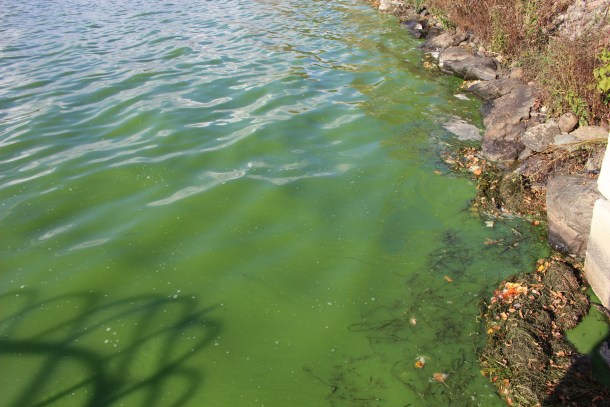
The EPA’s support — and Act 76 itself — comes after years of discussion, from Duggan and from across the state, over Vermont’s cyanobacteria blooms, which are caused by an excess of nutrients, including phosphorus runoff from farms. In 2019, there have already been algae breakouts in St. Albans Bay, Missisquoi Bay, and the Burlington waterfront. Several beaches have closed in Burlington, and Lake Carmi installed an aeration system to fight blooms earlier this year.
Despite federal pressure to clean up Vermont’s lakes, however, it took the state some time to decide upon a funding source. Gov. Phil Scott initially proposed the bill with a measure that would take from the estate tax — but after the Legislature raised concerns, the Senate Finance Committee turned to the rooms and meals tax instead.
“Collaboration between my administration and the legislature, with support from the treasurer’s office, in this year’s legislative session was key to identifying a long-term commitment of resources to achieve this clean water milestone,” Scott said in a press release. “Vermont’s approach to protecting our waterways … is truly a team effort across federal, state, local and private partners.”
But despite the lengthy process, Moore said that the EPA’s ultimate approval of the act represents a leap forward.
“This is very significant,” Moore said. “As part of the TMDL, or pollution budget, that was developed for Lake Champlain in 2016, Vermont made a series of commitments … and this was one of the final outstanding ones.”

