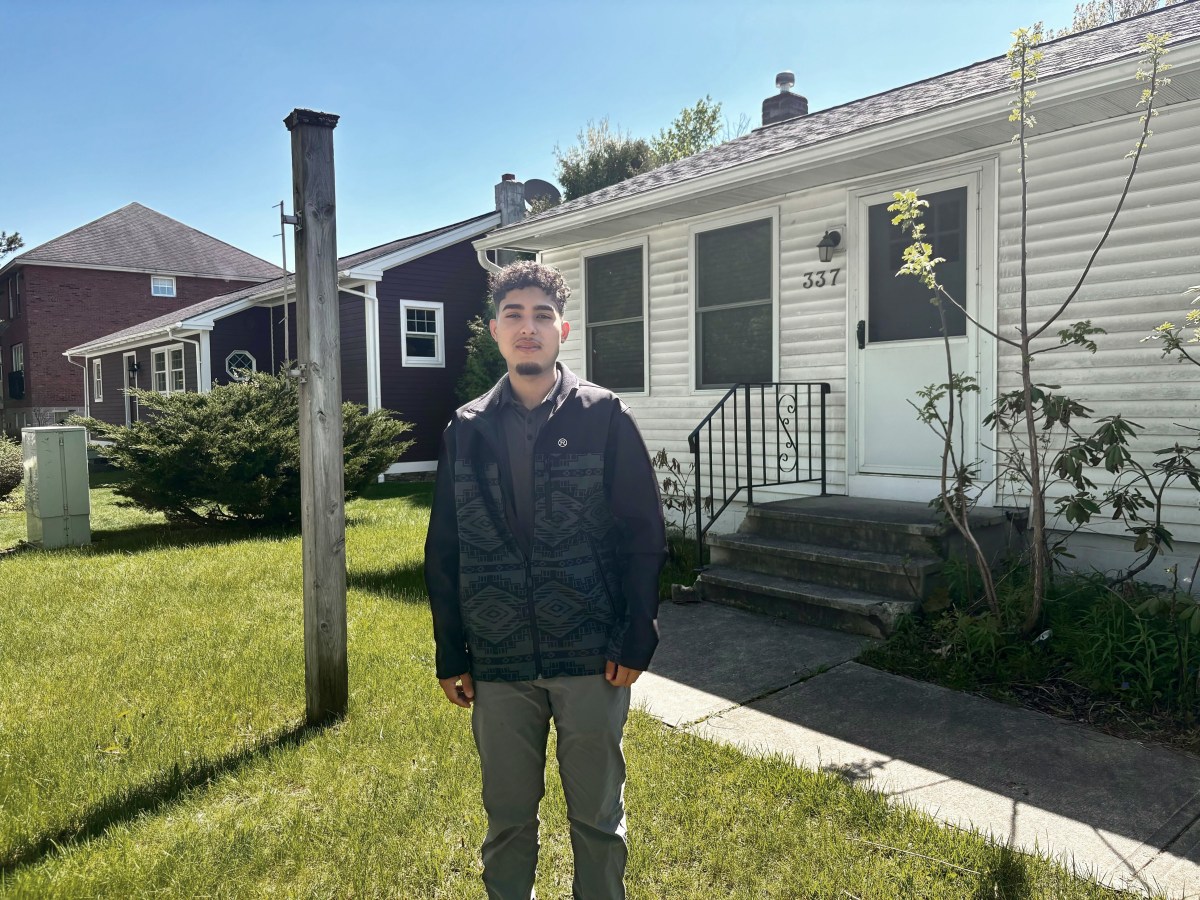
When federal agents stormed into the house he had lived in just five months, José Estrada Jerez said he and his uncle were on their knees, their hands raised in surrender.
“They burst in the door, their guns pointed at me and my uncle,” Jerez said. “I was already on the floor and I was screaming, ‘I surrender. I surrender.’”
More than a month after an armed U.S. Immigration and Customs Enforcement raid in South Burlington apprehended the wrong people, including his uncle Cristian Humberto Jerez Andrade, the 19-year-old immigrant and U.S. citizen said he is trying to recover from the trauma of the assault.
“That was the worst thing that has happened to me, ever,” said Jerez, who recently returned from a trip to Honduras, where he celebrated his 19th birthday.
Jerez’s firsthand account of what happened in the Dorset Street house, shared in a phone interview with VTDigger from his hometown in Honduras, provides a view into how ICE officers conducted themselves that day and how immigrants are affected by federal immigration enforcement actions. Much of his descriptions mirror his testimony in U.S. District Court at a hearing for his uncle in March.
ICE has not responded to multiple email queries to its media relations department about that incident.
In Jerez’s telling, about 15 men in protective gear with guns had stormed into the nondescript single-family house toward the end of a daylong standoff March 11 where the teen lived with his uncle, whom he described as a father figure.
One of the ICE officials in the house pulled him up, threw him back on the floor, handcuffed him and searched him, he said, without consent and without a warrant. The official then took everything in his pockets, he said, including his phone and his U.S. passport, and assaulted him.
“When he had me on the floor, I said, ‘I’m a USA citizen. I’m a USA citizen’ and he’s like, ‘I don’t care. I don’t fucking care.’ Then he picked me up, set me down on a chair and slammed my head against the wall,” he said.
Jerez said he sat there, handcuffed for about 30 minutes, scared to move, while ICE officials searched the house looking for a man who wasn’t there. Eventually they grabbed his uncle.
A citizen of Honduras, Jerez Andrade, 31, was detained for a week before an immigration judge granted bond and released him on March 19. His housemates on Dorset Street, two sisters — Daysi Camila Patin Patin, 20, and Jissela Johana Patin Patin, 31, citizens of Ecuador — were also released shortly after the raid.
By the time a lawyer entered the house to speak with him that evening, the then-18-year-old was in “complete and utter shock,” according to Nathan Virag, who is representing Jerez.
“Probably one of the first things he said to me was about the assault. He was very shaken up about that,” said Virag, an attorney with the Association of Africans Living in Vermont. “He was trying to answer my questions but — I don’t even know how to describe it — he wasn’t quite there.”
Based on his conversations with the residents of the Dorset Street house, Virag said the incident has left them haunted by fear and feeling that their lives were forever changed that day.
“José is a U.S. citizen. He should not have been treated that way by immigration. When immigration broke through the house, they automatically were surrendering, so there was no reason for immigration officials to assault him in that way,” he said.
The federal officials violated his constitutional rights and traumatized him, said Virag, who is looking into legal options to seek justice.
“He’s not doing well. He’s grappling with nightmares. He has trouble sleeping. … I personally don’t know how he’s going to recover from it, but it really affected him. And it’s still affecting him.”
During his testimony at his uncle’s hearing, Jerez discussed witnessing the raid, the actions of the ICE officers inside the house and the accidental gunshot in the attic.
“I feel like I could have died that day,” he said in federal court in Burlington on March 17. “I could’ve lost my life because of an ICE agent’s stupid decision.”
His immigrant life
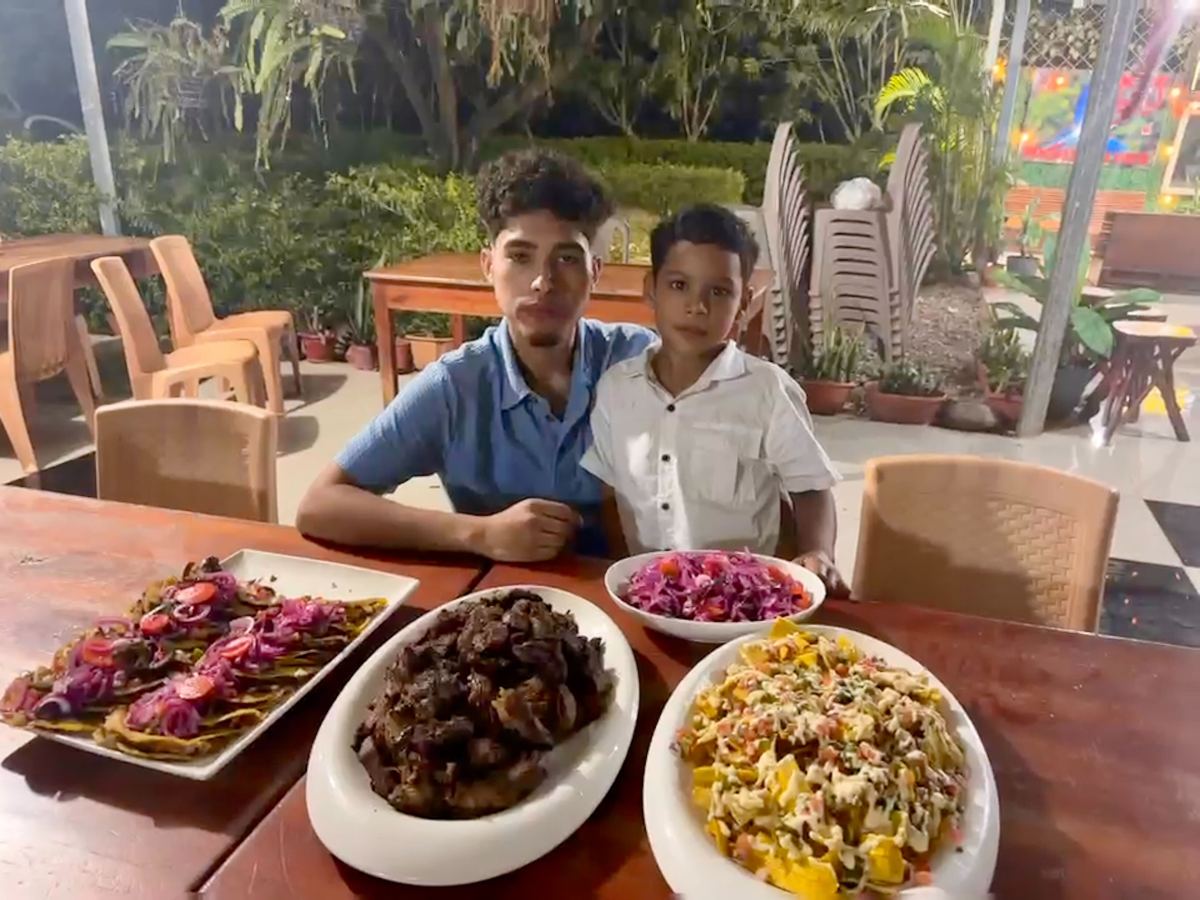
Until the March 11 raid, Jerez said he had lived as an immigrant in and out of the United States since age 5 with a sense of comfort and belonging. Born in Honduras, he was raised largely by his grandmother and his uncle Jerez Andrade. His mother had married an American and was living in Louisiana. He said he became a naturalized U.S. citizen through his mother around age 10.
In those early days in Louisiana, ICE activity was not happening around him or talked about much, he said. That changed, particularly during Donald Trump’s second presidency. Suddenly, he said, immigrants knew they had to be careful.
About seven months ago, Jerez said he left his mother in Louisiana to join his uncle working several jobs in the construction industry in Maine and in Vermont. The winter was particularly difficult, he said, as he had never experienced snow and cold.
The night before the ICE raid in South Burlington, Jerez was devastated to learn that one of their new friends in Vermont, whom he met at a job site in Winooski, was allegedly deported to Mexico.
“This was literally our first friend that got deported. It’s so crazy,” Jerez said.
It was hard to believe this was happening in Vermont. “That’s why people go to Vermont, to feel safe,” he said.
‘I was scared. I was really scared.’
The morning of the raid, it was chilly, and his uncle had started the car so it could warm up, he said. They were going to grab coffee and breakfast at a gas station, per their usual routine, on their way to the work site when they were spotted by ICE officials.
He said the two men initially tried to pull over, but the ICE vehicle hit their car from behind, and his uncle panicked and sped off. On Virag’s advice, Jerez declined to describe the full encounter with the ICE vehicle and the car chase that followed.
They had been out of the house barely 15 minutes when the car chase led them to return to the house. The front door didn’t have a bolt. Jerez said he shoved the couch up against it as they all took shelter. They agreed not to open the doors and made sure the windows were shaded.
As more ICE officials lined the street and backyard, everyone inside the house started to panic, Jerez said.
“My uncle — he was panicking too, you know — said, calm down. Everything’s gonna be OK,” Jerez said. “And then he started to call Migrant Justice.”
Best known for advocating for migrant farmworkers’ rights, the nonprofit in recent years has teamed up with local advocates to provide rapid response to immigrants facing encounters with ICE or U.S. Customs and Border Protection, which includes an emergency number to report federal immigration activity in Vermont.
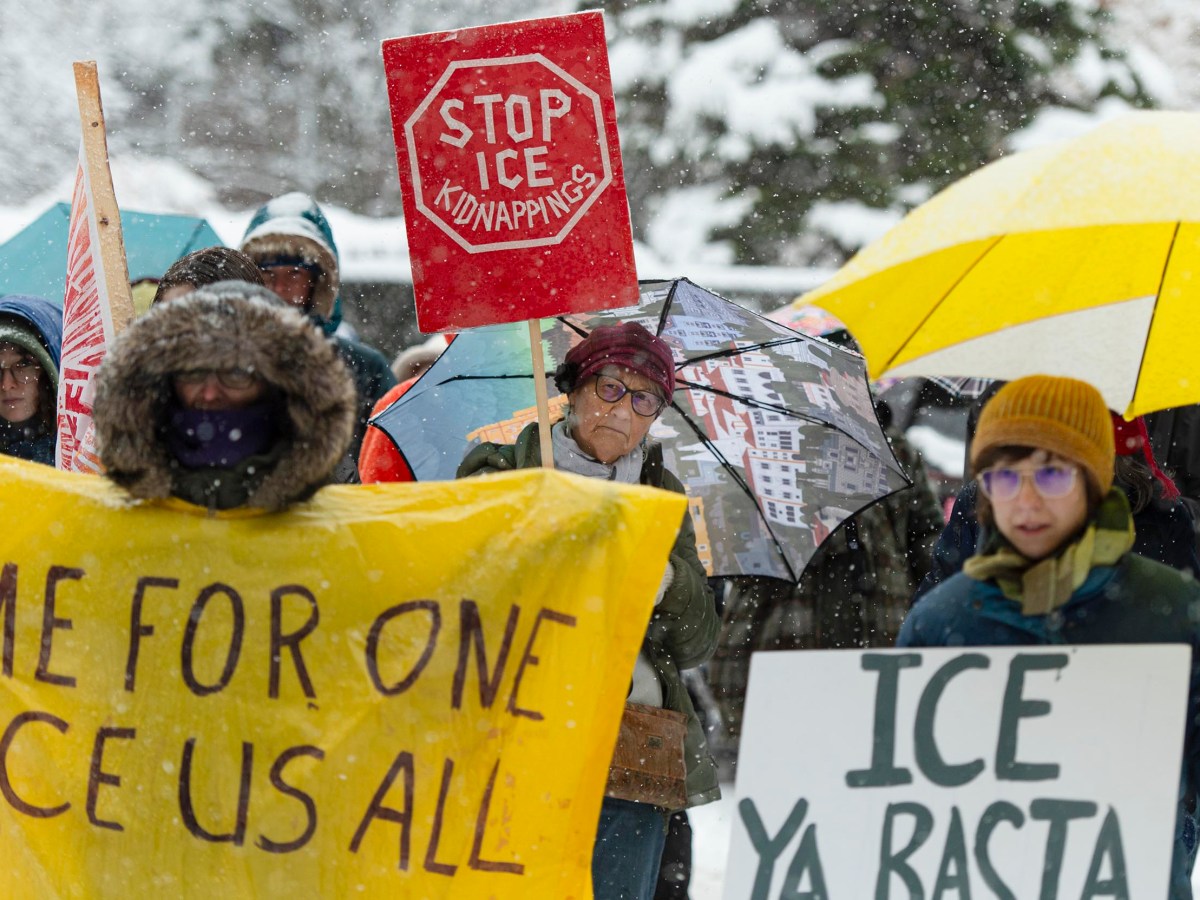
By 8:15 a.m., people had started gathering outside the house.
“They started singing. They were screaming at the ICE agents, telling them to go away,” Jerez said. “They just started surrounding us, you know, so we started feeling a little bit safer.”
As the protest grew outside, inside the residents called their families. “I was on the phone with my mom, and my uncle was on the phone with his kid, with his wife,” Jerez said.
A part of him was terrified, he said, that he and his uncle would be detained and thrown in jail. Another part of him was grateful and relieved, he said, to see the outpouring of support from people who didn’t even know them. “I was amazed. It was very surprising,” he said.
There was a child in the house. All of them were worried about what would happen to the child if they were detained, he said. The child’s mother got in touch with the child’s teachers in the South Burlington School District, and one of them came by to remove the child. Protesters waited for an opportune moment when ICE officials were not in front of the house. They formed a narrow passageway for the child to be removed by linking hands from the doorway to the teacher’s car.
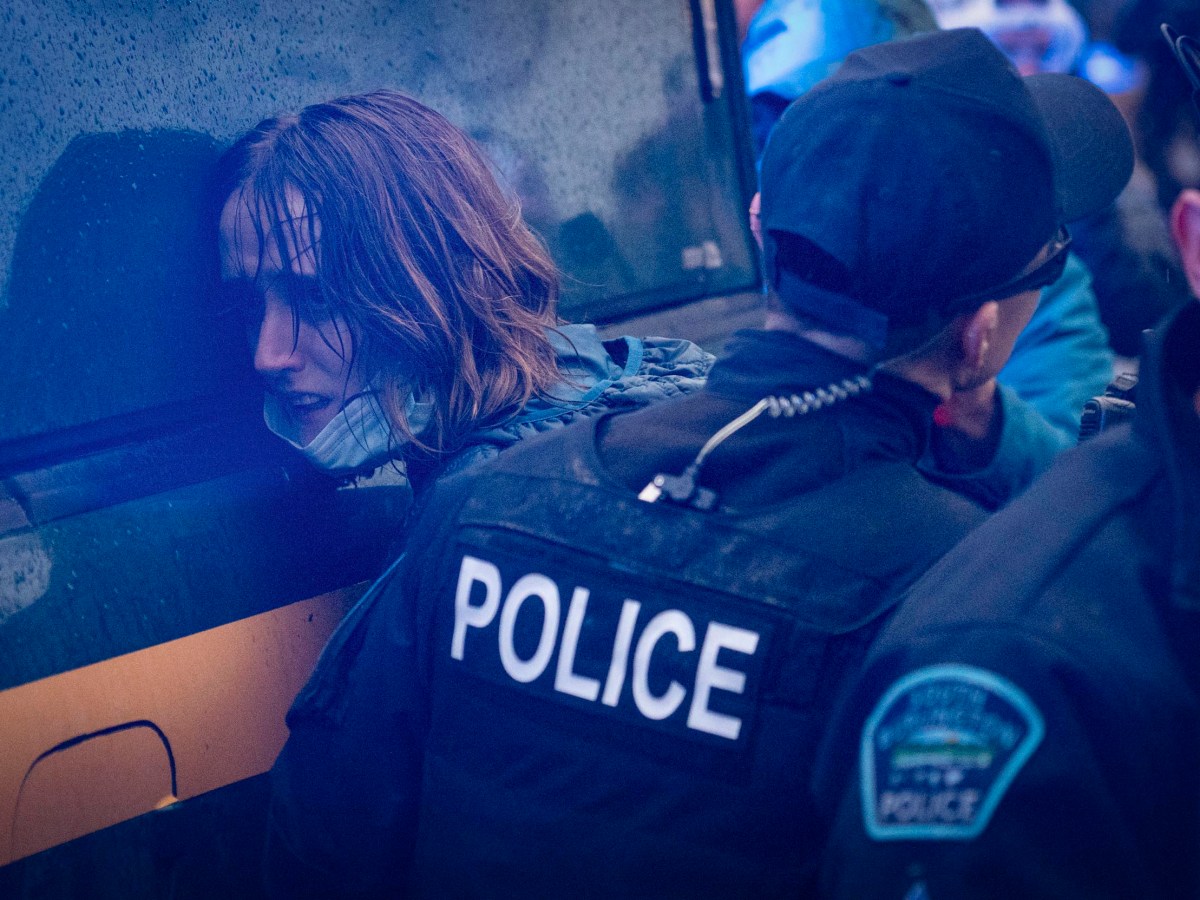
After several hours, bystanders heard police officers announce that a tactical team from the Vermont State Police was going to force entry and warned people blocking the house that they could be forcibly removed. Jerez didn’t hear the warning, but he did hear the sound of officers from the state police Critical Action Team removing people and busting open the door.
“I was scared. I was really scared, you know. I didn’t know what to think,” he recalled, his voice shaking.
‘We don’t want no problems with you.’
ICE officials barged in with guns, demanding to know where to find Deyvi Daniel Corona-Sanchez, Jerez said. Corona-Sanchez was the 24-year-old Mexican man they were seeking, according to later affidavits by ICE officers.
The residents told the officers they didn’t know who that was, Jerez said. “They were screaming at us,” he said.
Then the ICE officials spotted the opening to the attic. One of them said, “I’m gonna go up in the attic. And if he’s up there, you guys will have to go to jail for a long time,” Jerez said.
The man used a stool to climb up into the attic space. Within minutes, his foot broke through the ceiling and his gun went off, Jerez said: “He fell through the sheetrock because he didn’t know where to step. He just stepped on the weakest spot.”
While the residents were all terrified, Jerez said the other ICE officers started laughing.
“I don’t know why they were laughing because I could have been killed or my uncle could have been or anybody in the house could have been killed. And this is all happening, like, five feet away from me,” he said.
Then they all kept asking about Sanchez and threatened to tear the house apart to find him, he said. One of the ICE officials threatened to tear gas the place.
“We were like, ‘All right, tear gas the place, you know, because there’s nobody else in the house,’” he said. “They kept looking everywhere, looking through the kitchen, through all the rooms. And we — my uncle and I — were still just handcuffed and facing a wall.”
After a fruitless search, ICE officials took Jerez Andrade and the two sisters into custody. One of the ICE officials took Jerez’s handcuffs off before they left. “And he was like, ‘We don’t want no problems with you.’”
Suddenly, Jerez was alone in a quiet house.
“I was lost. I did not know what I was going to do next. I was completely lost,” he said. “I was wondering, what’s gonna happen now, what am I gonna do? My uncle’s gone. The person who’s taking care of me is gone.”
Rapid community response
Among the community members who stepped up to offer support in the aftermath was Al Turkos, a Winooski resident and city councilor who was at the Dorset Street standoff all day.
It was “absolutely devastating” to watch a visibly shaken José, they said, as he packed up some of his things in the basement of the house after the raid.
“He was very, very very upset, hysterically crying,” Turkos said. “He’s a young person who recently just relocated here, relocated to this house and had his life upended in mere hours.”
On their invitation, Jerez ended up staying with Turkos — who uses they/them pronouns — and their wife, Liz, in their guest room for about two and a half weeks. His uncle also stayed with them for a few days after he was released, they said.
Turkos, a trauma survivor and community organizer, said they tried to make Jerez feel at home and give him some agency over his life. When asked what would make him feel better on his first night there, Jerez said he wanted to cook.
“So we went to City Market. We got plantains. He made tostones, he made chicken. We asked him what kind of music he wanted to listen to and we were listening to Bad Bunny,” Turkos recalled.
That night, two days after the raid, Jerez spoke at a Migrant Justice rally. Over the week they walked around town together, Jerez hung around with some friends one day and attended a birthday party for one of Turkos’ friends. Last week, Jerez went back to work at a job site in Winooski with his uncle.
Jerez was comfortable sharing a space and meeting their friends, according to Turkos, who remains in contact with him.
“He will always be like a member of our community and our chosen and found family,” said Turkos, who helped him create a $30K fundraiser.
“It’s a misconception that people think that it is the traumatic event that leaves you the most harmed, when, in reality, it is the response and the care that you receive after the traumatic event,” said Turkos, who has worked with survivors of trauma.
‘It was like a hurricane’
More than two months later, Jerez said he is still trying to make sense of the incident and the assault that has left him shaken. He left most of his things there and said he doesn’t feel like he could ever go back to live in that house.
He described the damage: the door was busted, the couch thrown, mattresses were flipped, and the ceiling broken with insulation poking out. “It was like a hurricane just happened.”
As for the car chase, the forced entry, the aggressive search and resulting detentions involving serious injuries, Virag said none of those things should have happened.
“The government has admitted they no longer believe Corona-Sanchez was ever in the vehicle, yet they still were able to access the home and violate a very protected constitutional ground — a home,” he said. “It’s worrisome for the future. We’ve seen this administration violate people’s constitutional rights, and this is a prime example of that. It should have never happened.”
Meanwhile, his respite in Honduras was healing for Jerez. He walked, rode horses and milked cows on his family’s ranch in Cantarranas, officially San Juan de Flores, eating fresh food and spending time with his family.
“I feel a little bit better here because I’m back with my grandma, you know. Being here is like therapy for me. It’s a peaceful place. It’s where I grew up.”
He returned to Vermont in mid-May, after a stop in New Orleans to see his mother, and is back to living with his uncle, this time in a shared apartment in the North End. He joined his uncle to work on a home construction job for 12 hours on his first day back. He especially enjoys framing and painting but said he would like to be an electrician. He is worried about future ICE raids.
“I don’t want this to happen again,” he said. “I don’t want my uncle to be taken again because that was very traumatic.”