Hundreds of pages of records obtained by VTDigger reveal internal confusion in the U.S. Forest Service in Vermont during the first months of President Donald Trump’s second term, with federal cutbacks and budget slowdowns leaving research and conservation projects hanging in the balance.
The documents provide a look inside the agency as staff responsible for the Green Mountain National Forest — home to popular destinations such as Stratton Pond and Moosalamoo — struggled to cope with budget uncertainty and staff cuts.
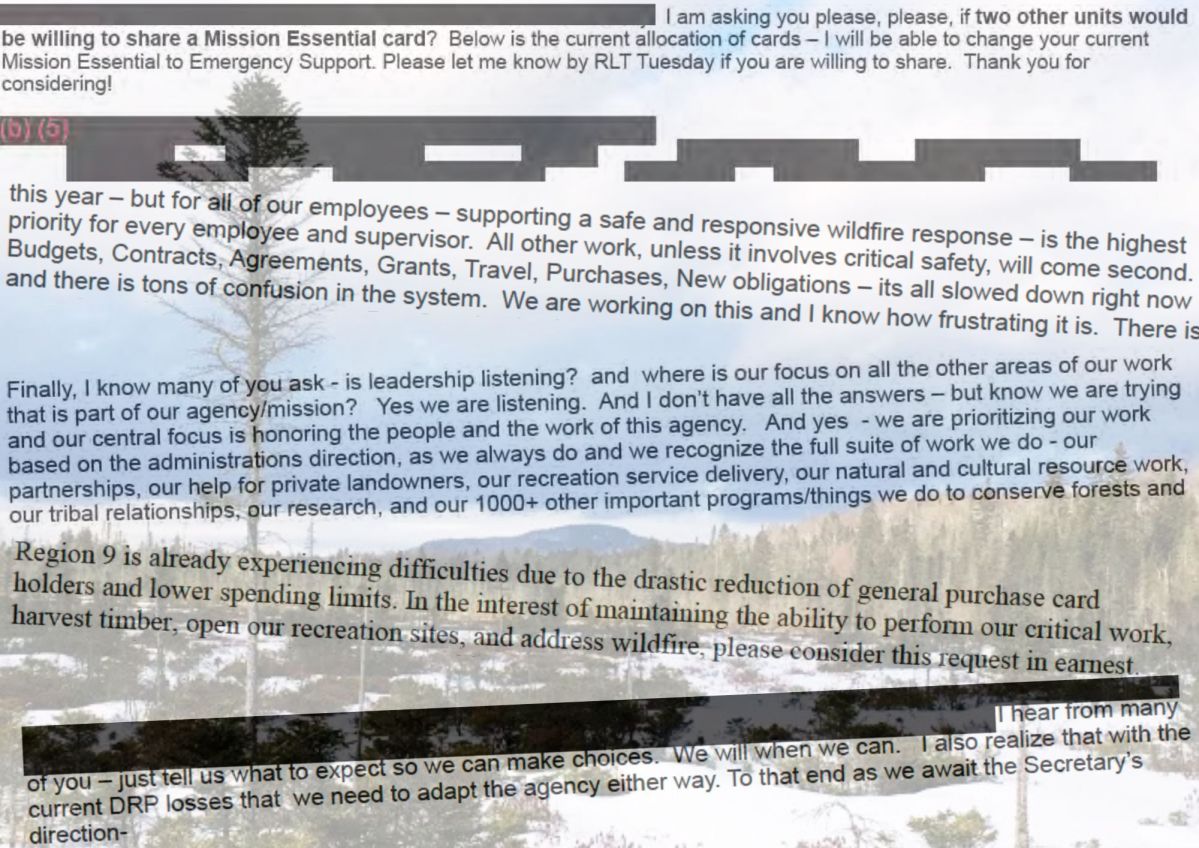
“It’s all slowed down right now and there is tons of confusion in the system,” senior Forest Service official, Christopher French, wrote in a long email to staff on May 23, 2025.
Meanwhile, the Trump administration was urging the Forest Service to concentrate its focus on emergencies, to increase logging and mitigate wildfire. The administration has also streamlined environmental reviews and cut back on public participation requirements in the process — initiatives that have left some Vermonters divided.
Forest Service staffers in Vermont worried about other work being sidelined because of the administration’s policy priorities and the slowdown in the budget process. The Green Mountain National Forest did not receive an interim 2025 budget until eight months into that fiscal year. A review of the Forest Service by Elon Musk’s Department of Government Efficiency resulted in a nearly complete shutdown on spending, leaving routine purchases in limbo, the internal records show.
The current administration’s budget request only included $2.3 billion in fiscal year 2026 and now is requesting $2.1 billion for the coming fiscal year. Congressional appropriations for the service have remained steadily above $8 billion in recent years, according to a spokesperson with the U.S. Department of Agriculture — which oversees the Forest Service.
The Forest Service in Vermont is responsible for about 400,000 acres split between two large swaths that stretch along the Green Mountains in southwestern and central part of the state. Part of the workers’ role is to tend to popular sites like the camping area at Silver Lake in Addison County, the Blueberry Lake mountain bike trails in Warren or the Battenkill fishing access area in Manchester. The forest is also a resource for timber sales and a living laboratory for scientific research.
French wrote last year in the email to staff that “things seem to change daily” and that everyone in the agency was working with fewer people and in a “rapidly changing situation.” French acknowledged federal workers’ concerns with the lack of focus on other areas of the agency’s mission such as research, natural resource management and recreation services amid the national directives.
Now, Vermonters are starting to see the impacts of those changes at the Forest Service unfold through delayed and downsized projects on Vermont’s federal lands like stream restoration. The agency’s tighter purse strings may also lead to hikes in fees for Vermonters accessing federal recreation sites.
Vermont’s U.S. senators, Bernie Sanders and Peter Welch, have decried the staffing cuts and cutbacks on research. Sanders said the service should “protect our public lands and the employees who show up every day to care for them,” in an emailed statement to VTDigger.
Forest Service Chief Tom Schultz was called on June 2 before a Senate agriculture subcommittee covering forestry to answer questions from lawmakers about the agency’s reorganization. At that meeting, Welch acknowledged that a proposal to shut a Forest Service research center in Burlington may bring efficiencies, but said the partnership between the Service and the University of Vermont researching local forest and invasive species in Vermont is vital, and “to save a dollar, you may lose a forest.”
For Schultz’s part, he responded that no closure plan is final; staff and research is not being slashed but cost saving measures are necessary.
Shifting Landscape
Records show the Forest Service leadership overseeing Vermont scrambling to understand the shifting landscape of funding and work capacity.
In the lengthy May 2025 email to staff, French wrote, “I don’t have all the answers — but know we are trying and our central focus is honoring the people and the work of this agency.” He also told staff, “We are prioritizing our work based on the administration’s direction, as we always do and we recognize the full suite of work we do.”
One former Forest Service worker in the Green Mountain National Forest, Tami Schroeder, told VTDigger that she resigned in 2025 after struggling with the unsettled atmosphere inside the agency and an “absolute lack of information” from management to staff. Often even leaders at the Green Mountain National Forest were not in the loop on the rapid changes, she said, adding that “there was no one that was able to help soften those blows.”
Overall, Vermont saw a loss of 25% of its U.S. Department of Agriculture workforce, including Forest Service, during the first half of 2025, mostly through a program that allowed agency workers to resign but maintain benefits and pay while on administrative leave, according to an Office of the Inspector General report.
The report says the Forest Service lost over 5,000 workers nationwide in the first half of 2025, or 16% of its workforce, after mass layoffs in February 2025 and several rounds of the resignation program.
In response to questions from VTDigger, the USDA spokesperson wrote that “the Green Mountain National Forest continues to provide essential services and is actively managing staffing to meet community needs.”
The U.S. Forest Service Eastern Region did not receive an interim budget for fiscal year 2025 until June, four months before its fiscal year closed, which allocated $2.6 million specifically to the Green Mountain National Forest and the Finger Lakes National Forest in New York, according to the internal documents.
When it announced the budget, the Forest Service said its objective was to align with the administration’s priorities, urging spending at the agency to focus on timber harvest, wildfire prevention and disaster response. In a statement to VTDigger, a USDA spokesperson said the slowdown in Congress passing an appropriations bill meant national forests received funding “much later in FY 2025 than usual.”
As the administration’s directives played out, it tied the agency’s hands by slashing the number of agency workers who had purchasing authority — purchase card holders — making it difficult for Forest Service workers to carry out the agency’s work on the ground, the documents show.
Non-emergency purchases were temporarily frozen, and spending caps were zapped to $1 as part of the DOGE effort to eliminate any “wasteful spending,” according to records from March 2025. Appropriate emergency spending during that time included feed for research animals and items addressing wildfire, bird flu and disaster recovery, according to the documents.
By April 2025, the Green Mountain National Forest had only two purchase card holders for emergencies, and there was also only one “mission essential” card holder overseeing four national forests in Vermont, New York, Pennsylvania, New Hampshire and West Virginia, according to an email to Forest Service leadership on April 7, 2025 from Antoine Dixon, a now retired senior forester with the Forest Service’s Eastern Region.
The Eastern region “is already experiencing difficulties due to the drastic reduction of general purchase card holders and lower spending limits,” Dixon wrote. Additional spending power was “most necessary” for four forests including the Green Mountain National Forest and Finger Lakes, he wrote.
Originally, the Eastern Region had over 350 staffers with purchasing authority. The Forest Service was told to cut spending authority, resulting in an 80% reduction in the number of purchase card holders in March 2025. In that process, the region was told to categorize remaining card holders into categories involving spending related to emergency responses to wildfires and disaster or purchases that if left unmade would impact the agency’s mission or basic operations, according to Forest Service documents.
The directive left some agency officials pleading their case. In a June 9, 2025 email, Stephanie Carman, an official in the Eastern region, asked for help: “please, please would two other units be willing to share a Mission Essential card?,” she asked in an exchange with other leaders. The mandate also came without a clear explanation of the categories or use of cards, and some card holders’ purchasing authority was “never actually turned on,” Carman maintained in another email.
After the Forest Service made a request for more workers with purchasing authority, the Department of Government Efficiency and the U.S. Department of Agriculture reinstated 1700 purchase card holders, less than half of the 4000 requested by the Forest Service, according to a slide deck from May 30, 2025 that was included in the documents obtained by VTDigger. That included over 250 card holders for emergencies like wildfires, for instance, and 10 card holders whose purchases were deemed to be essential to the mission in the Eastern Region, which spans from Eastern seaboard to Minnesota and Missouri.
In response to questions from VTDigger about the documents and recent culture at the Forest Service, the USDA spokesperson said that the records show isolated incidents of the Forest Service adjusting to internal changes, and do not reflect ongoing concerns.
“Temporary stress points can occur as employees adapt to new requirements and a new way of doing business,” the spokesperson wrote.
Making do with less
Now, a Forest Service research center in Burlington is currently under the threat of closure, along with more than 50 other offices across the country, as part of a national effort to reorganize the Service operations and move headquarters out west to Utah announced in April.
The proposed closure is not final and the agency would relocate scientists, not eliminate jobs or research programs if the Burlington facility shutdown, according to the USDA spokesperson.
“We are taking a hard look at the cost of each facility, its utilization, and its deferred maintenance needs while supporting our people,” the spokesperson wrote.
In a letter last month, the National Association of Forest Service Retirees expressed qualms about the reorganization plan, including its justifications, staffing impacts and how it would affect the service’s ability to carry out its mission.
The closure of research sites could jeopardize research projects aimed at improving forest health, and the divestment away from research on the natural biological sciences lead to a “brain drain” with lasting consequences on the state and country, said Bill Keeton, a University of Vermont forest ecology and forestry professor, during testimony to the Vermont House Committee on Agriculture, Food Resilience and Forestry on May 12.
One such effort that may be impacted by the closure is elm tree restoration research that the Forest Service and The Nature Conservancy have worked on in tandem. Senior Conservation Planner with the Nature Conservancy Gus Goodwin said “I think there’s still a lot of uncertainty,” he said, adding that researchers need access to laboratory equipment, greenhouses and trees they have been studying for around a decade.
Organizations that have partnered with the Forest Service on specific projects say the reduced staff and budget delays made getting funding harder, limiting the scope and timeline of work.
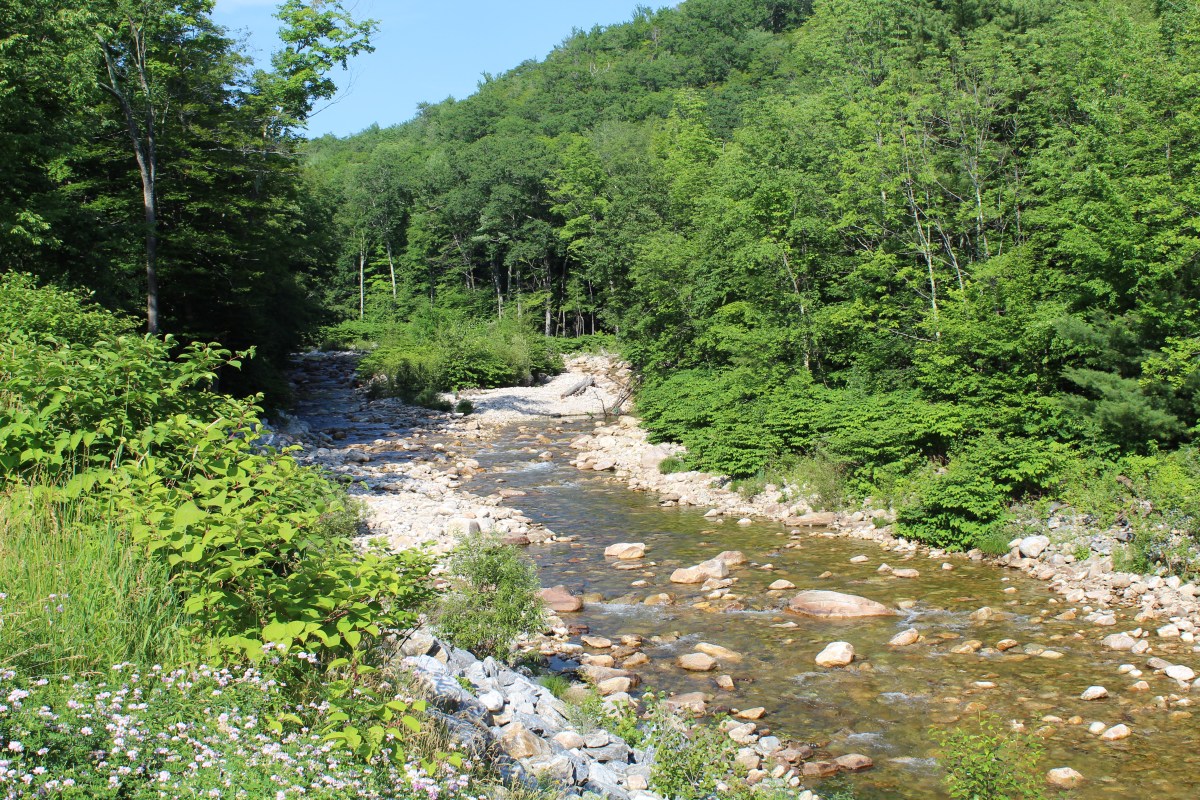
Erin Rodgers, a program manager with Trout Unlimited’s Eastern Region — which works with the Forest Service on stream restoration in the Green Mountain National Forest — said the scarcity of federal funding for the Forest Service has forced the organization to cobble together funds from several sources for projects such as replacing drains in rivers that interrupt the normal flow of a river and help prevent fish from moving downstream. It has also shifted its focus to less expensive projects like placing logs and woody materials in streams to slow down the flow of water and help reduce erosion, Rodgers said.
“We had a lot of really good years of partnership funding, and now we’re a little bit more hard pressed to find creative ways of either changing the practices that we’re doing on the forest land with the Forest Service, or just finding different ways to fund those kinds of projects,” Rodgers said.
Schroeder, who worked in the Land Acquisitions Program, said the reining in of card holders and the temporary spending freeze slowed down the process of closing on land or making small purchases. This affects land conservation partner organizations that are paying property taxes on parcels for an extended period of time with the intent of selling the land to add to the Green Mountain National Forest, Schroeder said.
For their part, the USDA spokesperson wrote that project timelines with partners fluctuates year-to-year for a variety of reasons including staffing recruitment, weather or wildfires, and is not exclusively due to “administrative updates,” and the Forest Service is still committed to conservation and land-stewardship work with partners.
Trust for Public Land, which focuses on conserving land for recreation and has partnered with the Forest Service, is working to fill gaps while the Forest Service is understaffed and facing internal competition for funds, said the organization’s Vermont and New Hampshire State Director Shelby Semmes. The organization has previously held onto properties — like Rolston Rest — so that the Forest Service can go through the steps and line up money to transfer the land to the national forest, said Semmes.
Semmes says she believes nonprofits can play a role, if they have the funding capacity. “Agencies are slimmer than they were in prior years,” she added.
Correction: A previous version of the story misstated the dollar amount that Congress appropriated for the Forest Service in recent fiscal years.