


The U.S. Forest Service announced Thursday that it plans to close its research and development office in Burlington as part of a national reorganization.
The office, based in the University of Vermont’s George D. Aiken Forestry Sciences Laboratory, employs five full-time researchers, according to Carol Adair, the university director of the lab.
“They’re a huge part of the research community, so it’s a big loss,” Adair said.
Peter Newman, dean of the University of Vermont’s Rubenstein School of Environment and Natural Resources, said in an emailed statement that the school is still working to understand the impacts of the restructuring on the lab.
“Our relationships with Forest Service staff, locally and across the nation, are mutually beneficial: Their work protecting forest ecosystems has inspired many students to pursue this work in their careers,” he wrote. “And when forest managers and UVM scholars work together, our research helps to advance land management efforts and protect the forests for generations to come.”
U.S. Forest Service officials did not respond to a request for details about the effects of the closure on the lab before publication time.

Burlington is one of more than 50 research and development locations the forest service is closing, according to its website. The forest service also plans to move its national headquarters from Washington, D.C., to Salt Lake City, Utah.
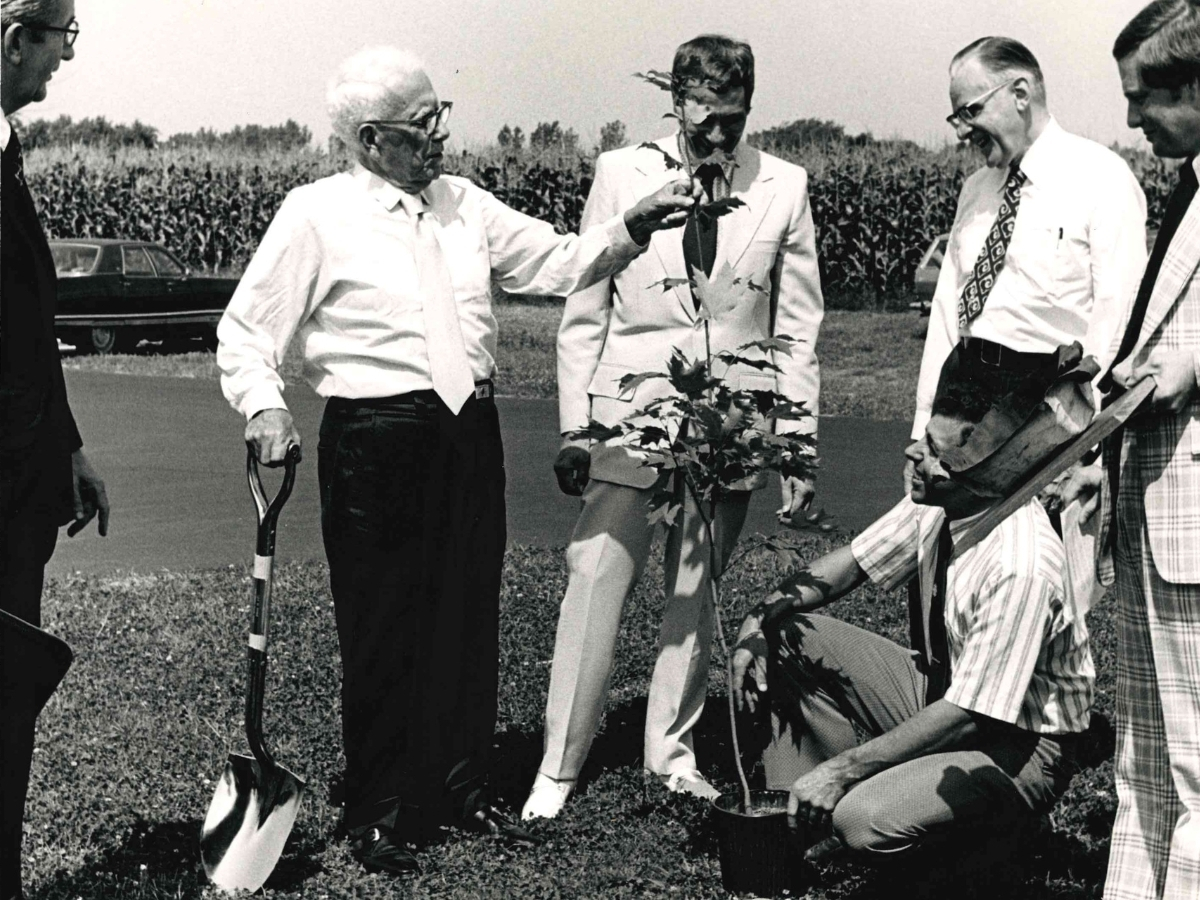
The forest service built the 12-acre Vermont lab in 1973 to house the Northeastern Forest Experiment Station, which studies Northeastern forestry and ecology, according to the lab’s website. Over the decades, the forest service researchers conducted research on topics like maple syrup production, forest health and the effects of acid rain on different tree species.
In 2013, the forest service transferred the lab to the University of Vermont. Adair said researchers from the two organizations have often collaborated. For example, Adair co-published a paper with a now-retired researcher, Paul Schaberg, on the connection between climate change and soil.
Adair said that the forest service has also produced some of Vermont’s most prominent forestry experts. Schaberg’s former student researcher, Josh Halman, is now the head of forest health at the Vermont Department of Forests, Parks and Recreation, she said.
The forest service said in a press release that the closure of research locations and the change in its headquarters’ location would “move leadership closer to the forests and communities it serves.”
“President Trump has made it a priority to return common sense to the way our government works,” Secretary of Agriculture Brooke Rollins said in the press release. “Moving the Forest Service closer to the forests we manage is an essential action that will improve our core mission of managing our forests while saving taxpayer dollars and boosting employee recruitment.”
But environmental advocacy groups are concerned that the headquarters’ relocation to Utah, a more conservative state, is part of a broader shift away from conservation of public lands.
Zack Porter is the executive director of Standing Trees, a Vermont group that works to protect and restore public forests. He said there has been an “all-out war” on federal agencies under the Department of Government Efficiency cuts, and that “has not spared” public land agencies like the forest service.
“It’s a sad day for this really important federal agency that takes care of some of our most important landscapes in the country,” Porter said.
He said that “setting the forest service up for failure” was a “ticket to the privatization of public resources” that has been a longstanding strategy of the Republican Party.
“Anti-government, pro-private property, pro-resource extraction industries and advocates have been pushing for a long time to dismantle and defund key government functions and agencies,” Porter said. “If we want these lands to stay in public ownership, and we want these resources to be stewarded for the benefit of future generations, we need to maintain public ownership, and we need to maintain support for our federal agencies.”
