

When 2025 ended, so too did Vermont’s eight-year experiment in systemwide health care payment reform.
Now as the state looks to what comes next in health care reform, one proposal working its way through the Legislature aims to incorporate the lessons from that past experiment.
The vision behind the “all-payer model” sought to align insurers and health care providers in a payment system that moved away from a fee-for-service model and instead incentivized preventive care. It strived to focus providers on meeting benchmarks for care quality and cost.
At its outset, the idea was hailed as a great experiment and a reason to hope for genuine reform of the state’s health care system.
But as the experiment waged on, the gap grew ever wider between what Vermonters expected from the model — and, in particular, from OneCare Vermont, the accountable care organization at its core — and what the concept and the organization were able to actually deliver.
Now the state’s agreement with the federal Centers for Medicare and Medicaid Services has sunset with the end of 2025, and OneCare Vermont remains open only in skeletal form less than a decade after the agreement between Vermont and the federal government launched in 2018.
So after seven years and nearly $100 million dollars invested in this grand experiment, where does its conclusion leave Vermont?
Primary Care Payments
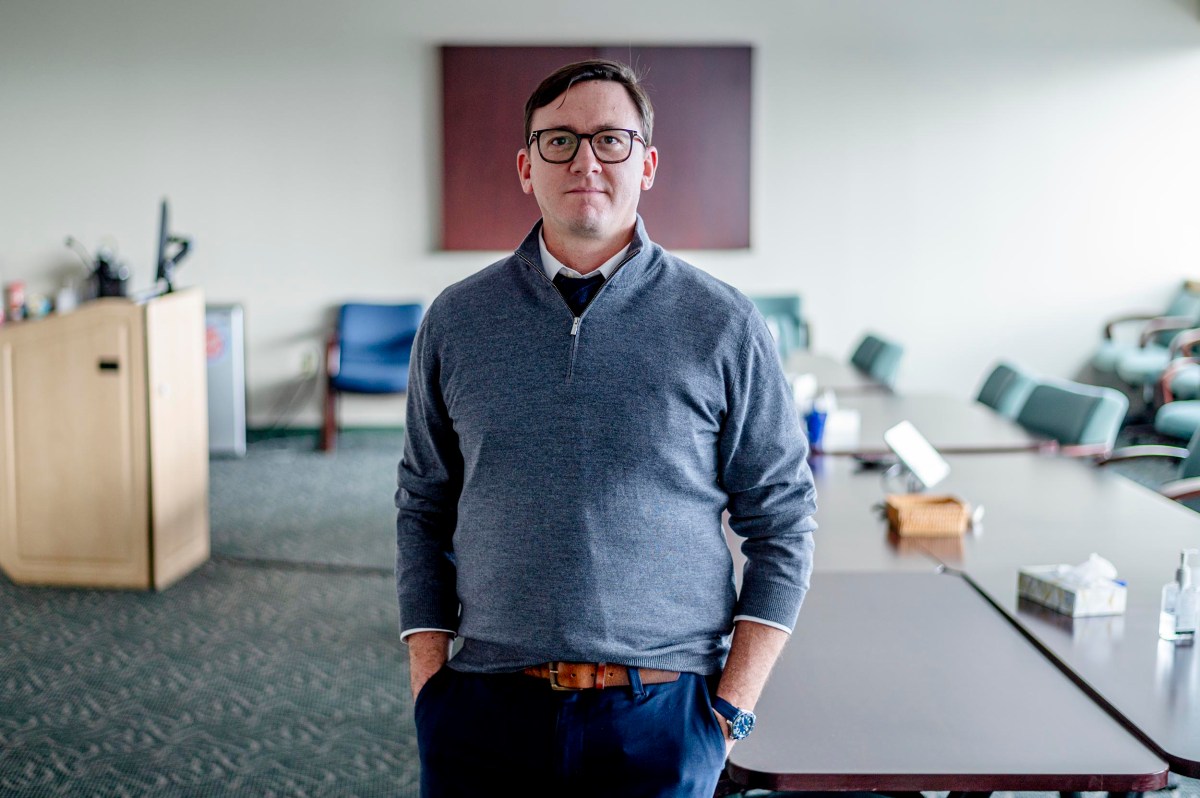
Tom Borys, OneCare’s CEO, sat in front of the Senate Health and Welfare Committee at the end of January, urging lawmakers to learn from the lessons he gleaned at the helm of Vermont’s payment reform project.
Specifically, Borys drew parallels between OneCare’s Comprehensive Payment Reform program (cheekily called CPR) and one of the committee’s flagship bills this year, S.197. Like the CPR program did, the bill reimagines primary care payments. Instead of paying primary care doctors for each service they provide, the bill proposes paying participating primary care providers a fixed monthly sum. The hope is that the payment method can incentivize better population health rather than creating a payment incentive for patients to seek care only when they are so sick they need medical treatment.
“The goals of the CPR program — I think they’re very germane to this bill,” Borys told lawmakers in January.
“I think that this is great, clearly. CPR is a program I still care about a lot. It did a lot of really good things for independent primary care practices,” he continued. “But I also just want to shed some light on the administrative effort it is going to take to make this a success.”
The primary care program was just one piece of OneCare’s broad payment reform effort, and the administrative lift the entire accountable care organization required was just one of the challenges the organization faced. However, the model’s year-end sunset and the Legislature’s renewed interest in fixed primary care payments are reigniting interest in better understanding the legacy and lessons of the all-payer accountable care organization.
“I know that there are mixed opinions about OneCare Vermont and its successes through time,” Borys told VTDigger in an interview late last year, “but I hope that as we advance as a state, we, at some point, look backwards and learn from this experience.”
Looking backward to all-payer’s origins
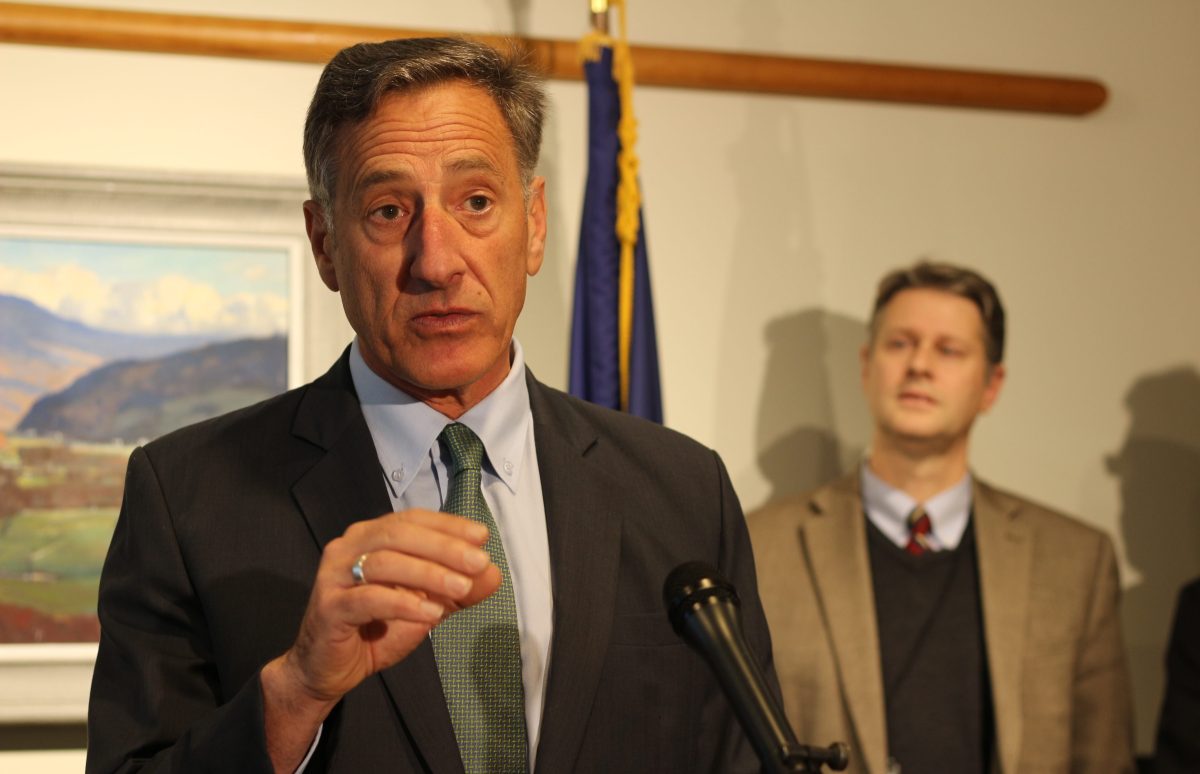
To understand OneCare and the all-payer model, the full story begins back in the early 2010s, when Gov. Peter Shumlin and state lawmakers were striving to make Vermont the first state to institute universal health care. By 2014, that effort was dead, but the conversations with federal Medicare administrators to facilitate the transition to a single-payer model took on new life in exploring alternatives.
Specifically, the newly established “shared savings” programs, which the Affordable Care Act created, opened up a potential for Vermont. In these programs, networks of health care providers form accountable care organizations, or ACOs, that agree to meet standards of patient population health for a certain agreed-upon cost.
In Vermont, new laws required health insurers to share claims data with the state. Both the local law and the rise of ACOs created crucial prerequisites to the all-payer model.
In an ACO, an insurer pays providers a set amount per patient in the network, rather than a traditional fee-for-service model. If, in an ACO, providers successfully reduce the cost of care without worsening population health, providers could keep the difference as a financial reward.
A traditional ACO model is meant to incentivize doctors and hospitals to prioritize preventive, earlier care. Overall, it is much less expensive for a patient to get frequent screenings for melanoma, for instance, than to treat skin cancer that has been allowed to progress undetected.
As the Shumlin administration began developing its plans, the Medicare shared savings program began gaining traction around the country. State agencies administering Medicaid also began to offer similar arrangements.
At the time, Vermont already had three ACOs, including OneCare Vermont, a hospital-led group of providers and the largest of the state’s ACOs.
The three ACOs were already participating in the Medicare-only shared savings programs. Policymakers in the Shumlin administration saw an opportunity to build on that model by broadening participation to, well, all payers across the state — the state-run Medicaid program, commercial insurers and Medicare. For the federal Medicare program to participate, the state needed to secure its “all-payer” agreement with the federal insurer.
As early as 2015, state leaders believed one primary ACO should lead the project. OneCare, which started as a for-profit entity in 2013 by University of Vermont Medical Center and Dartmouth Hitchcock Medical Center, filled that role.
Leaders in the other ACOs were skeptical that an organization led by hospitals would be able to successfully shift care out of hospitals.
The way to reduce costs in the state, all parties agreed, was to improve access to high-quality community-based primary and preventative care. In testimony before the Vermont Legislature’s Health Reform Oversight Committee in fall 2015, leaders of the state’s community-based providers wondered why the state was leaning on a “hospital-centric” ACO to lead that effort.
All — or some — payers
Meanwhile, a lawsuit filed by Liberty Mutual Insurance Co. against the state started making its way through federal appeals courts. The case, Gobeille v. Liberty Mut. Ins. Co., challenged the Vermont law requiring that private insurers share claims data with the state. A U.S. Supreme Court decision in the insurer’s favor set a precedent nationwide: Most employer-sponsored insurance plans were governed solely by federal law and, thus, did not need to comply with Vermont state law.
The decision meant that participation by private insurers became voluntary. With it, only some payers were opting into the all-payer model. In essence, the decision short-circuited the all-payer plan before it even began.
With so many Vermonters receiving their insurance through their employer, the decision meant that a significant number of patients were no longer enrolled in OneCare, and the participation targets that the federal agreement set became all but impossible.
Still, from 2018 to 2020, OneCare managed to grow rapidly, according to Borys. The organization contracted with additional health care providers across the state, and by early 2020, nearly half of Vermonters saw a provider in the ACO, he said.

That progress staggered to a halt as the Covid-19 pandemic set in and providers struggled financially, with either a deluge or a dearth of work.
“We really pushed pause on a lot of the standard quality improvement efforts or cost control efforts and shifted to supporting providers however we could,” Borys told VTDigger.
He saw 2023 as the first “normal” year back, but by then, the organization had already begun to face scrutiny from regulators and state officials.
Borys saw some of the challenges that the organization ran into as issues of all-too-high expectations on the heels of hopes for a single-payer model.
“There was a lot of excitement around the all-payer model when it first came out,” he said. “We were excited too.”
“I think if I could go back, we would speak about this work a little bit differently and define what we’re trying to accomplish, as well as the magnitude and what it would mean for everybody, a little bit differently,” Borys said. “It was hard to do. It still is hard to do, to talk about what accountable care organizations are and how they work, but I do think we could have spoken a bit more plainly and specifically about our goals.”
The ACO’s operating costs were likely higher than the health care savings it was generating, according to a May 2024 memo from the Green Mountain Care Board, which regulated OneCare. The memo’s authors caveat the complexities of measuring savings against a hypothetical projection of what health care spending could have been, especially as the Covid-19 pandemic significantly drove down the amount of care people sought. They also noted the challenges of incorporating a metric for the quality of care patients received as represented by these dollar amounts.
Still, OneCare’s administrative expenses totaled $70.35 million from 2018 through 2022, according to the memo.
One projection, measuring the insurers’ spending against their targets, suggests that care in the ACO model cost $42.28 million more than it would have without it; without the dampening effect of the Covid-19 pandemic in 2020, that number may have been closer to $89.56 million, the Care Board memo authors found.
However, a different analysis of the operating expenses compared to the savings sent back to the participating providers found that the program did save $18.23 million. But, if that analysis had excluded 2020, the authors estimate it would have still cost the system $32.38 million.
Yet another measure, of the Medicaid contributions toward these foundational OneCare expenses compared to the savings it brought the health coverage program, does suggest that the program actually saved Medicaid $21.43 million.
A 2021 report from Vermont’s State Auditor Doug Hoffer generated waves when his office found Vermont Medicaid spent over $25 million more on ACO operations between 2017 and 2020 than it would have in a traditional fee-for-service model.
Even though Medicaid patients were less than half of the patient population under OneCare, the state program took on the lion’s share of these expenses to set up the program, that report found.
Losses mount
Then, in 2023, BlueCross BlueShield of Vermont, the state’s largest health insurer, did not renew its contract with OneCare, removing 93,000 Vermonters — or one-third of those enrolled — as patients in the ACO. Medicare and Vermont Medicaid were the primary payers remaining.
For the first time, the Green Mountain Care Board cut OneCare’s budget.
At the time, BlueCross BlueShield cited concerns over patient data protections. But, its leaders also said they did not see progress on health outcomes or affordability that the ACO had meant to achieve.
They were not alone.
During a June 2023 meeting of the Green Mountain Care Board, member Thom Walsh highlighted the results of a third-party organization that measured OneCare’s performance against comparable ACOs across the country. That report showed that emergency room visits were 36.6% higher for OneCare than their national ACO peers in 2021. Meanwhile, primary care visits were 18.7% lower than that same peer group average.
Since then, the state has continued on a similar trend. In and outside of the ACO, Vermont spent more and more on care that happens in the hospital, rather than on primary or preventative care.
In an interview with VTDigger, the care board chair Owen Foster attributed this, in part, to the relatively low risk the ACO created for its providers to take. Commercial insurers or providers in an ACO have a financial incentive to reduce the cost of care — since, they save money if the upfront premiums are lower than the claims paid out. But, the opposite is true if claims end up exceeding insurance premiums.
A narrower opportunity for risks buffered the doctors and hospitals against big financial losses but, as health policy experts generally agree, it also curbed potential bigger savings that could have come from incentivizing innovative changes to treating patients earlier and with an eye toward preventative care. The care board’s 2024 memo notes that had the ACO taken on more risk, the savings to the participating providers could have been bigger.

This inability to take risks actually left money on the table that the state could have brought in from Medicare (federal dollars), Foster said, while Vermont Medicaid (state money) ended up footing the majority of the bill for setting up the program.
Among the financial losses from the costs for Vermont Medicaid, the state also needed to regulate the ACO and pay a contractor to analyze data each year — and will continue through 2026, even after the ACO has closed.
The Green Mountain Care Board’s 2024 memo said that the state pays the private analyst firm Mathematica $1 million each year to comply with a reporting requirement under the federal all-payer agreement. By the end of fiscal year 2026, the state will have paid the company $7 million for these analyses.
But, even more than the dollars the state lost on the program, Foster sees a real loss in all the time the state’s experts have spent investing in the program over other health care reforms.
Yet, throughout the all-payer experiment, the state was reluctant to jump ship, bound by a pair of golden handcuffs in the form of two big federal funding programs. As part of Vermont’s agreement with Medicaid, the state received $42 million from the federal government as part of the All-Payer Model for Blueprint and SASH, programs designed to support primary care and at-home care.
Worsening health outcomes
Worse yet than the financial losses, some argue that the all-payer model actually worsened Vermonters’ health and even cost lives.
Robert Hoffman, a public health advocate and now a professional mental health counselor in Pennsylvania, had long been a critic of OneCare. He had been hired by the organization in a short-lived role doing data analysis. While there, he has said, he saw data on health outcomes that seriously concerned him. He raised the alarm and was subsequently laid off from the organization, prompting a years-long wrongful termination suit, which was ultimately settled.
Hoffman maintains that life expectancy dropped for those in the all-payer model, and that more than 20,000 people died prematurely between 2017 and 2025, though others have not been able to substantiate that claim. (Hoffman’s estimate includes patients from New York, Northern Massachusetts and New Hampshire who sought care in Vermont.*) He argued that the payment reform model led to less access to treatment and to care rationing — especially around hypertension-related diseases and substance use disorders.
He does not feel any one actor, the hospitals, the state or even the ACO itself are to blame for what he sees as the model’s failure, but he fears that Vermont will not learn from its past mistakes as it moves into the new, post-all-payer future, he told VTDigger this fall.
Moving Forward
When discussing the lessons Vermont can heed from the all-payer model, Foster said to focus on the fundamental building blocks of health care, rather than sweeping solutions.
“We have these sort of panaceas that (we think) are going to fix everything, and I just don’t know if it’s realistic,” he said. “I think we need to really build the bridges and the roads and the basics of health care and not think that some payment change is going to really solve everything. In our health care reform, we need to think about the fundamentals.”
The fundamentals, he said, are things like investing in screenings, primary care, substance use disorder treatment, mental health care — services that intervene earlier, and outside of hospitals.
Through the end of the year, OneCare will continue its staged wind down, finalizing its layoffs and data offloading.
“My hope is that OneCare’s legacy certainly serves as a launching point for people to pick up where we’re leaving off, and carry the baton from there,” Borys told VTDigger.
Now, with its bill focusing on primary care payments, the Legislature is aiming to do just that by focusing on the small slice of care outside of hospitals.
“This is the next step for health care reform,” Sen. Ginny Lyons, D-Chittenden Southeast, who chairs the Senate Health and Welfare Committee and sponsored the primary care bill, said. She cited the oft-referenced statistic that for every dollar spent on primary care, $13 are saved from being spent on inpatient or emergency department care. She is optimistic that taking on primary care, rather than the whole health care system, will be essential to the program’s success.
Borys, too, remained optimistic when speaking to lawmakers about the goals of the program. Still, he urged them to heed all that he’s learned and cautioned against reinventing the payment-reform wheel with a new plan to try to make health care more affordable and accessible.
“I think a universal truth with payment reform, and many cases in life, is that you solve one problem, you create another,” he told lawmakers. “Sometimes the new problems are better. Sometimes they’re worse. Sometimes you don’t know yet.”
Correction, March 13: An earlier version of this article mischaracterized the people Robert Hoffman estimates to have prematurely lost their lives in the all-payer model.
