


Should Vermont businesses be allowed to operate “cash free?”
It’s a question lawmakers in both chambers have taken up this year as they consider bills that would prohibit retailers from taking cards or electronic payments only. Proponents say that the measure would help ensure access to key goods and services for people who aren’t able to hold a bank account.
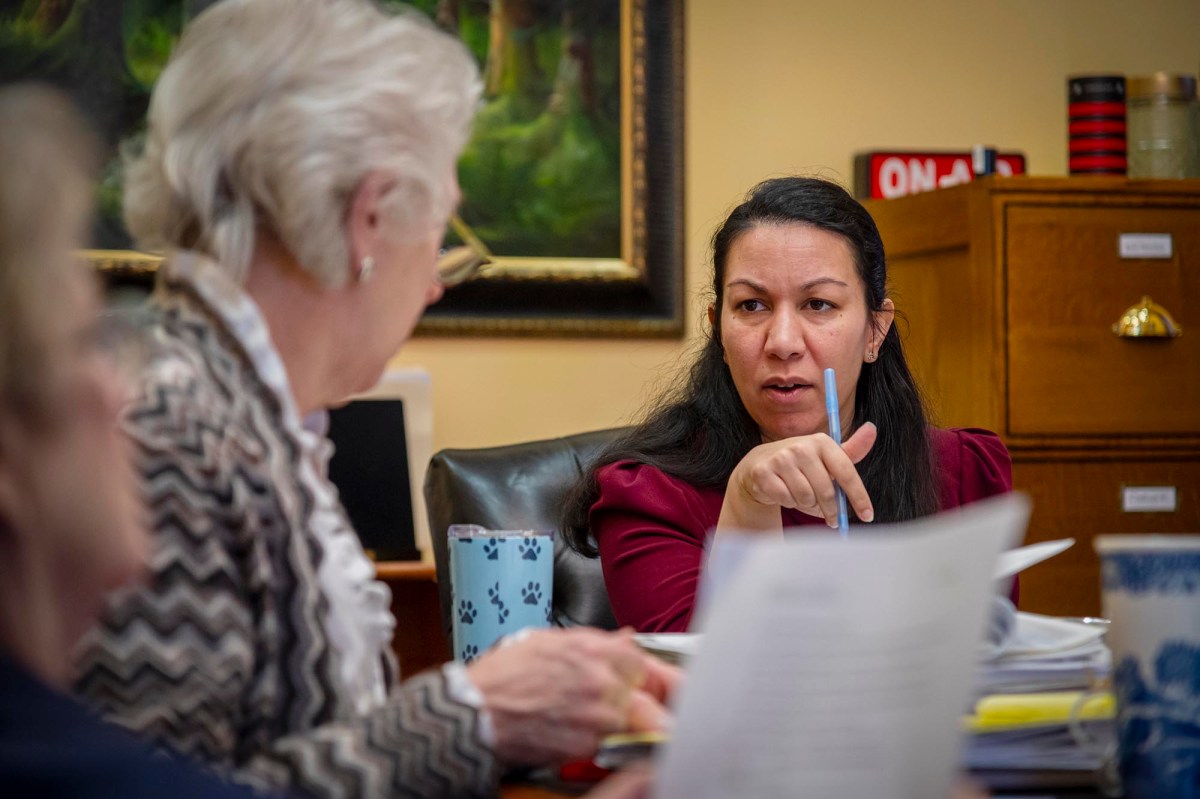
The Senate Economic Development, Housing and General Affairs Committee took testimony on the Senate version of the bill, S.175, Wednesday morning. The one-page bill states that retailers “shall not refuse” to take cash unless a transaction exceeds $1,000, and that a retailer who violates this provision would be charged with committing an unfair business practice.
It wasn’t clear from Wednesday’s hearing how many Vermont businesses have nixed cash payments in favor of cards, and committee members said they plan to hear from retailers at a later date. Some Vermont ski resorts have adopted “cashless” operations, senators said.
Sen. Kesha Ram Hinsdale, D/P-Chittenden Southeast and the panel’s chair, said that lawmakers had heard from several “people who are passionate” about preserving cash use. Another senator said she’s concerned about store employees who may not want to have cash on hand at night.

As the state’s Office of Racial Equity sees it, it’s important to put the requirement into place now, regardless of how prevalent cashless businesses are in the state.
Jay Greene, the office’s policy analyst, testified that the percentage of Vermonters who do not have a bank account increased at the onset of the Covid-19 pandemic. Data shows that Black and Hispanic Vermonters are more likely to fall into this category, they said, and thus would be disproportionately impacted by any business’ “cash free” policies.
“I would just encourage the committee to think about who we are protecting with this law,” Greene said. “I appreciate that retailers need to have their input on this — but for our office, it all comes back to protecting unbanked and underbanked households.”
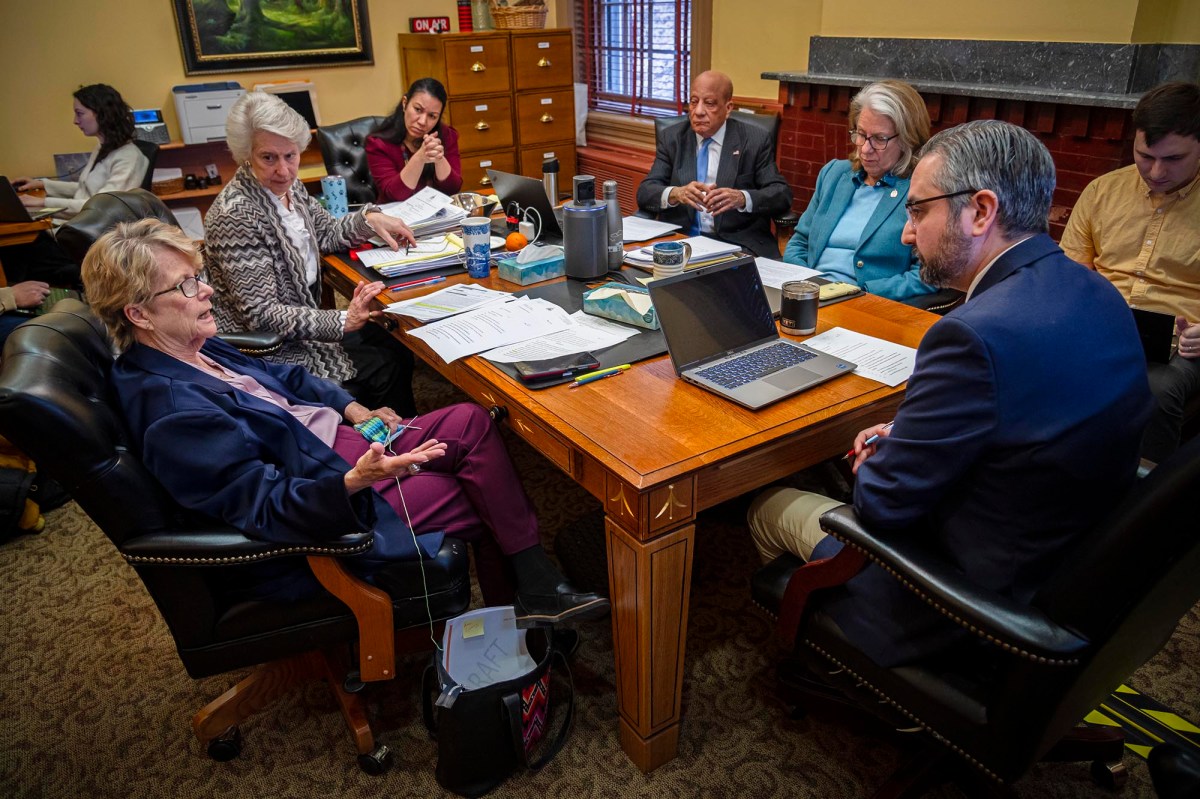
After hearing from the committee’s legislative counsel, lawmakers asked for a new draft of the bill with language that mirrors similar laws already on the books in Connecticut and Colorado. Those laws define retail operations in more detail and also do not have an upper limit on when cash must be accepted. They also include exemptions for certain types of transactions.
The Vermont House version of the bill differs from the Senate’s only in the fact that, like Connecticut and Colorado, it does not include the $1,000 cap. But House lawmakers plan to put their bill aside — assuming that they get the Senate’s version after crossover.
— Shaun Robinson
In the know
Before lawmakers descended on Montpelier in January, they appeared poised to make sweeping changes to Act 250, the signature land-use law that has governed and guided development in the Green Mountain State since 1970.
Lawmakers convened this session with an influential proposal in hand, calling for loosening Act 250 regulations on housing development in some areas and strengthening rules for building in sensitive habitats. The report — crafted by planners, engineers, attorneys and housing proponents at the Legislature’s request — represented a delicate compromise between two camps historically at loggerheads over the law: those seeking stronger environmental protections and those pushing for housing and economic development.
The report was light on details, though, and left plenty of room for lawmakers’ interpretation. They have responded with a spate of bills aimed at tackling Act 250 reform. Some place more emphasis on lowering barriers to housing development; others focus on bolstering ecosystem preservation.
As lawmakers approach a key mid-March deadline — when bills must cross from one chamber to the other in order to advance — the path forward for major Act 250 change looks murky.
— Carly Berlin
Lawmakers watered down a sweeping health care bill last week, replacing a provision that would expand access to Medicaid for many Vermonters with a study.
As initially written, the bill, H.721, would have dramatically raised the income thresholds for Medicaid over the next five years, likely making tens of thousands of Vermonters newly eligible for publicly funded health insurance.
But last week, the House Committee on Health Care removed that language, instead assigning the Agency of Human Services to complete a “technical analysis” of the prospect of expanding Medicaid.
— Peter D’Auria
On the move
The Legislature is moving quickly to advance this year’s Budget Adjustment Act to the governor’s desk, amid growing concerns from housing advocates over changes being made to the state’s emergency motel housing program.
A conference committee of three state senators and three representatives have been hammering out for weeks discrepancies between the Senate and House versions of the spending package, which balances the state budget for the current fiscal year ending June 30. Late Tuesday night, the six appointees signed off on an agreement that, for the most part, conforms with the Senate’s version of the package, as passed earlier this month.
“I would say they followed the Senate version, which was more palatable from my perspective,” Republican Gov. Phil Scott told reporters at a Wednesday press conference, shortly before the Senate voted to concur with the committee’s negotiated package.
“I haven’t looked at every detail of the BAA and what they came up with,” Scott continued. “But for the most part… there’s no poison pills in there that we can see, and I’ll probably sign it if there aren’t.”
— Sarah Mearhoff
After weeks of testimony and discussions, the Senate Committee on Government Operations settled Wednesday afternoon on a version of S.55, a bill that puts in place Open Meeting Law rules to replace pandemic-era state policies which are set to expire this summer.
The committee unanimously approved forwarding what might be called a “soft” hybrid requirement. Public state bodies, except advisory boards and the Human Services Board, would be required to hold hybrid meetings. Local public bodies, such as select boards, would not.
Local bodies, however, would have to record and upload their meetings “to the extent feasible.” And every public body, except advisory boards, would have to “designate at least one physical location.”
This version of the bill emerged as a compromise as the committee aimed to increase accessibility, while ensuring the new rules would be viable for all types of municipalities.
S.55 now moves to the Senate floor.
— Babette Stolk
Visit our 2024 Bill tracker for the latest updates on major legislation we are following.
What we’re reading
Cabot residents to vote — again — on whether to close their high school, VTDigger
The Vermont Town Meeting moderator who’s fighting for a ‘good clash,’ VTDigger
