

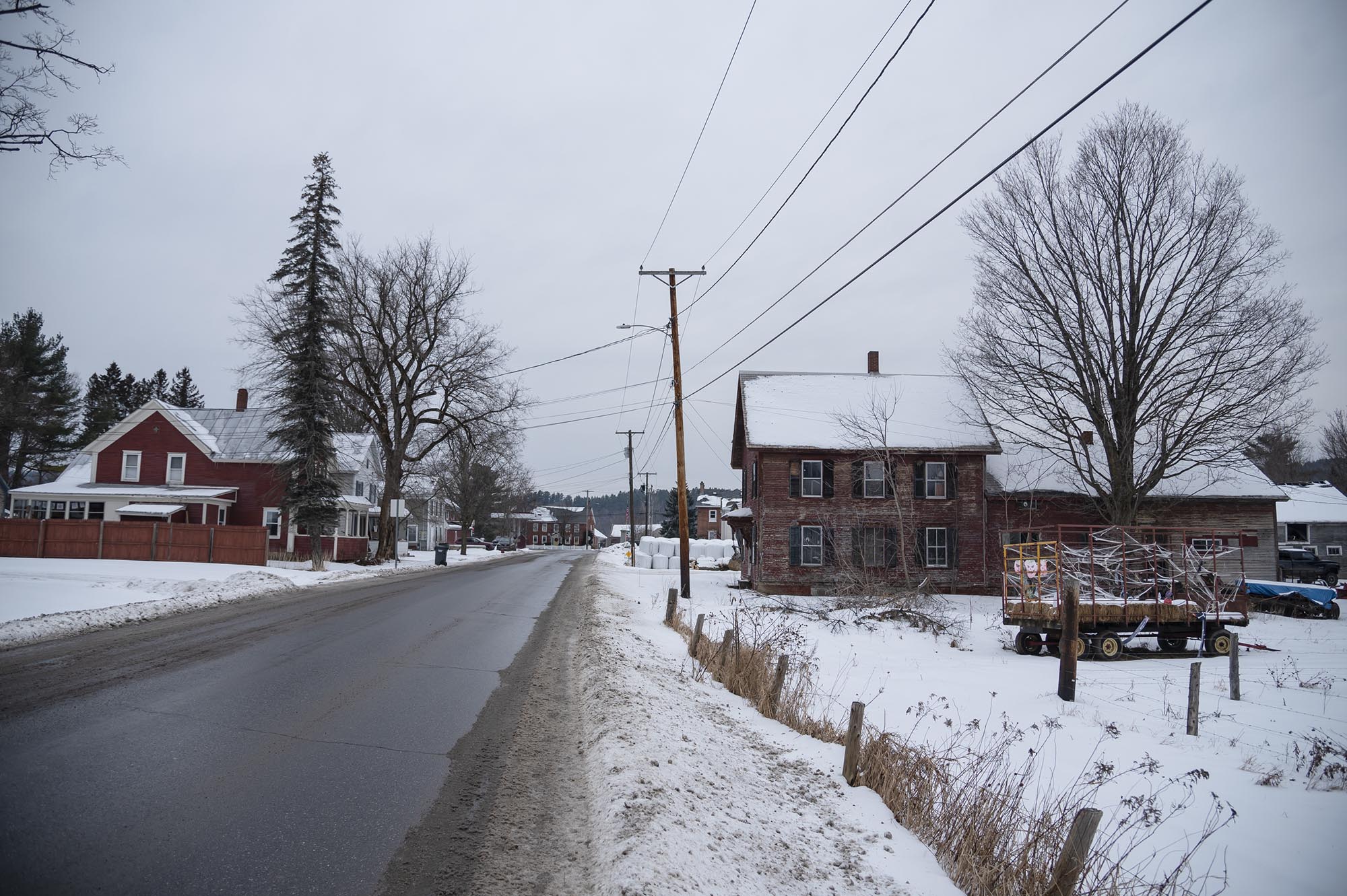
Both the Vermont Supreme Court and the Legislature are contemplating how Act 250 — Vermont’s sweeping land use law — should apply to projects located in towns with minimal zoning regulations.
A recent Supreme Court decision, which is open for reargument, would change the way Act 250 has been administered for 50 years. Rep. Amy Sheldon, D-Middlebury, introduced a bill last week that would erase the clause in the law under debate, which would restore Act 250’s historic jurisdiction.
The Supreme Court also heard more arguments on the Snowstone case on Wednesday morning.
When legislators enacted Act 250 in 1970, they intended to curb “unplanned, uncoordinated and uncontrolled” uses of land. Developers constructing large projects that come under Act 250 review must work with one of the state’s nine regional district environmental commissions, which weigh 10 points of criteria.
The law applies to commercial and industrial projects. Some developers say it’s a hassle to go through the motions of the act, and critics say it limits economic growth in the state, but it’s also widely credited with maintaining Vermont’s rural and wild qualities.
Act 250 divides Vermont’s towns into two categories: those with zoning and subdivision regulations and those without them. About 45% of Vermont’s towns don’t have both zoning and subdivision rules in place, according to an amicus brief filed by the Vermont Natural Resources Council.
To determine whether developers need Act 250 permits, administrators look at the zoning and subdivision regulations where developers want to construct projects and the size of the property where projects are located.
In a town with zoning regulations, developers need Act 250 permits if they’re building a project on a parcel of land that’s 10 acres or larger. Those are called “10 acre” towns.
The threshold is purposefully lower for municipalities that don’t have other ways to regulate development. For the last 50 years, in towns without zoning regulations, developers have needed an Act 250 permit if they’re building “improvements for commercial or industrial purposes on more than one acre of land,” the law says. Those are “one acre” towns.
Recently, Supreme Court Justice William Cohen interpreted that clause — “improvements for commercial or industrial purposes on more than one acre of land” — differently. In a case about a proposed stone quarry in Cavendish, he wrote in his decision that the project should need an Act 250 permit only if the footprint of the project physically disturbs more than an acre of land.
Under that interpretation, environmentalists and former administrators of Act 250 have since argued, many projects that would formerly have fallen under the act’s jurisdiction would not.
Sheldon’s bill, which legislators walked through in the House Committee on Natural Resources, Fish and Wildlife on Wednesday, would remove the clause “on more than one acre of land” from Act 250’s definition.
James Dumont, who attended the committee meeting, is representing a group of seven former chairs of the Environmental Board and Natural Resources Board, which administers Act 250. Sheldon asked Dumont whether the bill would eliminate the debate about the law’s jurisdiction in one-acre towns. He said it would. Other legislators on the committee said they’re interested in pushing the bill forward this session.
The new interpretation sparked concerns among administrators, in part, because they said it would be harder to determine whether a project fell within Act 250 jurisdiction. Rather than knowing the total size of a parcel, a developer would need to know the exact size of the project — including details like parking lots, leach fields and driveways. Developers could need civil engineers or architects to determine if a project is possible at all.
Meanwhile, some developers and architects may look forward to more freedom under the Supreme Court’s interpretation of the law.

Jesse Beck is president of Freeman French Freeman, an architecture firm that has worked on several high-profile projects, including the Waterbury State Offices, the Burlington Airport and, currently, Burlington High School.
“It does take time to go through both the local permitting process and the Act 250 permitting process, which can extend project timelines,” Beck said. “Even though it’s worked well for us, because ours are on a large scale and usually a longer timeline, it can extend that timeline.”
Other restrictions, such as the state’s wetlands rules, he said, would prevent the environmental harm that Act 250 is in place to stop. Most developers aiming to construct projects already have civil engineers to calculate the size of a project, he said.
The groups that oppose the change say the court could have reached the same decision — that the parcel where the project was proposed is smaller than one acre, and therefore did not need an Act 250 permit — without introducing the new interpretation of “one-acre towns.”
Attorneys raised that point during arguments before the Supreme Court Wednesday morning. None of the attorneys argued for the court to maintain the section of its decision related to the new interpretation of one acre towns.
Attorneys representing the Natural Resources Board, former board chairs and the neighbors in the case asked the court to reverse that part of the decision. The attorney for the Cavendish stone quarrier took no position, but said he thought “the 50 years of Act 250 jurisprudence that the amicus referred to is accurate.”
The court has not yet issued a decision.

