


Editors’ Note: The Underground Workshop is a collaborative network of student journalists from across Vermont. The Workshop is open to any student interested to participate. Our current menu of opportunities is here; for more information please contact the Workshop’s editor, Ben Heintz, at ben@vtdigger.org.
This article part of an invitational series called International Vermonters, conceived by one of the Workshop’s student editors, Rebecca Cunningham of Burlington High School, presenting profiles immigrants and refugees living in Vermont. The intention is to help Vermont residents better understand their neighbors and ultimately build community. We are seeking submissions for this series through the 2021-2022 school year.
From Syria to America: One Family’s Story
By Alec Smail, Woodstock Union High School
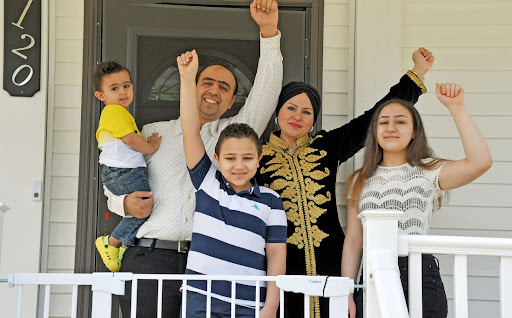
Hazar Mansour and her family had many reasons to leave. One night a bomb woke her daughter. Routinely, they would be driving and hear gunshots going off. Even the driver would have to duck down to be safe.
“In Syria, no place is safe,” Mansour said. At the start of the Syrian Civil War, in 2011, Mansour’s father was killed as he was walking home from work one day, posing no threat to anyone.
As a French teacher in Damascus, Mansour worked with six and seven year olds. She would routinely come to work and find out that one of her students had been killed.
“It was very hard as a teacher to see this happening,” Mansour said.
It was not safe for her own children either. Mansour recalls being called by her daughter’s school and told to pick her up because there was dangerous activity nearby.
Another time a bomb went off near her daughter’s school, and Mansour could feel the vibrations from her own classroom nearby. She said this was the final straw. She and her husband, Hussam Alhallak, fled with their two young children to Turkey in 2015.
“It was the right choice for our children’s futures,” Alhallak said.
Once they moved to Turkey, they faced many struggles when it came to finding a way to live. They found jobs, but wages were a problem. ”It is not enough money for a livable salary,”Alhallak said.
The Turkish government provided some help during Ramadan: a free meal for the large Syrian population after sunset when the day’s fast was over. The meal changed most days and they would all sit around and eat it together.
While in Turkey, they were waiting to hear if they would be allowed to go to the United States. Once they were notified of their acceptance, they were ecstatic. “It was a dream come true to go to America,” Alhallak said.
Except there was one problem. Mansour had called the State Department’s office to confirm that they were good to go. However, on the call she found out they were not going to Los Angeles, which was the original plan. They were headed to Rutland instead.
Mansour chuckled as she recalled having to buy winter clothes at the last minute to prepare for cold Vermont winters.
“At first I was not happy about the move,” Mansour said, “but now I tell my mother I cannot go back to a crowded place.”
Upon arriving in Rutland in 2017, they stayed with current Rutland High School Principal Greg Schillinger. Every morning Schillinger would teach them English over coffee and breakfast. After about two weeks, Alhallak and Mansour and their children, Mohammad and Layan (then 8 and 10 years old), moved out of the Schillinger household and into an apartment in Rutland. Alhallak got a job at a bakery and Schillinger regularly stopped by to say hi and see how things were going.
Alhallak was an accountant in Syria and wanted to continue to be one in America. Although Mansour was a French teacher in Syria, she decided to join Alhallak in getting accounting certification as well. Each day after work, the couple would go to the Community College of Vermont (CCV) and study from five o’clock to nine o’clock.
“Hazar helped me very much,” Alhallak said.
One day, when Schillinger was stopping by the bakery, he offered Alhallak a part-time job in the Rutland School District as an accountant. Alhallak worked both at the bakery and the school before his boss at the bakery connected him with someone at Casella’s, the waste management company.
After his interview and a couple of weeks of waiting, Alhallak got the job at Casella’s and has been working full time as an accountant there ever since.
Ironically, Mansour now has Alhallak’s old job at the Rutland School District office. “My boss is very good and very kind to me,” Mansour said, noting that her boss is very patient and her team works well together.
Despite being safe themselves, the family worries about their relatives still in Syria.
Her brother and his wife are both teachers in Damascus and they live with Mansour’s mother, who is very sick. Currently they get only two hours of electricity a day and water deliveries just once a week.
“I keep my phone with me at all times in case (my mother) calls,” Mansour said, noting that she does not know when they will have electricity to call.
Mansour and Alhallak are both studying to become American citizens.
“That is our dream, to bring (our family) over to America,” Alhallak said.
In July of 2020, they moved into a house that they helped build with the Habitat for Humanity organization in Rutland. They were connected with this program after filling out an application and agreeing to work 200 hours helping to build the house.
Even though Syria and America may seem like very different places, Mansour and Alhallak said they are not all that different, especially the people.
“When we meet people here, we feel like family,” Mansour said.
Despite differences in religion (Mansour and Alhallak are Muslims and less than one percent of Vermonters identify as Muslim), they have not found it very different from Syria.
“People are accepting of our religion, they are very curious about our religion too,” Mansour said.
Mansour gave an example of a time she was in the grocery store and somebody asked her how old you had to be to wear the hijab and how many times a day she is required to pray.
Based on their experience here, Mansour and Alhallak are very happy that Vermont will be welcoming 100 Afghan refugees.
They have some important advice for the refugees coming over.
“Learn the language,” Mansour said, “and make connections with the people here.”

