

This story was updated at 7:30 p.m.
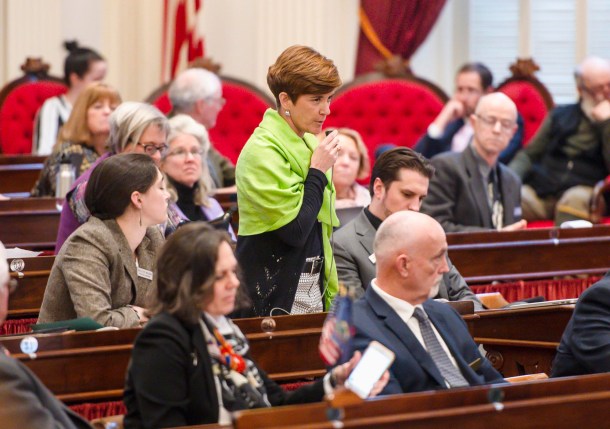
The Vermont House advanced legislation to create a statewide paid family leave program Thursday, but support for the measure fell short of what would be needed to overcome a likely veto from Republican Gov. Phil Scott.
Under the paid family leave program, which passed on a vote of 89-58, Vermonters would be able to take up to 12 weeks off of work to care for a newborn child, and eight weeks to care for an ailing family member.
The bill’s passage sets the stage for a veto override vote that could well be closer than Thursday’s, in which 10 Democrats and Progressives voted against legislation that has been a major priority for years. The legislation, H.107, drew opposition from both moderate Democrats and independents who believe the program is too costly for the state, and a bloc of left-leaning members who believe the program doesn’t offer generous enough benefits.
While support splintered on the fringes of the liberal side of the House Thursday, House Speaker Mitzi Johnson, D-South Hero, expects some lawmakers will flip their votes to override the governor’s veto.
“Making a political statement saying ‘Hey we don’t want to be ignored because we really wanted this other thing’ is really different than condemning the next two to six to eight years of new parents or people with a dying spouse … to having to just cobble something together the way people do now.”
The program would cost about $29 million, and represents a compromise reached by the House and the Senate, after they failed to agree on a paid leave policy last year.
The Senate passed the bill last week. It now goes to the governor’s desk.
It would be funded by a mandatory 0.2% payroll tax paid by employees, or employers who volunteer to offer the benefit.
“Working Vermonters should have the ability to welcome a child or care for a sick family member without fear of losing income or being fired,” said Rep. Robin Scheu, D-Middlebury, who helped write the legislation. “This bill will help boost our economy, supporting our existing workforce and attracting more people to the state.”
With five Democrats, five Progressives, four independents, and the entire Republican caucus opposing the bill, it falls eight votes short of the 100 needed to override a veto.
[See how your lawmaker voted on the paid leave bill in VTDigger’s roll call analysis.]
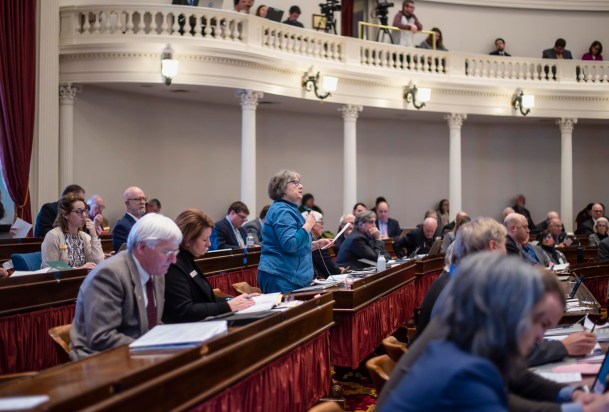
“Those of us who are opposing this bill today because we believe it does not go far enough are not purists who will not support any compromise,” Rep. Selene Colburn, P-Burlington, said on the House floor. “But at some point I think we have to ask ourselves what the cumulative impact of these compromises are.”
Democratic leaders in the House and Senate however say that a vote on a veto override requires a different calculus than Tuesday’s vote, and are hopeful the left-leaning members who opposed the bill will change their minds in the coming days.
While they may have opposed the bill Tuesday, whether they would actually be willing to stand in the way of a paid family leave program becoming law is another question.
“I think today’s vote was about people’s ideals and that’s very different than an override vote which is about whether or not we can help Vermont families move forward with major life events,” Johnson said. “Nothing is over till it’s over in this building.”
Rep. Robin Chesnut-Tangerman, P-Middletown Springs, who leads the Progressive caucus and voted against the bill Thursday, agreed if Scott strikes down the bill, Progressives will have to use a “different calculus” when considering their votes.
“So this was a clear majority,” he said of Thursday’s vote. “And I think there’s a legitimate question for me about, ‘Should the governor be able to veto something with a clear majority of 89?’”
Among the Progressive caucus’ chief concerns with the legislation is the Senate’s decision to strip temporary disability insurance from the bill.
The House’s version of the bill last year would have included the insurance, which allows workers to take time off for personal medical issues.
But to bring down the cost of the program, the Senate made the personal insurance coverage optional — meaning workers have to voluntarily pay extra if they want to receive it.

“Think about the absurdity of a paid leave program that tells a person that they can take paid time off to care for their spouse with cancer, but the person afflicted can’t take the paid time off to care for themselves,” said Rep. Randall Szott, D-Barnard, who has helped lead the effort to oppose the paid family leave bill.
House Republicans voted against the bill in unison. Many in the party said that they would have supported the governor’s paid family leave proposal, which would have made the program voluntary, and not a requirement, for workers or employers to pay into.
“I think we would be very wise to pursue that option, instead of digging into Vermonters’ pockets for another $30 million,” Rep. Scott Beck, R-St. Johnsbury, said of Scott’s paid leave proposal Thursday.
Scott has strongly signaled that he will veto the Democratic paid family leave bill because it is funded through a mandatory payroll tax. He vetoed a bill with the same funding mechanism in 2018.
“I hear every day that one of the major hurdles to staying or relocating here is the affordability of life in Vermont. This includes taxes and fees. That’s why I cannot support a new $29 million payroll tax on working Vermonters,” the governor said of the Democratic paid leave bill during his budget address this week.
In the coming weeks, Democratic leadership in the House, will have to work to convince some legislators to flip their votes, if they want to see the program become law.
Johnson said that leaders of the House will be having conversations with the members who voted against the legislation.
But she said there wouldn’t be a pressure campaign to get them to change their minds.
“I usually find that conversations work better than arm twisting,” she said.
Correction: This story initially stated that the bill would be up for a final vote in the House Friday. In fact, because it is a report of a committee of conference, it goes directly to the governor.
