

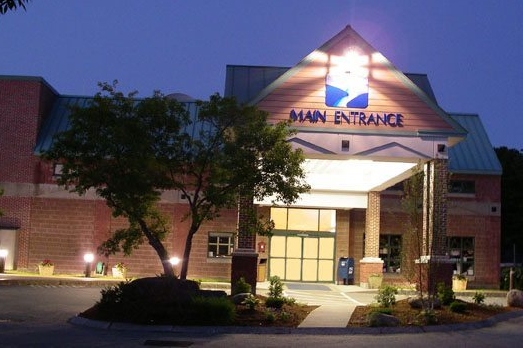
[A]bout two months after receiving an $800,000 bailout from the state, Springfield Hospital is seeking additional help – this time from regulators at the Green Mountain Care Board.
Springfield Hospital Interim Chief Executive Officer Michael Halstead says the hospital’s “cash position is tenuous at best,” and he’s asking the care board to OK a budget adjustment that could allow collection of nearly $500,000 in additional patient revenue over the remainder of the fiscal year.
Board members did not immediately act on the request. Instead, care board Chair Kevin Mullin said he wants to schedule a public meeting with Springfield Hospital leaders.
“I think that not only the board but the citizens in the Springfield area and even the citizens in the state of Vermont are looking for as much transparency as possible and (to learn) about how the turnaround is going,” Mullin said.
While the Springfield hospital has been struggling for years, the hospital’s failure to pay bills came to light in media reports late last year. The hospital’s chief executive officer quit soon after, and a subsequent audit faulted mismanagement and a lack of financial transparency.
The state has increased oversight of Springfield and sunk $800,000 into the hospital to prevent an imminent closure. Springfield also has cut staff and recently decided to close the hospital’s birthing center by June.
Care board documents show that, as of January, the hospital was running with a negative 11.6 percent operating margin and had just 17 days of cash on hand.
In his Wednesday letter to the care board, Halstead said hospital administrators have been “working on expense reductions the last few months approaching $6.5 million, but the gap in the shortfall continues to remain short of ‘break-even.’”
So the hospital is asking the care board for a 5 percent increase in its average “charge” or rate – the amount Springfield charges insurers. The modification would generate an extra $488,924 in net patient revenue during the hospital fiscal year that runs through the end of September.
The budget change would be “in support of improving the hospital’s financial health during this ‘crisis situation,’” Halstead said. The hospital’s board approved the request on March 12, he wrote, and the hospital is asking for the change to take effect May 1.

While the care board approved a similar request a few weeks ago for Gifford Medical Center, Springfield’s proposal is no small matter.
When the board approved revenues and rates for fiscal year 2019, Springfield received the largest charge increase – 5 percent – of any hospital. The hospital’s proposed modification would double that.
Mullin said the hospital’s request is “troubling.”
“By the same token, I think everyone wants to try to give them at least a fighting chance to come out the end of the tunnel with a viable health care system for their community,” Mullin said in an interview. “Is it a good thing that we would consider doubling what was already the highest rate increase in the state? Probably not. But is it necessary? Probably, yes.”
It’s not yet clear when or where the care board’s meeting with Springfield Hospital administrators will take place. “We’ve got to make sure that they’ve got all the data together that’s necessary under our rules for a rate request,” Mullin said. “And then we’ll figure that out.”
Tom Huebner, a former Rutland Regional Medical Center CEO who has been appointed by Gov. Phil Scott to oversee and assist in Springfield Hospital’s recovery, said the state had requested a long-term financial plan by April 1.
But Huebner on Wednesday said the hospital likely won’t meet that deadline due to the complicated nature of the hospital’s financial situation. He said the deadline will be extended.
Springfield’s situation is particularly severe, but wobbly finances are part of a trend among small rural hospitals facing similar pressures. Eight of Vermont’s 14 hospitals also lost money on operations in fiscal 2018, and expenses are outpacing revenues across the system.
To further explore the issue, the care board has scheduled a rural hospital panel discussion for 9 a.m. April 3 in the Pavilion building auditorium in Montpelier. The goal is “to provide the board, invited legislators and the public with a broader perspective on challenges and opportunities facing rural hospitals around the country and in Vermont.”
The panel lineup includes Steve Gordon, president and CEO of Brattleboro Memorial Hospital; Dan Bennett, president and CEO of Gifford Medical Center; Jeff Tieman, president and CEO of the Vermont Association of Hospitals and Health Systems; and Kevin Stone, interim CEO of OneCare Vermont.
The panel also will feature Eric Shell of Stroudwater Associates, a national health care consulting firm.
Mullin said he’s looking forward to further discussion about Vermont hospitals and about general trends in the industry.

“The majority of hospitals in Vermont are financially struggling,” he said. “And even those that aren’t financially struggling, when you look at the long-term growth rate of expenses versus revenue, it’s alarming, because they’re not in synch.”
On a related note, the care board on Wednesday approved a maximum revenue growth target of 3.5 percent for Vermont hospitals in fiscal 2020 and, tentatively, for fiscal 2021 as well. Care board members said their decision was influenced by factors including hospital investments in the all-payer health care reform project as well as workforce and wage pressures hospitals are facing.
The targets are slightly higher than the maximums the board set for fiscal 2018 (3.4 percent) and for the current fiscal year (3.2 percent).
Mullin said the board’s decision to set growth targets two years in advance should provide hospitals with “certainty and predictability as they make investments into things that don’t have short-term returns, but have longer-term returns to the system.”
“As they shift to the all-payer model, I think it’s good for them to have that certainty for a couple of years,” he said.
Mullin added that care board members still will consider each hospital’s budget proposal individually.
“This isn’t a guarantee that (hospitals) are going to get 3.5 percent,” he said. “They’re still going to have to come in and make a compelling argument.”
Katy Savage contributed to this report.

