

More than 7,500 Vermonters are receiving medication-assisted treatment for opioid addiction in the state’s “hub and spoke” system, new statistics show.
Participation in those programs continues to grow: The census in the “hub” portion of the system alone increased by 12 percent from September 2017 to September of this year.
And officials say there are more health care providers involved in the treatment program’s “spokes” than ever before.
Taken together, the numbers indicate that “there has been a significant growth in access to treatment and also the number of prescribers,” said Beth Tanzman, executive director of the Vermont Blueprint for Health.
Tanzman on Wednesday gave state legislators an update on the hub and spoke program, which started in 2013 and has been expanding since. It uses two outpatient models to distribute buprenorphine and methadone to those with substance use disorder. There are 88 medical practices serving as spokes, along with eight hub sites that offer more-intensive treatment.
The program has its critics but also has received national recognition. Earlier this year, a survey of 80 hub and spoke participants found “dramatic reductions” in drug use, overdoses, hospital visits and arrests.
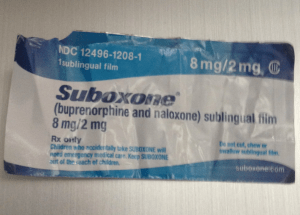
Medication-assisted treatment is a clear priority for Vermont officials, and its use continues to expand. Officials have sought to lower barriers and hasten access to such medication, and Suboxone – which is a brand of buprenorphine – is the No. 1 drug in terms of utilization and gross spending in Vermont’s public health insurance programs.
The state also opened a new hub in St. Albans last year, and that has helped eliminate the wait list for medication-assisted treatment in Vermont. “When someone with addiction says, ‘I want help,’ we want to be able to respond very quickly to get them into treatment,” Tanzman said.
Tanzman, whose office administers the spoke program, said there were 3,657 people being treated in hubs as of September and 2,887 Medicaid patients in spokes as of October. There also are roughly 1,000 more people receiving spoke treatment who are covered by commercial insurers or Medicare, she said.
“If you combine (the hub census) with what we’re serving in spokes, and what we’re also doing for commercial and Medicare insurance, we have a significant number of people in Vermont in treatment,” Tanzman said.
Her presentation also detailed the geographic breakdown of spoke treatment for Medicaid patients. Chittenden County had the largest number of patients at 624; Franklin/Grand Isle came in second with 428, and Rutland was third with 343.
The number of people in both hub and spoke treatment has been rising steadily, state statistics show.
There were 1,751 patients in hubs at the beginning of 2014. That has more than doubled, though the census has been fairly steady for most of this year.
At the end of 2013, there were 1,919 patients being treated in spokes. The census has increased by 50 percent since then and jumped by about 14 percent between September 2017 and September of this year.
Spoke prescribers have increased to meet that demand. There were 226 prescribers in October, an increase of 100 since the end of 2015.
The Blueprint for Health is responsible for signing up those prescribers. Tanzman said there was some reluctance among medical providers when the hub and spoke program was getting started, but the addition of 60 spoke staffers organized under the Blueprint’s Community Health Teams has helped change that.
“It made prescribers feel like, ‘OK, we can do this as a team. I don’t have to do this alone,’” Tanzman said.
Asked whether she expects to see future growth in the hubs and spokes, Tanzman pointed to the ongoing opioid epidemic. While state officials said in a report earlier this year that they’re “beginning to bend the curve on the upward spiral of opioid-related fatalities,” that report also noted that 101 Vermonters died from opioid overdoses in 2017 – a 5 percent increase from the year before.
Officials also estimate that there could be thousands more people – perhaps as many as those already in medication-assisted treatment – who are not receiving help for opioid use disorder.
“Unfortunately, (hub and spoke programs) are going to have to continue to grow for now,” Tanzman said.

