


Committee members said they had been seeking action from the Green Mountain Care Board on pay parity for three years, and during that time independent doctors have been either leaving the state or accepting employment with hospitals.
Pay parity is the idea that insurance companies should pay doctors the same amount of money for a given office visit or procedure, regardless of whether they are self-employed or work for a hospital.
Currently, hospital-employed doctors are paid more than independent doctors for the same services. Hospitals have stronger leverage with insurance companies to negotiate higher prices.
Amy Cooper, the executive director of HealthFirst, an organization for providers at physician-owned practices, said the pay gap is especially large in Vermont, where primary care doctors are often paid 250 percent more when they work for hospitals, and specialists are often paid 350 percent more.
Nationally, Cooper said, about half of doctors in a given state are independent as opposed to hospital-employed. In Vermont, she said, just 15 to 20 percent of doctors are independent, and the number has declined by 20 since December 2015.
Cooper said those doctors have either left the state or joined an employer, such as a hospital system. Over time, she warned, independent doctors who retire or go out of business will see their practices bought up by hospital systems instead of replaced by other self-employed doctors.
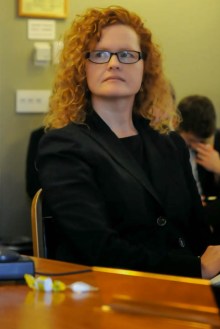
“It’s a very complex issue, and it’s not a simple task,” Barrett said. “There are many areas that we’re looking at. … How is (price parity) going to impact the rates and premiums that Vermonters pay? How is it going to impact payment reform? How is it going to impact the other reform we’re working on in the state?”
The board has worked in recent years to set up a single administrative entity that would encompass all medical providers in the state — independent, employed by community health centers, and employed by hospitals. That administrative entity is the basis for the so-called all-payer model.
“We know it’s complicated,” Sen. Ann Cummings, D-Washington, the committee chair, told Barrett. “We know you’ve got a lot to do, but we’re losing the independent practices, and once they’re gone, they’re gone. It’s like an endangered species, and we don’t seem to be making progress.”
Sen. Michael Sirotkin, D-Chittenden, asked Barrett whether the Legislature could expect to see changes in reimbursement practices next month, when insurance companies propose their prices for 2018, or next January.
Barrett answered that the board does not currently deal with pay parity as part of its annual renewal process of insurance prices. She said the board has the legal power but would need to hold a rulemaking process to implement regulations on pay parity, and would need additional staff and money.
“We have not gone through the rulemaking process,” Barrett said. “That would take time.”
But she said the board has still made “significant progress” on implementing pay parity, “especially in the last six months.”
Cummings jumped in.
“I’m starting to understand the frustration, and when this building gets frustrated, our inclination is to tell you what to do,” she said. “It sounds like it’s slower than molasses in February.”
Cummings said independent doctors are “starving out there, and we can’t afford to lose any more of them. I’m a little concerned about having one entity controlling all of health care.”
“And I know it’s difficult, but I remember sitting here seven or eight years ago and having the insurance companies say, ‘We’re getting close to a common code. We’re getting close,’” Cummings said. “And that was seven years ago.” Insurance companies are still using different billing codes, she said.

“I just wrote down three things that we could do legislatively that you would not like,” Lyons said. “And I’ve gotten to the point that I would like to put those into legislation.”
Barrett said the Senate Finance Committee should also speak to Jessica Holmes, an economist who sits on the board, who has been “very focused on this.” Holmes is one of just three members of what is supposed to be a five-member board.
“I do feel as though the progress we have made recently has been more tangible than in the past few years,” Barrett said. “I don’t disagree that the progress has been slower than you would like.”
On Friday, the Senate Appropriations Committee added language to the annual budget bill to require the Green Mountain Care Board to report back by Oct. 1 on “what substantial changes” it has made toward pay parity.
The language in the budget bill references three laws the Legislature passed that sought progress on pay parity: Act 144 of 2014, Act 54 of 2015, and Act 143 of 2016.
“There are real people hurting out there,” Cummings said of the situation.

