

[A]bout this ethics commission business, there are two opposing but equally valid approaches.
Approach No. 1: the sarcastic, loyal-to-his-clan news guy who grumbles that this year’s ethics proposal ought to be titled “An act relating to making it look like we’re doing something about ethics in government even though we aren’t.”
And the one that didn’t pass last year should have been “An act relating to setting up a totally toothless State Ethics Commission.”
Both last year’s bill and this one’s, S.8, envision establishing a commission staffed solely by a part-time executive director (with maybe a little clerical help) who would have the majestic authority to … well, to refer complaints to another state agency.
OK, so there’s an incisor in there somewhere, and perhaps a maxillary canine over in the corner. But not a lot of teeth.
A couple of problems here. First, the sardonic news guy approach is too easy. Not entirely incorrect, mind you; proposing this minimally fanged ethics commission could qualify as an effort to look as though lawmakers are doing more than they are in fact doing. Still, it’s too easy.
Besides, it risks falling into the category of just another special pleader. Maybe an honorable special pleader, but that’s part of the problem. Backed by self-proclaimed “good government” types, reporters like to think of themselves as “the good guys” (this is guys of either gender) when it comes to transparency in government.
Not recognizing (perhaps refusing to recognize) that it is also in their professional self-interest. News guys should not be loyal to their clan. They should be loyal to the news.
And they should recognize the danger of thinking of themselves as one of the good guys, and recognize the flaws of “good government” advocates. As the late, great University of California political scientist Nelson Polsby used to note, “bad government” has its advantages.
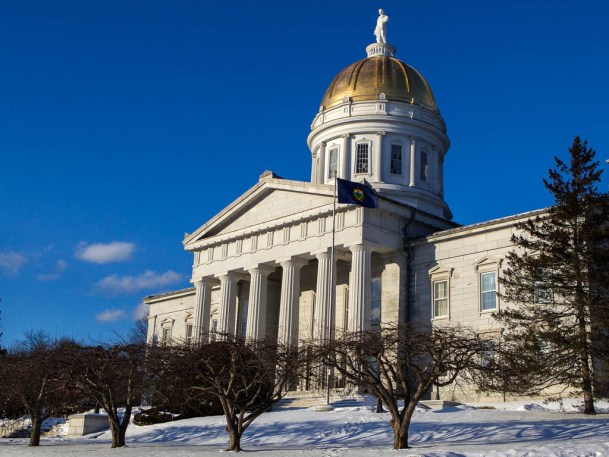
Hence approach No. 2: Forget the sarcasm and the clan loyalty. Consider the context. Take seriously (if skeptically) the assessment of Senate Government Operations Committee Chair Jeanette White, D-Windham, that the commission envisioned by S.8 (actual title: “An act relating to establishing the State Ethics Commission and standards of governmental ethical conduct”) is “a good first step.”

It is true that two recent events have tarnished the reputations of state government and specifically the Legislature. But neither was a failure of government ethics, nor would either have been prevented by an ethics commission or stronger disclosure laws.
Norm McAllister was not accused of government corruption or misbehavior as a Franklin County senator. He was accused of — and has now pleaded guilty to, although he can still withdraw that plea — a crime that would have been just as criminal had he not been in government.
Then there was the alleged diversion of millions of dollars intended to finance resort developments and other businesses in the Northeast Kingdom under the federal EB-5 visa program. That seems corrupt. But the corruption took place in the private sector. The public officials who should have protected investors and contractors — officials at all levels and, it turns out, in all parties — failed to do so. They may have been oblivious, insufficiently skeptical and downright incompetent. But no law enforcement or regulatory agency has suggested that any public official was on the take, and neither obliviousness nor incompetence is the kind of defect remedied by an ethics commission.
Some of the opposition to a stronger commission doesn’t seem all that impressive, either. White, who is a co-sponsor of the bill (the lead sponsor is Sen. Anthony Pollina, P/D-Middlesex) is one of several legislators contending that only those “good government” advocacy groups and journalists care about government ethics.
Just as the incoming president claims that only reporters care about his tax returns.
In both cases, polls prove them wrong. A large majority of Americans think Donald Trump should release his tax returns, and a comparable majority of Vermonters think there should be an ethics commission.
“If we ask people, ‘Should we have an ethics commission and look at conflicts of interest?’ of course everybody would say yes,” White said. “But I’m not hearing from constituents saying, ‘You’ve got to get this passed.’”
She’s probably right. Government ethics, like campaign finance, has never been a vital issue for most voters. As Trump pointed out, he didn’t release his tax returns, and he won.
Those wary of ethics commissions also point out that — as with any enforcement or regulatory body — this one could go to extremes. The final decisions of government are the public’s business. Every step taken along the way to reach those decisions need not be. Responding to complaints from disgruntled officials or advocates, a zealous investigator might confuse political deal-making with corruption.
Sometimes it is, if the deal includes private gain for anyone. That’s why voters ought to be able to know (as Vermont voters really do not) the income and wealth sources of their senior government officials.
But that kind of corrupt deal-making is very rare. What worries some people is that an ethics enforcement agency could discourage the customary horse-trading — “I’ll vote for your pet project if you’ll vote for mine” or “Remove this one provision from the bill and you’ve got my vote” — on which legislative progress depends. In a contentious society — and, yes, even Vermont is one of those — that’s the way representative democracy works. It’s the way it’s supposed to work, which is what Nelson Polsby meant in his praise of “bad government.”
But 47 states have some kind of ethics commission. Political log-rolling has not disappeared in any of them.
Assuming that democracy is the goal, one of the most potent arguments against a stronger ethics agency is one of the strongest arguments in favor of it. Opponents scoff that because there is so little corruption in Vermont, any ethics commission at all is simply for show. It’s not worth the time, effort and money the commission would require. It’s all just “appearance.”
What they don’t grasp is that in this case appearance is substantive.
“A lot of it does have to do with appearance,” said Condos. “Transparency in government is really the basis of trust. Voters have to know that their elected officials are accountable. Citizens are given the power, the right, to know. It’s sacred.”
Sacred gets into other realms. Let’s just say it’s vital. If democracy is to thrive, voters have to have some level of trust that their elected and appointed officials are playing it straight.
With precious few exceptions, they are. Spending a few bucks to make it more likely that more people understand this seems a small price to pay for a thriving democracy, even if saying so risks sounding like an advocate of good government.

