

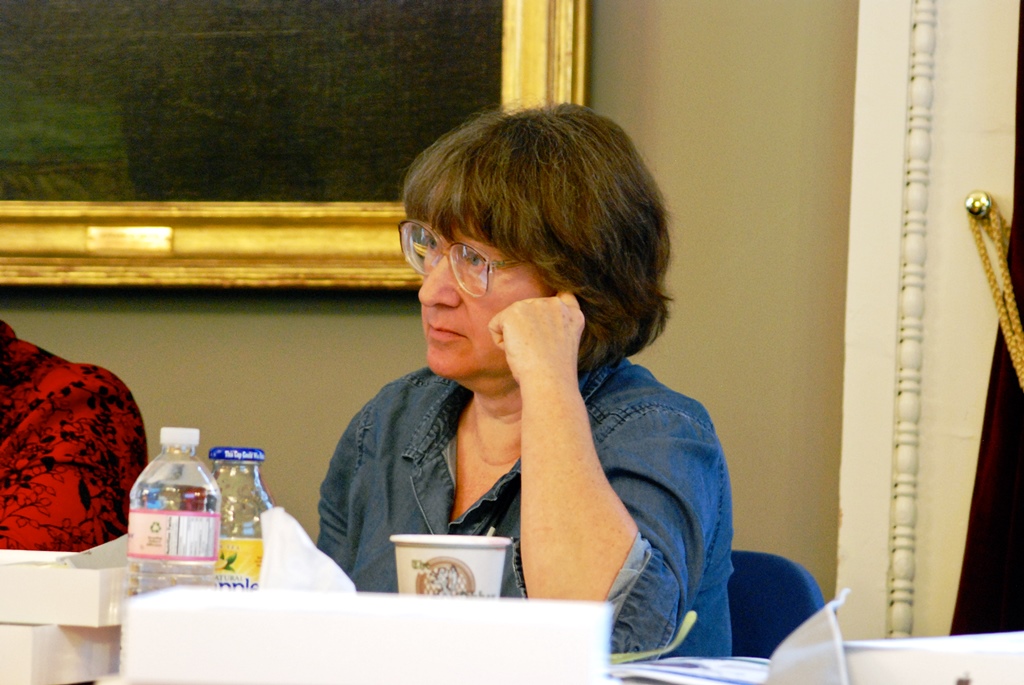
Rep. Cynthia Browning, D-Arlington, who recently sued the governor for details of his single-payer financing plan, now has a health care reform plan of her own – one that is vastly different from the framework outlined by the administration.
“It’s trying to develop a moderate and reliable path to health reform that doesn’t involve the disruption and uncertainty inherent to a single-payer system,” Browning said of the proposal.
Instead of a single payer, Browning’s plan would maintain a private health insurance market. It would also expand the subsidies available through Vermont Health Connect, but make insurer participation voluntary, to the extent allowed by the federal Affordable Care Act.
Browning said her plan is consistent with goals of Act 48, the state’s 2011 health care reform law, in that it would move toward universal coverage, improve the quality of health care and reduce costs.
It would seek to improve quality by building on Vermont’s Blueprint for Health to expand the medical home model and community health teams, and would continue the state’s current value-based payment reform efforts to contain costs, such as shared-savings programs for Accountable Care Organizations and global budgeting.
To ensure that newly covered Vermonters have access to health care providers, the plan calls for an additional $5 million in the state’s student loan repayment program for health care professionals. It also calls for continued investment in Medicaid reimbursement rates so that private doctors won’t shun its beneficiaries – something the Shumlin administration has already committed to.
“I think the important part about this proposal to me is that it takes policy actions that were already taken that are working and intensifies them and expands them,” Browning said.
The package Browning outlines would cost between $30 million and $35 million, and would be paid for through a 2.7 percent tax on employer-sponsored health plans. Browning said such a tax has long been part of the health care reform conversation, and was proposed by U.S. Sen. John McCain, R-Ariz., at the national level.
The majority of the proposal’s costs, $10 million to $16 million, would go toward expanded subsidies offered to an additional 9,500 people, according to projections Browning developed with the help of the Legislature’s Joint Fiscal Office.
The plan contains more controversial provisions to promote health coverage, such as requiring proof of health insurance to renew a driver’s license or possibly through state tax filings.
It also sets aside $1 million for additional targeted outreach to enroll uninsured Vermonters in health coverage through private plans on the exchange or Medicaid.
Projections from a consulting firm hired by the administration estimate that Vermont’s uninsured population would drop from 42,000 to 13,000 by the end of the year as a result of implementing the Affordable Care Act, Browning said.
“We don’t know yet if that’s true, but even if it’s not true, working within the framework that we have to extend coverage still makes a lot more sense than overhauling our entire system for 30,000 or 20,000 people – half of whom are probably already eligible for Medicaid,” Browning said.
Act 48 specifically calls for a publicly financed universal health care program, and moving away from such a program would likely require statutory changes, because it publicly finances additional subsidies but not a universal health care system.
Browning’s plan could also have unintended consequences. It would expand subsidies to more Vermonters, but says nothing about increasing those subsidies for people having difficulty paying for them. The plan calls on the state to make premiums more affordable, but doesn’t include money to further subsidize them — though that could be an option.
In addition, the ACOs that providers are proliferating aggressively – with the blessing of state regulators – are likely to increase consolidation in the health care industry, which is not universally seen as a good thing. In a consolidated health system, providers have more clout, which could give them more leverage to negotiate with payers. A single-payer system would check that clout by forcing providers to negotiate with a single entity. It’s unclear how the state’s regulatory body, the Green Mountain Care Board, would be able to do that on its own.
Browning and a few House Republicans have worked on the proposal for several months with the help of the Joint Fiscal Office and the health care consultant Ken Thorpe who was hired to assist lawmakers this session. A memo penned by Thorpe caused a stir when it was released earlier in the session, and many of the principles in the memo are reflected in Browning’s plan.
The Legislature paid Thorpe $48,000 this session, and though he has testified before several committees it’s difficult to know what tangible results there are to show from that, other than Browning’s plan. Thorpe also helped Sen. Tim Ashe, D/P-Chittenden, develop a health care reform bill, which is still under consideration.
Though Republicans helped develop the plan, House Minority Leader Rep. Don Turner, R-Milton, was clear that Browning’s proposal is not the Republican alternative to single-payer.
“It’s important that we look at health care reform alternatives when Vermonters and businesses are in this place of uncertainty,” Turner said. “We didn’t finalize our approach, we stopped. So what Cynthia’s rolled out is some of the ideas we worked on, but we were not at a place where we thought this was a plan.”
Turner praised Browning for creating a more responsible framework for health care reform, and said he supports the core tenet of improving the current private insurance system rather than creating a government program to achieve universal coverage.
He said he appreciates that Browning’s proposal includes a method to finance the reforms it suggests, adding that while it’s not a tax plan he necessarily supports, it’s at least a proposal with a financing plan, which is more than the governor has offered, Turner said.
GOP State Committee Chair David Sunderland has said Republicans will release an alternative health care reform proposal sometime after the legislative session ends as part of a push to make health care a campaign issue.

