

This story by Liberty Darr and Briana Brady was first published in The Other Paper on June 18, 2026.
This month, more than 5,000 seniors across Vermont graduated from high school. A significant portion of those teens graduated from the state’s career and technical centers.
Of the more than 20,000 high school students in Vermont, around a quarter enroll at one of the state’s 17 career and technical centers, but that may only be a fraction of the kids who wanted to attend the programs.
Demand for technical education is growing in Vermont at a pace that local career and technical centers can’t yet match. In response, schools are looking at how they might be able to offer some level of technical education themselves.
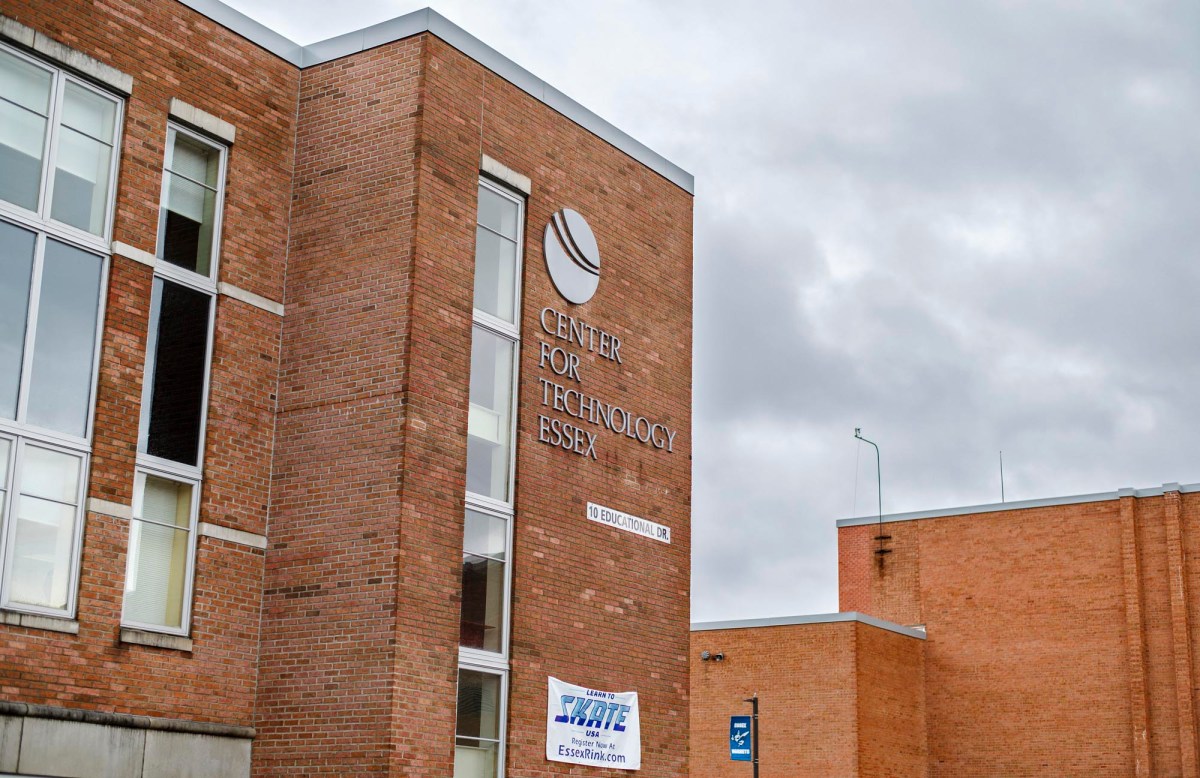
According to data provided by the Center for Technology, Essex, which is one of the two career and technical centers in Chittenden County, this year the program received 681 applications for 405 available spots across a wide range of technical education classes like automotive tech, building residential or HVAC, or web design and creative media.
“It wasn’t that long ago that being in the trades was a negative stigma in schools,” said Ben Heath, an engineer at Engineers Construction Inc. Heath is on advisory committees for Essex and technical centers in St. Albans and Middlebury.
Heath said things have changed in part because the trades sector itself has undergone a transformation — Vermont desperately needs tradespeople. As the numbers of skilled electricians or plumbers or mechanics have fallen, Heath said, wages have risen.
“So now, we have this huge population of young people who now are being told by their parents and by their relatives and friends and other people, ‘Hey, you should think about going into the trades,’” Heath said. “Unfortunately, the schools are way behind the eight ball on this, and they are not moving fast enough.”
‘Supply and demand’
Of the 175 seniors who graduated from South Burlington High School this year, three attended Burlington Technical Center and nine went to Essex.
Champlain Valley School District had around 40 graduates who attended the local technical centers.
According to data from the South Burlington School District, 45 high school students submitted applications to Essex but only 23 were accepted. CVU saw a similar rate — just over half of students who applied were accepted.
According to South Burlington High School Principal Patrick Burke and director of school counseling Meghan Sweet, this rapid increase in applications has been an ongoing trend over the last 10 years.
“It’s really a question of supply and demand more than it is a process of exclusion,” Burke said.
Bob Travers, director of the Essex tech center, said there appears to be consensus across a broad range of education leaders that career and technical education is at a tipping point.
“Twelve years ago, I used to have conversations with Pat Burke about the cost of career and tech ed and how we can keep it down,” Travers said. “Now I’m having conversations with Pat and a number of other high school principals about how we can get tech more available to all of our students.”
Bringing tech to the schools
Travers informed the South Burlington School Board in May about ongoing conversations to bring in a specific tech education program to the district. Although details will become more available in the next year, he did say seed money from the Perkins funds — federal funds that provide over $1.4 billion annually across the nation to develop, improve and expand career and technical education — will go toward the initiative.
Part of the equation in South Burlington is the dissolution of several programs that, at one point, were offered in-house. Burke said classes like wood shop, fine metals or auto tech have slowly been eliminated due to different budget constraints over the years.
Burke said that, since the district cut its Big Picture program — a student-driven, project-based learning model — last year, there is nothing currently offered at South Burlington High School that could be categorized as career technical education, aside from five sections of a computer science course.
“The eventual elimination of Big Picture has us in a spot where accessing the centers actually is of more consequence,” he said.
CVU is even closer to offering in-house tech education. In April, the board approved the creation of a role to oversee career and technical offerings at the school.
Until now, the district had been partnering with Burlington Technical Center to bring an instructor into the school to offer a pre-tech exploratory program to ninth and 10th graders. Next year, the center will discontinue the program due to a regulation from the Agency of Education on how students can engage in pre-tech programs. CVU students would sometimes do pre-tech within the district in their ninth-grade year and then move into the pre-tech program on site at Essex Tech in 10th grade, which technically counted as repeating the program.
Superintendent Adam Bunting said it’s important that students can still access this kind of education at CVU.
“I think we’ve been successful because you’re not asking a student to have to make the decision to leave their immediate community just as they’re transitioning into high school,” Bunting said.
Because it hosted a pre-tech program, CVU has a bit of a head start, already having a lot of the equipment necessary for tech classes. According to Chief Operating Officer Gary Marckres, the school may eventually save money: The tuition costs for each student have been around $22,000, savings that will go toward the in-house program.
“I think you have folks within our community who are wondering whether a traditional college and university path provides a return on investment that it used to, and I think we’re doing a better job at honoring the interests of students and the critical importance of having flexible pathways in high school,” Bunting said.
No more ‘either/or’
Jason Reed, director of the Burlington Technical Center, recently told the South Burlington School Board that career and technical education offers students a multipronged pathway. He cautioned people against viewing a pursuit of technical education versus a college degree as an “either/or” type of scenario.
For example, Burlington Technical Center offers a dual college enrollment built into programs for students who see themselves as college bound.
“We also get students who say, ‘I’m not college bound,’ they take dual enrollment with us, and all of a sudden they’re college bound,” Reed said. “We also have students who thought they were college prep who discover that they can go into the workforce and work their way up with the foundational skills they have.”
While Heath sees some in-house technical education as essential — everyone should be able to change their car battery or swing a hammer, he said — he wants to see the technical centers across the state expand to meet the rising interest.
“There’s just this gaping hole in society that needs to be filled, and it’s become this extremely lucrative way to make a living,” he said. “What I have been seeing in the tech centers is many schools being very, very slow to react to this, actually agonizing and frustratingly slow.”
Vermont Sen. Kesha Ram Hinsdale, D-Chittenden-Southeast, introduced a bill this legislative session, S.313, that could transform Vermont’s career technical education system, recognizing that Vermont’s economy has unmet workforce needs and skills gaps.
“We see that career technical education is being treated like an elective or an extracurricular activity, when 60% of our students are going to be more successful on that path if we make it available,” Ram Hinsdale said.
In addition to outlining intent to provide universal access to career technical education for all students in Vermont, the bill also looks to address barriers like transportation, scheduling conflicts and awareness.
“We are missing a lot of kids, and we are missing a lot of opportunities for our economy,” she said.
