


History is not destiny. That said, historically speaking, if you want to get elected governor of Vermont, it helps to already be governor of Vermont. Incumbency has historically offered a tremendous electoral advantage. In fact, it has been 64 years since an incumbent governor has lost an election. That’s 23 times in a row that an incumbent governor has stood for re-election and won.
That streak makes Vermont an outlier nationally. (Incumbents in Connecticut have streaks dating further back, but they have needed to stand for re-election less often because their terms run four years, not two as in Vermont.) Indeed, the election of 1962 marks the only time in the past 173 years that an incumbent Vermont governor has lost a general election.
Those statistics, however, don’t show what was going on behind the scenes to make that streak possible. Vermont was essentially a Republican-run state from 1854, when the party was founded, until 1962. Vermonters initially embraced the GOP for its opposition to slavery and stuck with it for a variety of reasons, including its fiscal conservatism, social policies, such as temperance and support for public schools over religious ones, and party loyalty. During those years, the real action was in the GOP primary — whoever won the primary was a lock to win the general election. But “action” is probably too strong a word. Republican party leaders devised an orderly succession within state government. Politicians were expected to work their way up a ladder, from speaker of the Vermont House to lieutenant governor to governor. In addition, party leaders worked to quell any regional rivalries by ensuring that politicians from the east and west sides of the Green Mountains alternated who held each office. The GOP’s succession system, dubbed “the Mountain Rule,” functioned smoothly for more than a century.
The only hiccup came in 1946, when Gov. Mortimer Proctor, the fourth member of his family to serve as governor, lost in the Republican primary to Ernest Gibson, Jr., a charismatic World War II veteran and former U.S. Senator who broke ranks by challenging a sitting governor. Although Gibson’s subsequent victory in the general election was yet another win for Republicans, his campaign represented a threat to the party leaders’ authority.
If the 1946 Republican primary showed that the establishment was starting to lose control of the GOP, the general election in 1962 demonstrated that the party itself had lost its grip on the state.
The first signs of weakness appeared in 1958 when Democrat William Meyer won the election to the U.S. House from Vermont. It was the Democrats’ first statewide victory in 105 years and the first statewide defeat for a Vermont Republican ever. In Vermont, Meyer benefited from a divided Republican party, a weak Republican challenger, and strong candidates at the top of the state’s Democratic ticket who brought supporters out to vote.
Nearly as alarming for GOP leaders was that year’s gubernatorial election, which saw Democratic challenger Bernard Leddy lose by only 781 votes to Robert Stafford. The barely triumphant Stafford blamed Republicans’ lackluster performance on a lack of “effective party discipline.”
Meanwhile, even after newly elected Democratic Congressman Meyer’s startling victory, the Democrats failed to gain momentum immediately. In the 1960 election, all of the party’s statewide candidates, including incumbent Meyer, lost. Stafford, sensing Meyer’s weakness, had challenged and defeated the Democrat instead of running for re-election as governor.
If you take the long view in politics, however, sometimes you can win by losing. The result in the 1960 gubernatorial race, won by Republican House Speaker F. Ray Keyser, ended up creating the circumstances that would make Democrats a statewide force for the first time since before the Civil War.
Keyser had not been most Vermont Republicans’ first choice for governor. In the primary, Keyser was set to face Lt. Gov. Robert Babcock and Vermont House member W. Arthur Simpson. Party insiders thought Babcock would make the strongest candidate. The situation became more complicated, however, when Babcock inadvertently turned the primary into a four-man race. Brattleboro attorney A. Luke Crispe hadn’t planned to run for governor that year—until Babcock tried to talk him out of it.
In Sam Hand’s history of the Vermont Republican Party, “The Star That Set,” Crispe recalled:
“We were having a drink and discussing it, and Bob said, ‘Luke, you can’t win. You know what happened to you two years ago, and the people won’t forgive you’—these were not his exact words but the gist of it—‘for becoming intoxicated or drunk on two or three occasions.’ And I said, ‘Bob, I couldn’t make up my mind but I just made it up. Now I’m going to run and prove to you that I can stay sober in a campaign,’ and had I stayed out of it, Bob would have been Governor.”
Instead, Keyser won the primary with just 29.6% of the vote, finishing 729 votes ahead of Babcock. Crispe finished a respectable third.
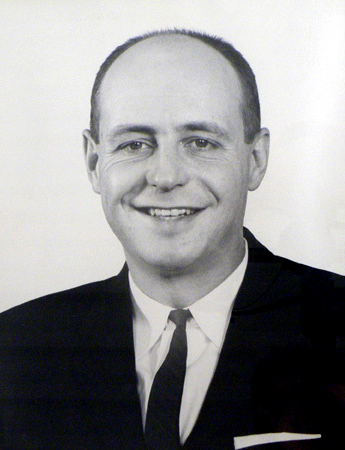
With a pronounced receding hairline, Keyser looked perhaps a decade older than his true age. He was in fact just 33 years old, the youngest governor ever elected in Vermont. At the time, he was also the nation’s youngest governor and, as Hand noted, “quickly settled in as its most beleaguered.”
Despite overwhelming Republican majorities in Vermont’s House and Senate, Keyser never held sway over the state Legislature, where factionalism made the body nearly ungovernable. The 1961 legislative session dragged on for nearly seven months, the longest in history at that point, the press reported.
The session was also noteworthy for the emergence of a bipartisan coalition of first-term legislators, dubbed the Young Turks, who cooperated to pass liberal reforms. Although they weren’t always successful, the Young Turks drew favorable press coverage that brought them to public attention.
Though only 37 and in his first term in office, one of the Young Turks, Democrat Rep. Phil Hoff of Burlington, decided to challenge Keyser in the next election. Keyser had done little to make himself popular with members of his own party. Republican Young Turk Rep. Richard Mallary complained that the governor “for reasons best known to himself…has worked harder and longer” on a bill that would benefit power companies by repealing an electricity tax “than on any other single piece of legislation.”
Keyser also locked horns with Sen. Asa Bloomer of Rutland over how to implement a court-ordered reapportionment of the state Senate. Over Bloomer’s objections, Keyser successfully pushed for Rutland County to lose a Senate seat that was given to Chittenden County. Democrats hoped Republican dissatisfaction with Keyser would result in some GOP voters crossing over to support Hoff.
In Hoff, the Democrats had a candidate who reminded many people of recently elected President John F. Kennedy; both were young, handsome, and charismatic Navy veterans. Unlike Kennedy, however, Hoff was a Protestant, so he would avoid the anti-Catholic bias that existed in some rural areas.
Vermont had such a long history as a Republican bastion that Democrats knew defeating even an unpopular governor would be a stiff challenge. As part of their strategy, Democrats wanted to ensure that the most popular Vermont Republican of the day, U.S. Sen. George Aiken, didn’t feel threatened in his re-election bid. The last thing Democrats needed was an energized Aiken to mount an aggressive campaign that would draw large numbers of Republicans out to vote.
Seeing Aiken as unbeatable, Democrat leaders put forward W. Robert Johnson, who called himself a “political neophyte.” Aiken felt so confident of his imminent victory that just days before the election, he magnanimously commented, “Bob Johnson is a good neighbor, and a good member of the business community. If you vote for him Tuesday, you’ll be voting for a good man.”
The gambit seemed to work. With Aiken not actively campaigning, and it being a midterm election, many Republican voters stayed home. Republican turnout dropped 35 percent compared to the election of 1960. Democrat turnout also fell, but by only about half as much.
Late on election night, Tuesday, Nov. 6, 1962, the Columbia Broadcasting System (CBS) declared that Keyser had been re-elected. But shortly after midnight Winooski, the last of Vermont’s 246 communities reporting votes, announced that Hoff had won an overwhelming victory in that city, taking roughly 90 percent of the vote. Winooski’s tally put Hoff over the top. According to newspaper reports the next morning, Hoff had won the state by a mere 759 votes. The count was close enough that Keyser demanded a recount, but the resulting count only increased Hoff’s winning margin. Still, it had been a very tight election; Hoff prevailed by only about 1%.
Some observers, including some Vermont Republicans, viewed Hoff’s election as a chance to redefine Vermont. Former Gov. Gibson sent his well wishes: “(Y)our election is a good thing for Vermont, and I think a breath of fresh air into the musty tombs of our state administration will re-invigorate and put life into our state — perhaps I should say cause a reincarnation.”
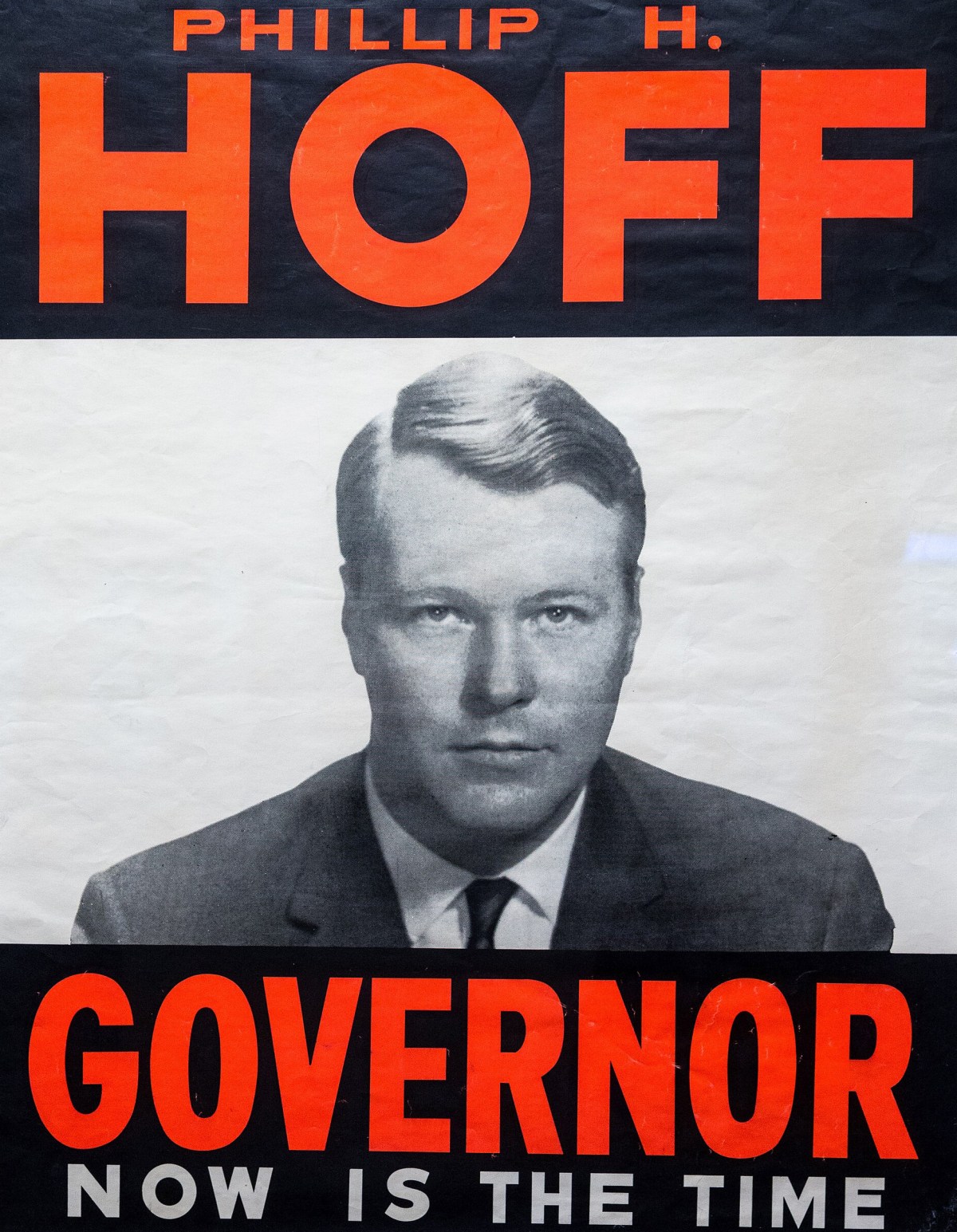
With Hoff’s victory, Republicans’ complete dominance in statewide elections ended. In fact, in the following election in 1964 Democrats took most of the statewide offices; Hoff won reelection, while fellow Democrats won the lieutenant governor, secretary of state, treasurer, and auditor of accounts races.
That is not to say that Republicans disappeared from the political scene. Far from it. It’s just that since Hoff was elected, power has been shared more equally between the two major parties. For example, since 1962 Democrats have held the governor’s office for roughly 33 years and the Republicans for about 30. Meanwhile, Progressives and Independents have also won statewide office.
Vermont’s political history is nuanced, ever-changing, and deeply human. Like financial advisers warning their clients, the only certainty is that “past performance is not indicative of future results.”
While history tells us that incumbency has represented a definite advantage in Vermont, there are no guarantees in politics. History cannot predict the future, much like financial advisors who warn that “past performance is not indicative of future results.”
Correction: An earlier version misidentified the photo of F. Ray Keyser.

