

[R]epublican gubernatorial candidate Phil Scott proposed two changes to the legislative calendar Tuesday, calling for 90-day sessions and a two-year budget cycle.
By doubling the current budget cycle, Scott said he believes costs could be reduced and fiscal planning would become more prudent.
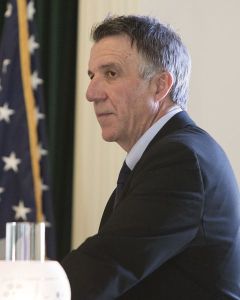
“Requiring the state to build and manage to a two-year budget would impose more fiscal discipline on spending, strengthen long-term planning and give us the foundation we need to modernize government in ways that lower operational costs,” Scott said. “Biennial budgeting can also reduce the time and cost of the budgeting process itself.”
Scott’s proposal for a two-year cycle is not new. Language that Democrats inserted in the fiscal year 2016 budget legislation calls for work to “explore moving to a two-year budgeting cycle where the budget proposed by the governor includes at least one subsequent fiscal year base funding estimate.”
Scott, the lieutenant governor, has promised that as governor he would not sign a budget that grows more than the state’s rate of economic growth or the average wage growth in Vermont.
Bruce Lisman, Scott’s opponent in the primary, has offered similar proposals, promising to limit state spending increases to 2 percent for the next three or four years and end the use of reserve funds and one-time funds to fill budget gaps.
Scott obliquely criticized Lisman’s proposal Tuesday, saying “an arbitrary limit on state budgets as some have proposed is an inadequate solution for years when economic growth and inflation-adjusted wage growth do not reach 2 percent, which has been the case in recent years.”
On his proposal of strict session limits, Scott said the rules would enable the state’s citizen Legislature to remain run by ordinary Vermonters. He also said a limited session would force legislators to zero in on the key issues.
“The long and unpredictable length of the sessions discourages normal, everyday folks from running,” Scott said Tuesday. “A 90-day session would set clear parameters that would encourage more working Vermonters to run and to serve.”
Scott’s proposed plan would allow the governor to convene the Legislature outside the 90-day limit under extraordinary circumstances.
Scott did not support the recently passed $5.77 billion state budget, calling it a piece of legislation that would hurt the state’s economy. In the days before the session ended, Scott said it was untenable to increase the budget by almost 5 percent a year while the Vermont economy is growing at less than 1 percent.
“The new taxes and the budget approved by the House do not help hardworking Vermonters and Vermont businesses struggling with the crisis of affordability,” Scott said shortly after the budget bill passed. “Instead, it digs us even deeper into the economic hole created by seven fiscal years of unaffordable spending.”
Scott said his proposed legislative changes would likely receive widespread support among Republican lawmakers. Last week he netted the endorsements of 54 of the 59 Republican lawmakers serving in the Statehouse.

