

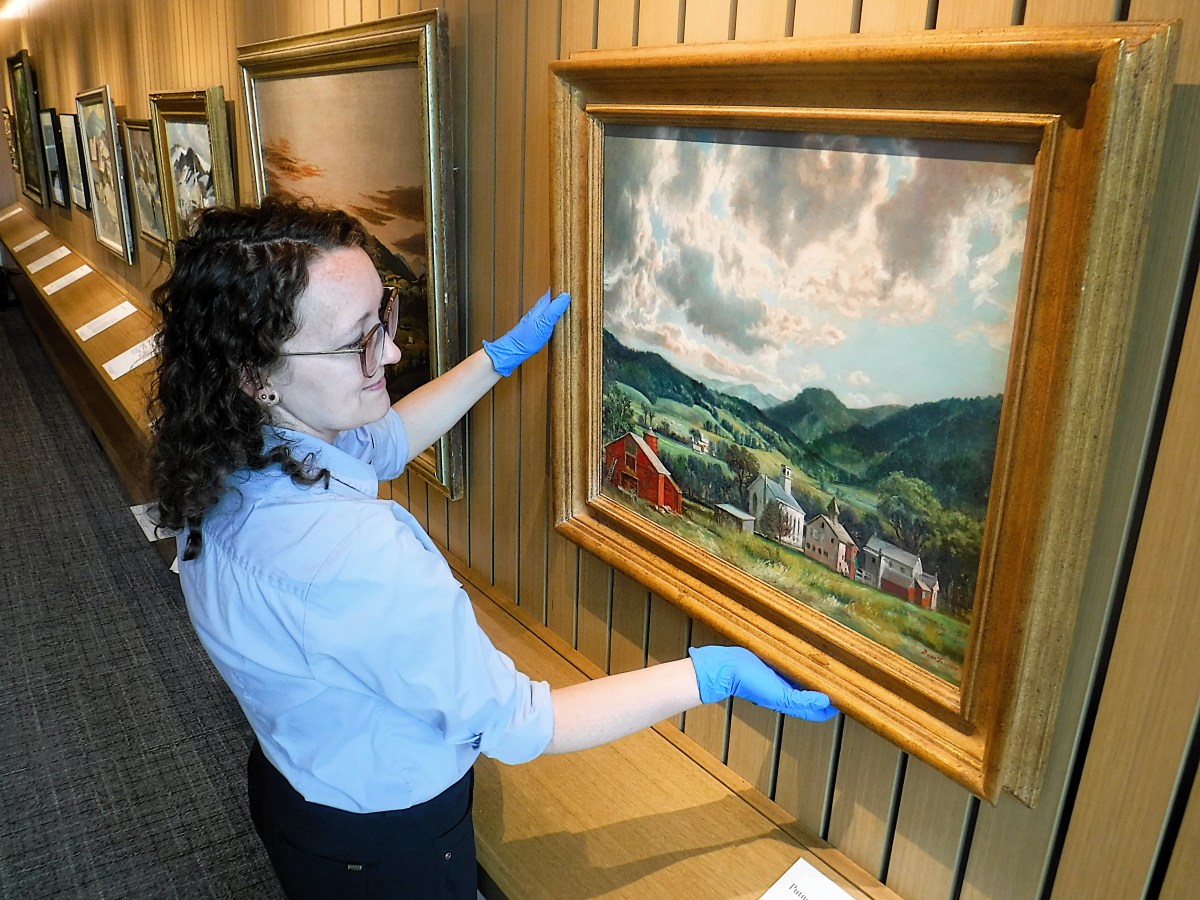
MANCHESTER — Lyman Orton arrived at a local auction six decades ago in hopes of furnishing his first house, only to spy a seemingly simple yet thought-provoking framed landscape.
“The whole idea that artists fell in love with the state and then painted it was just fascinating to me,” the patriarch of the family that owns the Vermont Country Store recently recalled.
The 85-year-old has since amassed what Yankee Magazine deemed “the largest private collection of 20th-century Vermont art in the world.” More than 300 works have filled his home, office, touring exhibits — and starting June 7, their first single, permanent showplace.
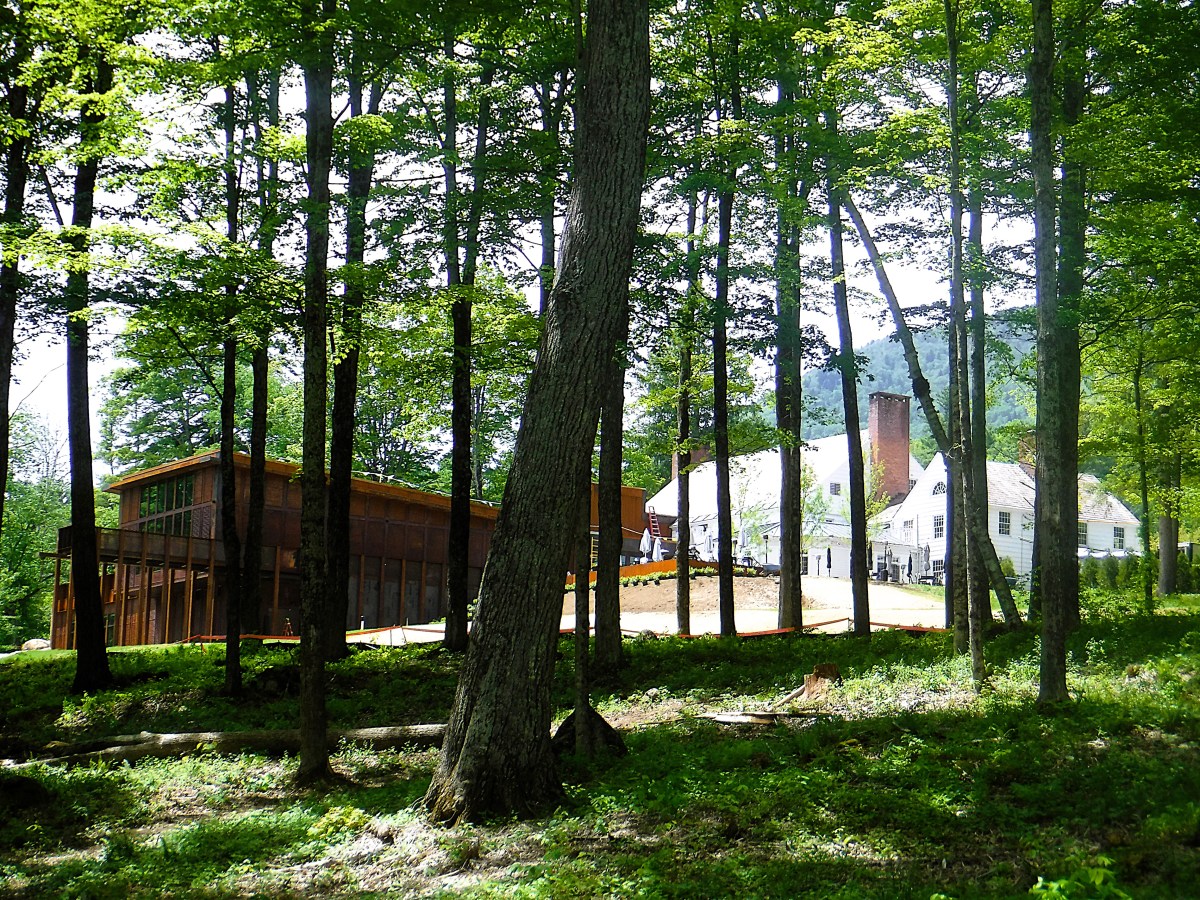
The Southern Vermont Arts Center, a 120-acre Manchester campus anchored by the century-old Yester House mansion, is set to open a two-floor, 12,000-square-foot addition as part of a $14.5 million capital project.
“I feel this has been a hidden gem for 100 years,” Executive Director Amelia Wiggins said in an interview. “We’re trying to unhide it.”
The Richmond-based architecture and building company Birdseye fashioned the new wing to feature Orton’s “For the Love of Vermont” collection, as well as a rooftop terrace and lower-level gallery named for Bob Van Degna, president of the center’s board of trustees, and his wife, Mary-Anne Van Degna, who are top project donors. The expansion includes a climate-controlled storage space for 1,000 other works accumulated since the nonprofit’s founding three-quarters of a century ago.
“We’re really trying to develop a cultural destination not only for our local community, but also for folks from major markets like New York and Boston,” center marketing director Sean Osborne said of the “transformative” project. “We provide not only exhibitions, but also performances, public events and, for nature enthusiasts, we connect to the Mount Equinox trails. There’s a lot to this place.”
Longtime locals know the West Road property as the former 1800s farm of the late Charles Orvis, founder of his namesake sporting goods business. In 1916, West Virginia timber tycoon William Ritter, owner of what was once the world’s largest hardwood lumber company, bought the acreage for $11,000 after seeing Robert Todd Lincoln, eldest son of former President Abraham Lincoln, establish his own nearby summer estate, Hildene.
Ritter commissioned the 30-room Yester House, only to lose it upon his divorce. His ex-wife, Gertrude Divine Webster, hoped to turn the mansion into a museum for her vintage furniture and fine art. But she dropped the plans shortly before her death in 1947.
In 1950, a nonprofit group calling itself the Southern Vermont Artists bought the property for $25,000 and began the center, which now includes a 400-seat auditorium and the state’s largest sculpture garden.
“Taken together, the architectural and landscape resources continue to evoke strongly the historic function and character of the Yester House estate as one of the grandest representatives of its type and period in Vermont,” the National Register of Historic Places states.
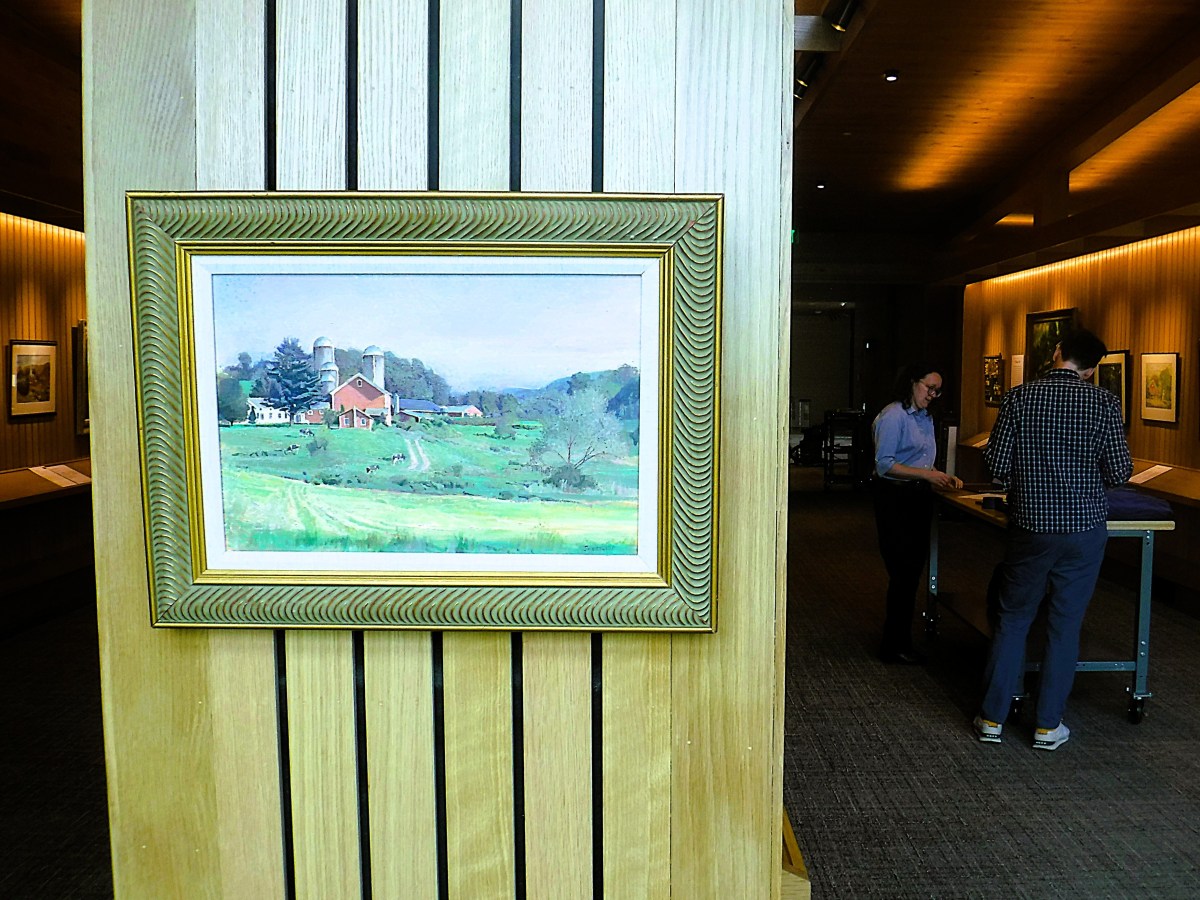
Orton appreciates that past. The seventh-generation Vermonter was in his 20s when he bought his first painting, not knowing it would seed a lifelong mission to “repatriate” local art sold and scattered over the past century across the country and around the world.
Orton points to “Mother and Chicks” by the late Rockwell Kent, who’s represented in the National Gallery of Art. The 1926 work pictures the Sunderland Union Church that Orton’s great-grandfather helped build. It’s unclear when one of Kent’s ex-wives took the canvas to California. But in 2008, Orton discovered it for sale in San Francisco and acquired it after a year of negotiations.
Orton can tell similar tales about Vermont scenes he owns by Luigi Lucioni, whose oils and etchings appear in the Smithsonian American Art Museum; Kyra Markham, an actress, painter and printmaker who was part of the 1930s Federal Arts Project; and Ogden Pleissner, nationally recognized for his Life magazine work and sporting scenes.
In 2023, Orton began sharing his art through a 220-page book and touring exhibit. Its initial showing in Manchester set attendance records, spurring him to approach the center about a permanent arrangement.
Orton’s collection is so big, curators will periodically change which 100 works they spotlight. The art will be surrounded by large-print labels and ample seating.
“One thing that strikes me is galleries and museums often don’t pay attention to comfort and education,” Orton said. “I’ve set out to change that. We think of this as a gathering place. Artists painted here, sold their stuff and then it scattered. Now it’s coming home.”
Correction: An earlier version omitted the name of one of the project’s top donors.
