


Flexible pathways (Act 77), universal preschool (Act 166) and the new education governance law (Act 46) have been referred to as the pillars of Vermont’s future education system. And while all three have the support of the education establishment, there is growing concern that Act 77 and Act 166 are not reaching the poorest and neediest students in Vermont.
The State Board of Education approved a resolution that requests the General Assembly immediately address the “structured inequalities” that are beginning to play out as both laws are being implemented.
“Not only is this an equity question,” said William Mathis, a member of the board, “it is a moral question. Is what we are doing for all kids? It needs to be equitable and universal.”
Jeff Francis, executive director of the Vermont Superintendents Association, testified before the House Education Committee and the state board, naming some unintended consequences that are emerging as acts 166 and 77 are being put in place, and urging adjustments.
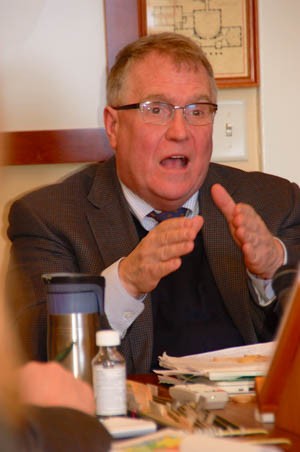
“Acts 46, 77 and 166 are the pillars for which we will craft our education system for the next 30 or 40 years,” Francis told the board at its March meeting. “There is no better time to revisit what we are doing with 166 and 77 than right now. If we are off course by a couple of degrees it can be fixed, but the further we travel the further we get from the point we want to be at.”
As supervisory unions and supervisory districts are administering or working toward universal pre-kindergarten, they are finding that low-income families are less likely and less able to take advantage of the vouchers given to them for 10 hours of preschool a week. Often this has to do with access in more rural areas, the need for more than 10 hours of care, and transportation issues, but also there are some problems associated with special education.
When lawmakers wrote the laws they never intended for inequality to come into play, according to Peter Peltz, a member of the state board and former vice chair of the House Education Committee. “What concerned me was all the kids that need it most aren’t able to access these programs,” Peltz said of preschool.
When it came to flexible pathways — allowing students access to early college, dual enrollment in both college and high school, and work studies programs — Peltz said the idea was to reach kids who weren’t engaged in their education and their futures.
Access and transportation have a role to play in the concerns about this law, as well as the impact that the policy has on students who do not choose to use the programs. Some high schools have had to avail themselves of a clause in the law that allows them to add phantom students to their rolls because their general education student body has atrophied to such an extent, according to the education secretary.
Francis urged the state board to research what is happening around these two laws. “Take a hard look and see how they are playing out in each and every community in the state, and make sure we are on course with the implementation of those acts,” he said.
Act 166: Universal Pre-Kindergarten
Ned Kirsch, superintendent of Franklin West Supervisory Union, told the state board that his rural region does not have any highly rated (four- and five-star) preschools, and while parents who have means can go to Burlington for pre-K those who are low-income or don’t have transportation are stuck. “My dream is that every school would have transportation for pre-K,” he said.
He said working parents who need more than 10 hours of child care and can’t leave work to move their children from the pre-K program to day care also cannot use the vouchers. So essentially, “we are supplementing parents who do have means,” he said.
Education Secretary Rebecca Holcombe pointed out that each school district pays for a $3,000 voucher for every child who attends an approved private pre-K program for 10 hours a week. “It is a challenge in places that previously operated (pre-kindergarten) because now they have to pay to operate plus pay for vouchers going out,” Holcombe said.
The vouchers also introduce a lack of predictability in student count and therefore in budgeting and programs for districts that operate schools and now pay tuition to private providers.
Orleans Southwest Supervisory Union Superintendent Joanne LeBlanc said Act 166 has “decimated” a decadelong pre-K collaboration she had in place under Act 62, the previous pre-K law, because of changes to partnership agreements due to the use of vouchers.
“We had a really unified system — a well-oiled machine. We developed a system that had lots of choice for parents. We listened to the parents and expanded outside of our SU to meet their needs, and I felt we were truly honoring the opportunity of choice for the families,” she said, before adding, “I feel that all the work I did for 12 years trying to build an early childhood system is gone. The entire infrastructure, the entire relationship we’ve had with our partners, the collaboration, and the ease we created for parents” is gone.
There is also limited choice for early education students who need special education services.
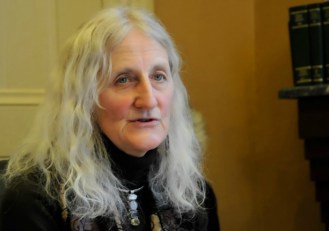
Jo-Anne Unruh, executive director of the Vermont Council of Special Education Administrators, said that because the voucher system allows parents to take money out of the school district, it is causing problems for children who have special needs.
A preschool child with special needs could be served in either a private or public program as long as it falls within the child’s school district. This hasn’t changed, but since vouchers are allowed to leave the school district, if parents choose a pre-K out of their district they can no longer avail themselves of those special education services. So either the child goes without special services or stays in a district that may not have very many high-quality pre-K opportunities.
“We applaud Act 166, but we are having pretty significant growing pains in terms of equity and access,” Unruh said. “Those really need to be addressed so we don’t create socio-economic silos. Nor do we want children with disabilities not to receive services as soon as possible.” She said they aren’t questioning the intent but feel some knotty issues need deliberation.
Act 77: Flexible pathways
Again geography plays a role in equity here, since opportunities to attend college aren’t always nearby. Throw in the need for students to get themselves to the college or workplace, and transportation becomes an issue, according to Francis.
Added LeBlanc, of Orleans Southwest: “We live in a rural geographic area with limited employment opportunities and no transportation system in place. So again, it boils down to in order for students to truly benefit it is those that have a vehicle and can go there they will go.”
Hazen Union School had to hire an Act 77 coordinator, an expense it had not anticipated, according to LeBlanc. She said her supervisory union needs a licensed workplace coordinator to help with the job placement as well.
At the state board’s March meeting, Holcombe said she knew of two high schools that have had to have phantom students assigned to them in their average daily membership count because so many students were leaving the classrooms to take college and workplace credits.
In an era of declining enrollments, Vermont’s offering of early college, dual enrollment, career and technical education, and work-based opportunities is leaving some high schools questioning their own viability, according to Francis.
“When you have 50 kids in high school and 10 juniors and seniors are exiting to go someplace else at the same time we want to provide a quality education to every child, that is a phenomenon that we ought to be paying attention to,” said Francis.
Superintendents, educators and others support the goals of Act 46, believe in early childhood education and the flexible pathways in Act 77, he said. It is because they believe in the potential of these programs so much that they want to make sure they are implemented well, according to Francis.
