

This commentary is by Addie Lentzner, a junior at Middlebury College, where she is studying sociology and Black studies.
For high school students Cashel Higgins and Mayla Landis-Marinello, testifying at the Statehouse is like any other day. Cashel attends Harwood Union High School, where he is spending his senior year as the student representative on the school board. Mayla is a senior at U32 Middle and High School, co-teaching a class on activism and serving as a founder of HER-Vermont, a student-founded reproductive justice organization. Both are well-versed in the world of politics and advocacy, especially when it concerns the schools in which they spend so much of their time. Yet, all too often, they feel unheard.
Education is, of course, a contentious issue in Vermont, particularly in our rural communities. In March 2024, after one-third of school budgets failed largely due to rising property taxes, policy-makers introduced what would become Act 73 — a bill to alter the funding formula and school districts themselves in an attempt to reduce costs. This Act has passed, but its future is far from certain. The Legislature is at a standstill over redistricting maps, communities are opposing many of the proposed funding formula changes, and small schools are in limbo while they prepare to let go of beloved teachers due to funding cuts and forced mergers.
As a student who grew up in rural Vermont public schools, and as a college student who remains deeply engaged in advocacy with current high schoolers in my community, I prefer to focus on our students rather than dwell on details of the legislation. I want to challenge us — as Vermonters — to question the purpose of education, and to ask how we can empower students like Cashel, who tell us they “don’t have confidence that we’d been listened to in the [education reform] discussion.”
In doing so, I hope that we can collectively start to rethink how we engage in reform as a social process that centers students. Because, ultimately, that is the essence of the education system we want to create.
I remember my first time driving up to the Statehouse from Arlington, where I attended high school. I was set to testify in the House Education Committee, after having co-authored a bill relating to the creation of an antiracist education certification, H.584, with a group of other students. As the car neared Montpelier, I began shaking. In my mind, my voice meant nothing, and statewide policy was something that a small-town girl like me had no business getting involved in. I had seen my peers drop out of high school, and I struggled to engage in a system that I felt wasn’t built with my best interests in mind. I had lost hope in the system, and my goal had been to graduate and never look back, but my time in the Statehouse and organizing on the ground with other students changed my perspective.
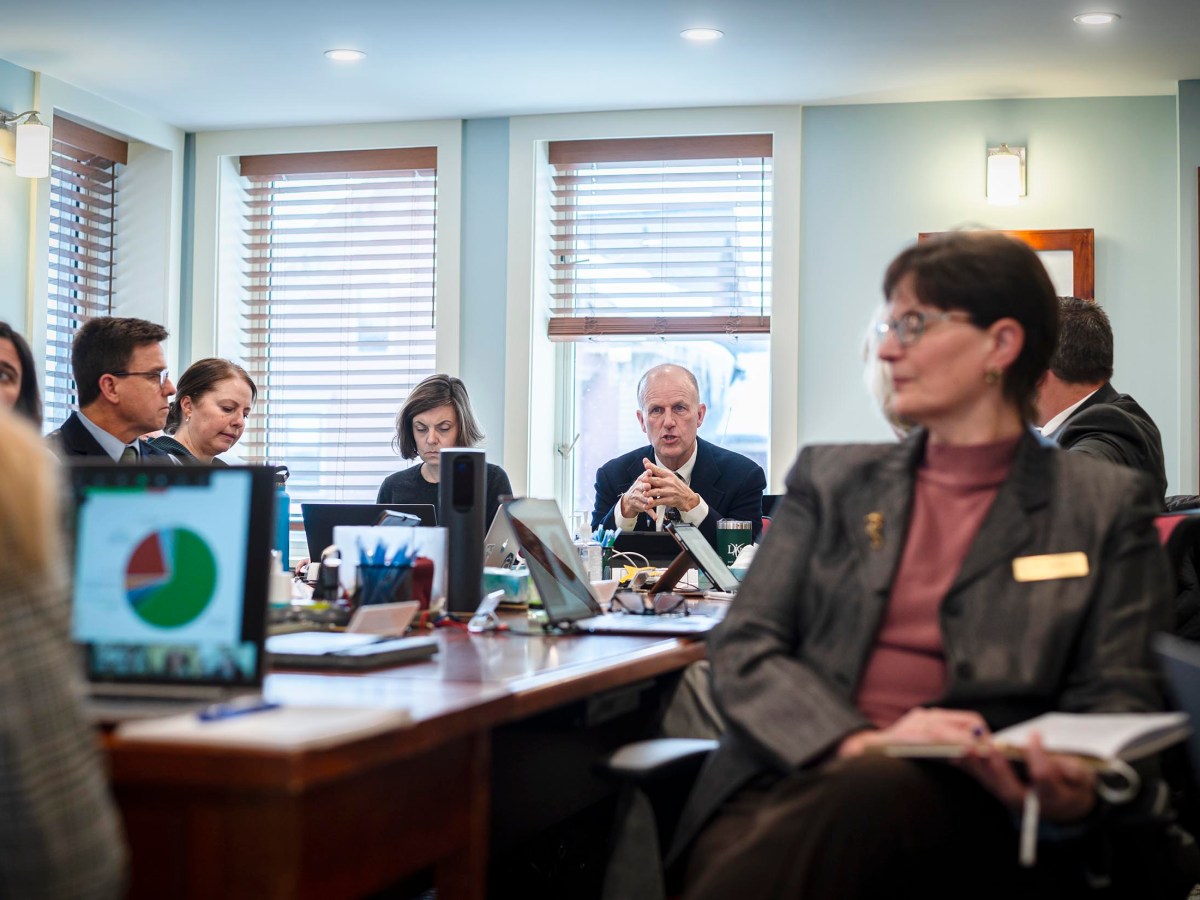
Four years later, in January 2026, the Statehouse had become my second home. I sat in the House Education Committee with Mayla and Cashel, and with two other high school students, Isa Harrington and Libby Gabel, joining us on Zoom. All four were advocating on H.640, a bill they had written on education policy and student voice. I had worked with them on this bill for most of the summer and fall, and it was now being brought to the halls of power.
Although H.640 might not pass on its own, it’s still very possible to bring its values into broader legislation. For example, the school reform bill, H.955, recently passed the House Education Committee. What would it look like to formalise an avenue for student voice in that bill? There are so many possibilities to bring young people into pre-existing systems and conversations in meaningful ways, especially regarding their own education.
Education Secretary Zoie Saunders was right when she said in a recent commentary for VTDigger, “Change is hard, but Vermonters have shown we can do hard things by coming together.”
The thing is, we as Vermonters — especially young Vermonters — want to come together, but we have not been given the space and power to do so effectively. If our leaders are serious about education reform that centers students’ needs, we call on them to invite us on our terms, not just theirs. That’s how real change happens — as a social process, as a community endeavor — not just a decision in the hands of a few.

