

This story by Susan Smallheer was first published in the Brattleboro Reformer on Oct. 22, 2026.
VERNON — There could be another nuclear reactor in Vernon’s future.
Vermont Public Service Commissioner Kerrick Johnson told the Vernon Selectboard on Tuesday evening that a new, small modular nuclear reactor might be a good fit at the Vermont Yankee site, which is almost cleared of the former 600-megawatt reactor that shut down in 2014.
Johnson said the Vernon site is very valuable not just to Vernon, but to Vermont and the New England power grid because of the transmission infrastructure located next to the reactor site. The switchyards and transformer belong to the Vermont Electric Company, known as VELCO, a consortium of Vermont’s electric utilities that owns the state’s transmission lines and infrastructure.
Johnson said affordability and climate change are behind Vermont’s interest in new nuclear technology. But he said a new, small modular reactor is years away — seven or eight was his estimate.
Small modular reactors are in development in the U.S., but one was recently approved for use in Ontario, Johnson said. The small reactors are in use in Russia and China.
When Yankee shut down, the town lost hundreds of well-paying jobs and a substantial tax customer, and it’s been watching reuse of the site closely.
Electricity demand in Vermont is high and growing, and was behind the consumers’ electric bills, which have climbed substantially in the past four years and are expected to grow 40% in coming years, he said in an earlier interview.
The interest in the Vernon site is part of a New England-wide renewed interest in nuclear power as the region grapples with increasing demand, Johnson said, and a move away from fossil fuels.
He said the modular reactor could work well with the battery storage facility that is under consideration by a Texas company, PowerTransitions, which has been holding public meetings in Vernon to introduce the company and its potential plans for the site.
NorthStar Group Services, which has owned Vermont Yankee since 2019 and is rapidly completing its $602 million demolition and cleanup, has signed a lease agreement with PowerTransitions.
But Johnson said the state of Vermont actually has the right of first refusal on the Yankee site and is evaluating what its role should be. The state option is included in the small print in the 2018 memorandum of understanding the state signed with Entergy Nuclear and NorthStar when Yankee changed hands.
Johnson said there is strong support among New England’s governors for nuclear power, and all six governors signed a letter of support in March. There are two remaining nuclear reactors in New England — the Seabrook station in New Hampshire and Millstone 2 in Connecticut.
Together, the two nuclear stations produce about a third of the electricity consumed in New England, according to recent reports.
Vernon officials and townspeople listened intently to Johnson, who himself is a former Vermont utility executive with VELCO and the former Central Vermont Public Service Corp., which was purchased by Green Mountain Power’s corporate owner.
Johnson acknowledged that support or opposition to nuclear power appears generational — with younger people supporting nuclear power as it is viewed as “cleaner” and not contributing to climate change and has a low-carbon footprint. Older generations, he said, remain skeptical.
Vernon resident Maddy Arms, who is a member of the Vermont Nuclear Decommissioning Citizens Advisory Panel, which coincidentally met Monday night to get an update on decommissioning, predicted there would be continued opposition from anti-nuclear activists who campaigned for decades against Vermont Yankee’s operation.
Selectboard members voiced neither support nor opposition, but thanked Johnson for coming to Vernon and speaking directly to them.
Johnson said Gov. Phil Scott has long been a supporter of nuclear power, and in fact Scott reiterated that support during a gubernatorial debate on Vermont Public Wednesday evening.
“I don’t think we should close the door on nuclear,” Scott said, saying he was interested in “small-scale nuclear.”
In contrast, his Democratic challenger, Amanda Janoo, said she was not a supporter of nuclear power, and she pointed to the high-level radioactive waste still stored in Vernon from Yankee’s 42 years of operation.
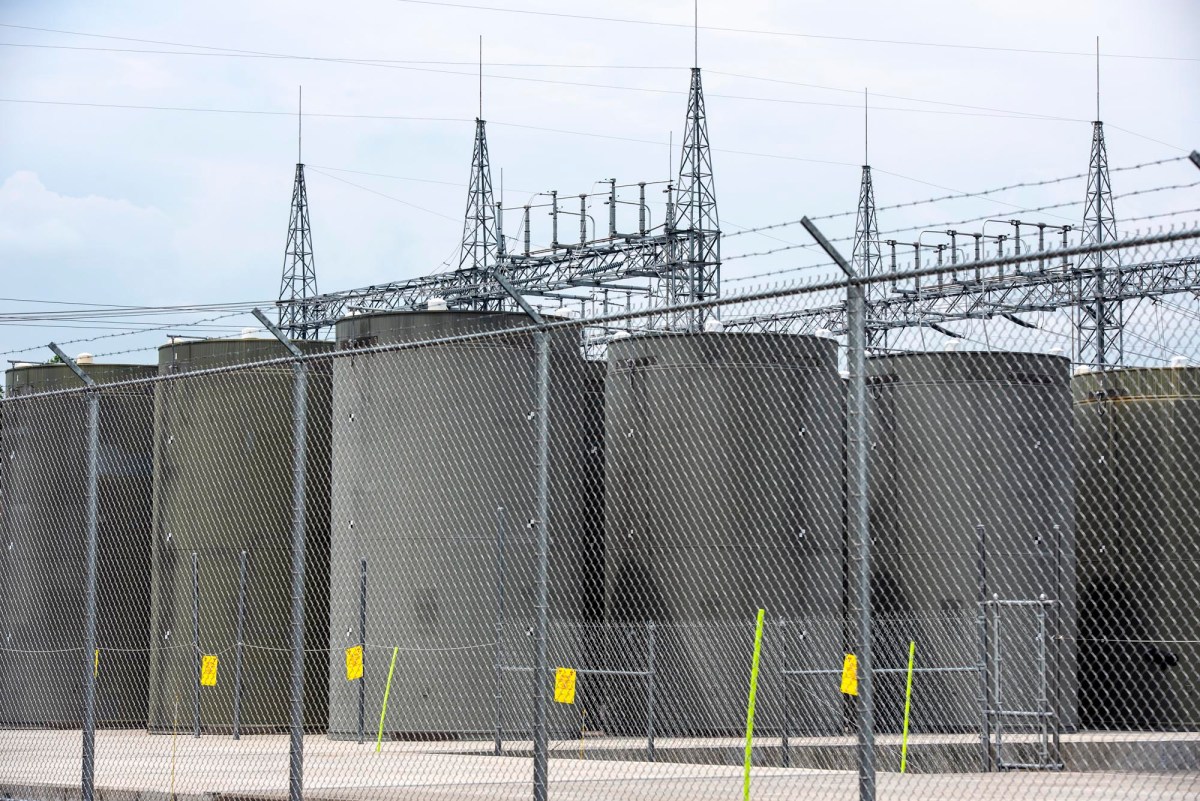
There are 57 large steel and concrete casks at the Vermont Yankee site, which contain the spent fuel and will remain in Vermont until the federal government builds a storage facility.
A small modular reactor would still produce high-level radioactive waste, but some of the reactors are being designed with re-processing of its fuel, which reduces but does not eliminate the amount of waste.
Johnson said that modular nuclear reactors would be about half the size of Vermont Yankee in terms of generation, but would create more jobs than a battery storage or solar facility. A data center has been all but ruled out for the Vernon site due to local opposition.
“Vernon will always have a say,” he said. “The department would never support” a project opposed by Vernon, he said.
Johnson took pains to reassure the Vernon board and townspeople that a new nuclear reactor wouldn’t be installed in their town without their support and approval, not to mention state approval. Johnson said the majority of Vermonters would support the return of nuclear generation to the state, claiming the figure was 63% according to a recent survey.
Vermont electric customers receive about 28% of their power needs from Seabrook, which is largely owned by a Florida-based power company, NextEra Energy.
Vermont Yankee and its sister plant, the Pilgrim reactor in Massachusetts, were shut down by its then-owner Entergy Nuclear because its power was too expensive compared to natural gas, not because of environmental concerns or political opposition. In fact, in the weeks leading up to Entergy’s announcement, the company had won a major court case against the state of Vermont in a federal appeals court about the future operation of Vermont Yankee.
Johnson said the state was looking at other options to increase power availability, including a “resizing” of the wind facility in Searsburg and an off-shore wind project proposed by a Canadian province, as well as upgrading a key transmission facility in Highgate, which brings Hydro-Quebec electricity to Vermont.
