Matthew McIntosh’s family says he came out of the womb loving cows.
Now, McIntosh, who works for the Agricultural Research Service in the U.S. Department of Agriculture, is trying to help Vermont farmers improve the quality and quantity of their cows through the University of Vermont’s new Food Systems Research Station.
At the station, researchers are seeking to innovate solutions to agricultural problems, sharing what they learn with the rest of New England, Kirk Dombrowski, UVM vice president for research and economic development, said in an interview.
“It’s one of those new collaborative spaces where we can get students with their hands literally in the dirt,” he said.
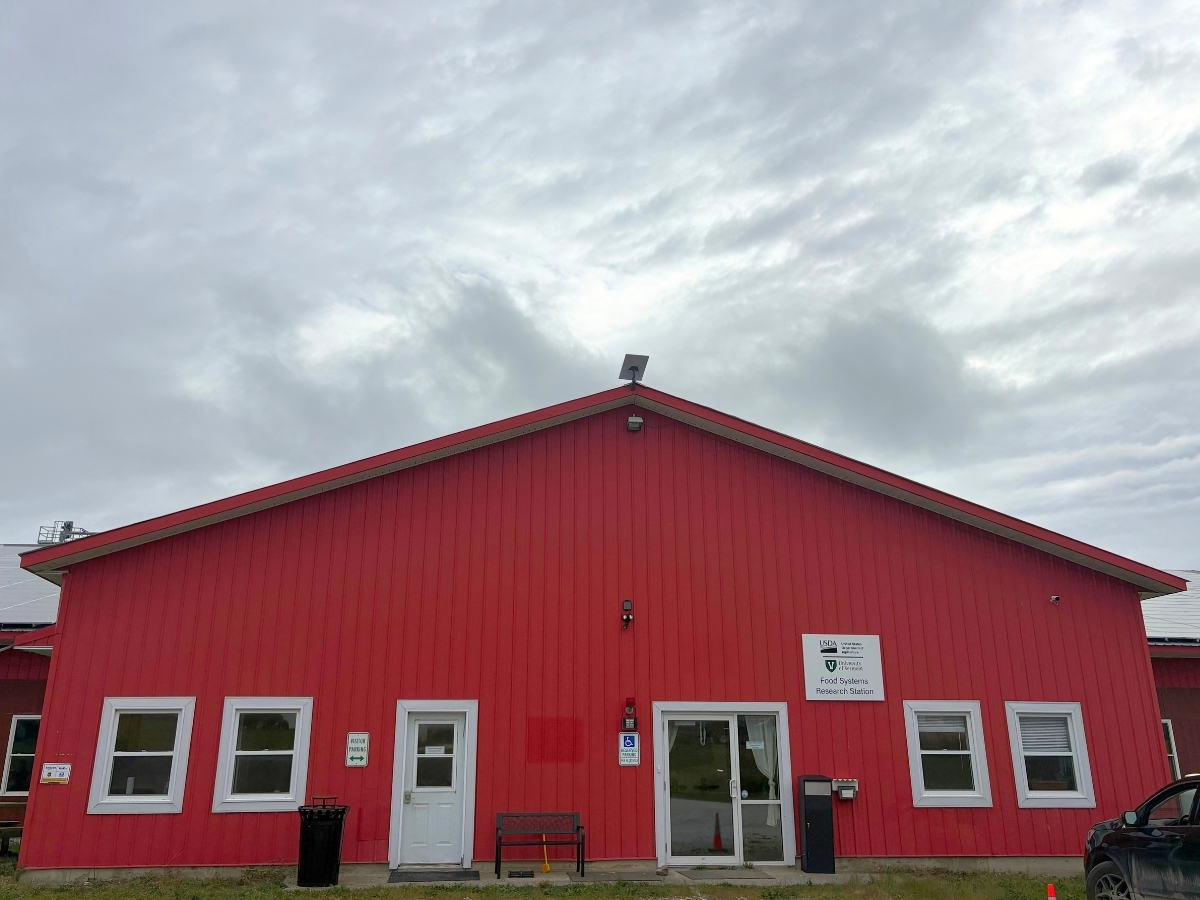
UVM opened the research station to a crowd of researchers, staff and stakeholders Thursday. Located on an approximately 400-acre former dairy farm in Charlotte, the research station is housed in an 18,000-square foot warehouse where researchers have begun studying crop behavior, livestock and food system challenges. The station is the first of its kind in New England, according to Food Systems Research Institute Director Polly Ericksen.
Ericksen, who coordinates research opportunities and collaborates with the USDA, said in an interview that the center’s researchers are able to alleviate some of local farmers’ burdens.
This includes dairy farm consolidation, which McIntosh is working to address with his upcoming research studying dairy and beef cow crossbreeding, as well as various other impacts on cow behavior and production performance.
Limited research started at the station in May, including a study of cow grazing preference inspired by discussions with other scientists, USDA Agricultural Research Service research leader Chris Peters said in an interview.
The research station is the newest step in the collaboration between UVM’s Food Systems Research Institute and the USDA’s Agricultural Research Service. The partnership began in 2019 through a $3 million congressional appropriation.
In 2024, UVM signed a 30-year lease on Nordic Farm to establish the research station.
In the two years since the signing, UVM and USDA teams have been working to prepare the land, determine equipment needs, establish preliminary research needs and begin building a research barn and acquiring livestock, Ericksen said during Thursday’s opening remarks.
She said that she envisions more “field days” like Thursday’s, where community members, researchers and stakeholders can see what work is being done.
Food systems research adds to a long-standing practice of trying to understand how agriculture works from all angles, Peters said, adding that researchers can’t keep their “blinders on.”
“The work that we do is not just studying farm products but whole systems, multiple products at one time,” he said, “kind of getting to the whole picture writ large.”
The hope for McIntosh and other researchers is to help local farmers produce healthy food that can stay in the Northeast.
“We could have a huge impact on keeping it local,” McIntosh said. “I’m just so delighted to be here.”