


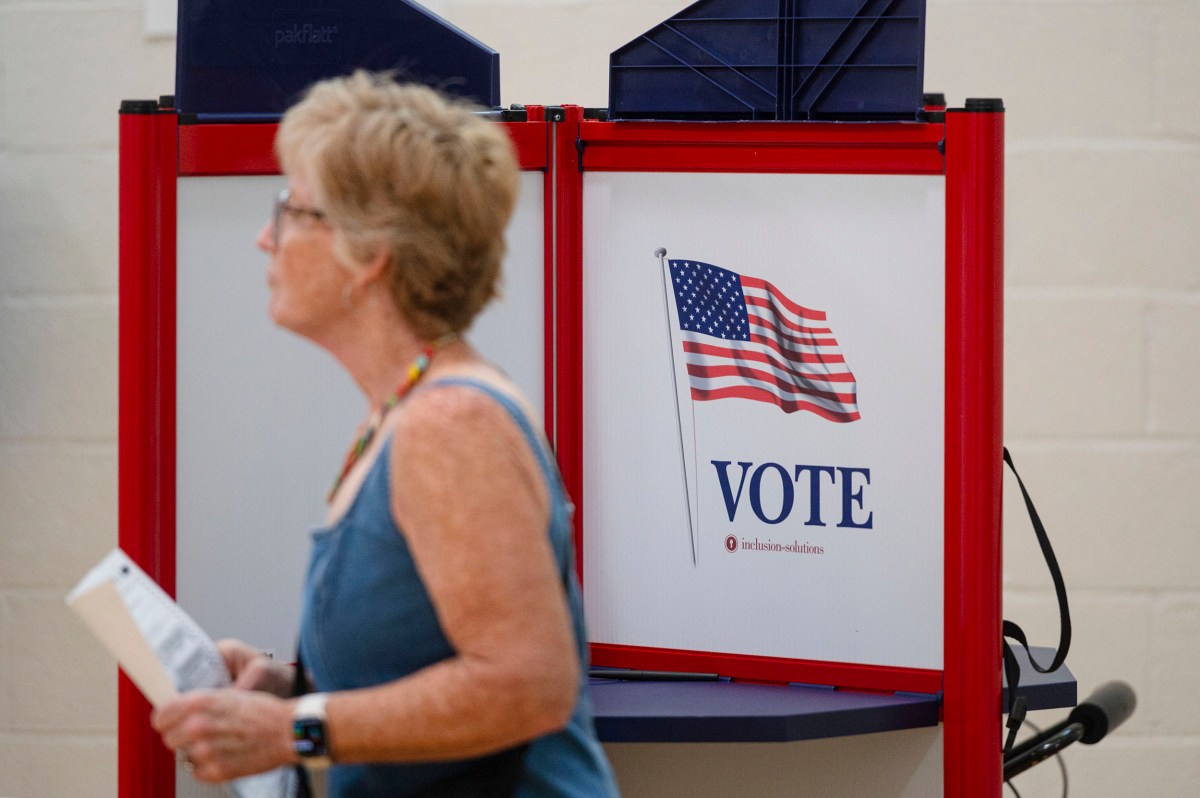
This story was updated at 6:17 p.m.
Across the state, voters are hitting the polls on Tuesday to decide who will challenge Vermont Republicans come November in competitive Democratic governor and lieutenant governor races as well as several crowded local races.
“I’m just hoping for change, and that no matter what party orientation, that our Legislature and the governor can work together to really make positive change in the state,” said Susan Gerreston, a Montpelier resident, outside of the city’s polling site at City Hall on Tuesday.
For Gerreston, that change is represented by Democratic candidate Amanda Janoo, who is running for governor. The economist and first-time candidate won Gerreston’s vote because of her progressive platform. However, the Montpelier resident said she has also “heard good things about” Janoo’s competitor, Aly Richards, who ran a successful campaign for affordable childcare as the former CEO of Let’s Grow Kids, a prominent childcare lobbying group in the state.
“I don’t think we can lose either way,” Gerreston said, referring to the faceoff for the Democratic nomination for governor, which will determine who will challenge Republican Gov. Phil Scott in the general election this fall. Scott, who’s in his 10th year in the office, is considered the nation’s most popular governor but has recently seen his job approval ratings diminish, with a University of New Hampshire poll finding him at a four-year low, slipping by 10 points.
Deb Dwyer, another Montpelier voter, said she also voted for Janoo because of her progressive politics, describing the candidate as a “Bernie type person.” Janoo has campaigned on a platform of directing wealth to local communities and supporting small businesses, while Richards has focused on affordability, targeting the housing crisis and childcare.
Molly Gray, a Democrat in the competitive lieutenant governor primary, also got Dwyer’s vote, she said. Gray, who previously held the seat from 2021 to 2023, turned up at the Montpelier polling site in the early afternoon, greeting voters as they cast their ballots.
But Dwyer said she did not know much about Gray’s platform, having voted for her because of “word of mouth,” and said she mostly directed her energy to the governor’s race in the hopes of voting out Scott.
“I don’t think he’s pushing back hard enough against the Trump-type policies,” she said, describing Scott’s leadership during the Trump administration.
Hartford voter Jen Durgin voiced Scott’s waning popularity: despite falling to the political left, she voted for Scott twice in the past, in part to show that Vermont can support moderate Republicans, she said.
But after Scott vetoed a bill that would have lowered insurance charges for public school employees, and has put up “unreasonable obstacles to greenhouse gas reporting,” she has lost faith in the incumbent governor, she said.
Gerreston, the Montpelier voter, also cited Scott’s vetoing of progressive bills passed by the Senate as a reason why she believes change is needed in the seat. This year, Scott has vetoed bills targeting healthcare reform, energy development and AI data center regulations.
For Marilyn and George Albrecht, in Hartford, school funding was top of mind. Their children and grandchildren all attended Hartford High School, which they said was the reason they chose to settle in Vermont 40 years ago after George Albrecht’s military job stationed him there.
“Property taxes go up, and the quality of education goes down,” said George Albrecht, who declined to say how he voted Tuesday. “If taxes go up any more, they will tax us right out of here.”
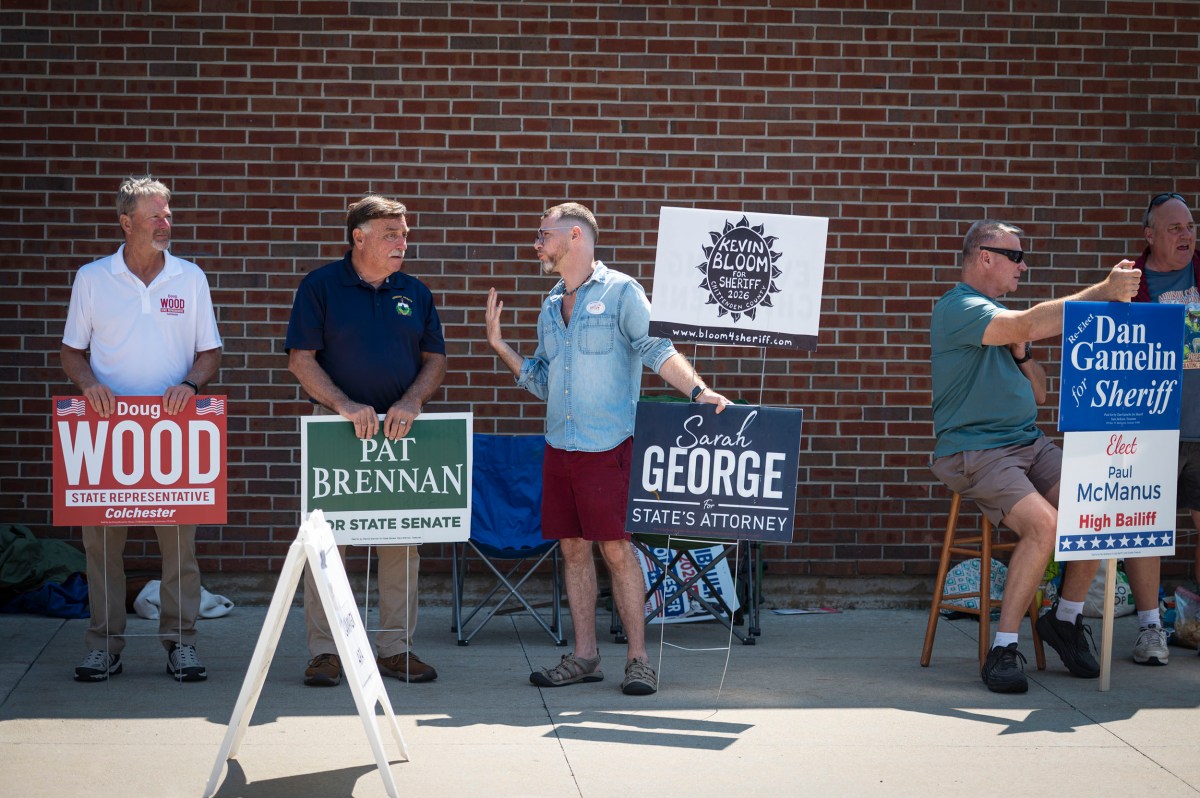
Hartford voter Joe Dombroski’s property taxes have doubled in the past few years, he told VTDigger in an interview outside the polls Tuesday. Keeping taxes low was one of the biggest issues on his mind.
“Just lower the prices,” he said. He knows that school consolidation can be unpleasant, but having attended a merged high school across the border in rural New Hampshire, he believes it’s possible and thinks it yielded better educational outcomes than a small rural schoolhouse. He hopes Vermont lawmakers heed that example, though he declined to say how he voted.
Education took center stage during the last legislative session, as Scott and the Legislature agreed to an education reform compromise that seeks to facilitate voluntary school district mergers.
In Rutland, focus turned to low voter turnout this primary. Ahead of election day, only 3% of registered voters had cast their ballot as of last Thursday, according to data from the Vermont Secretary of State’s Office. Rutland City Clerk Tracy Kapusta said voter turnout was light so far in the Marble City, with a slow trickle of people visiting polling locations.
Sen. Brian Collamore, R-Rutland, who is running in an uncontested Republican primary, said in an interview Tuesday that it is disheartening to see low turnout at a variety of polling locations he visited in Rutland County.
“I’m not thrilled that very few people are voting,” Collamore said. “I don’t think that’s good for the country and good for the state.”
In Norwich, Liz Blum, 84, turned out with enthusiastic support for Amanda Janoo’s governor candidacy and Elizabeth Burrows’ bid for state senate, in the crowded six-person Windsor County primary for three seats representing the district. She donned a Burrows for Senate shirt that she buttoned over before heading into the Tracy Hall polling place.
“I am so thrilled with Amanda Janoo. She has a great chance to beat Phil Scott, who has been in office 10 years too long and hasn’t improved anything. I see Amanda as a whole-picture person, with really sensible solutions for saving small communities and taxing the wealthy,” Blum said.
Blythe Faris of South Royalton, on the other hand, said she backed Aly Richards in the Democratic primary, inspired at least in part by the candidate’s focus on “affordable childcare.” Faris came to the polls at the White River Unified District’s Royalton campus Tuesday afternoon with her 3-year-old, Thomas.
Ryan Goss, a 40 year-old IT professional from Rutland, said he does not see much difference in policy positions between Janoo and Richards. Goss said he was impressed by Janoo’s professional background in economics and experience working for the United Nations.
While he voted for Janoo, he said in previous elections he left the governor’s ballot line blank because he couldn’t bring himself to vote for Scott, but didn’t find the previous Democratic candidates compelling either. He said he thinks that Scott handled state leadership well through the peak of Covid-19, but saw support for the incumbent wane recently.
“I think she’s qualified enough that if people truly have kind of soured on him, that I think people will see her as a good replacement,” Goss said of Janoo and Scott.
Nora Doyle-Burr contributed reporting.

