

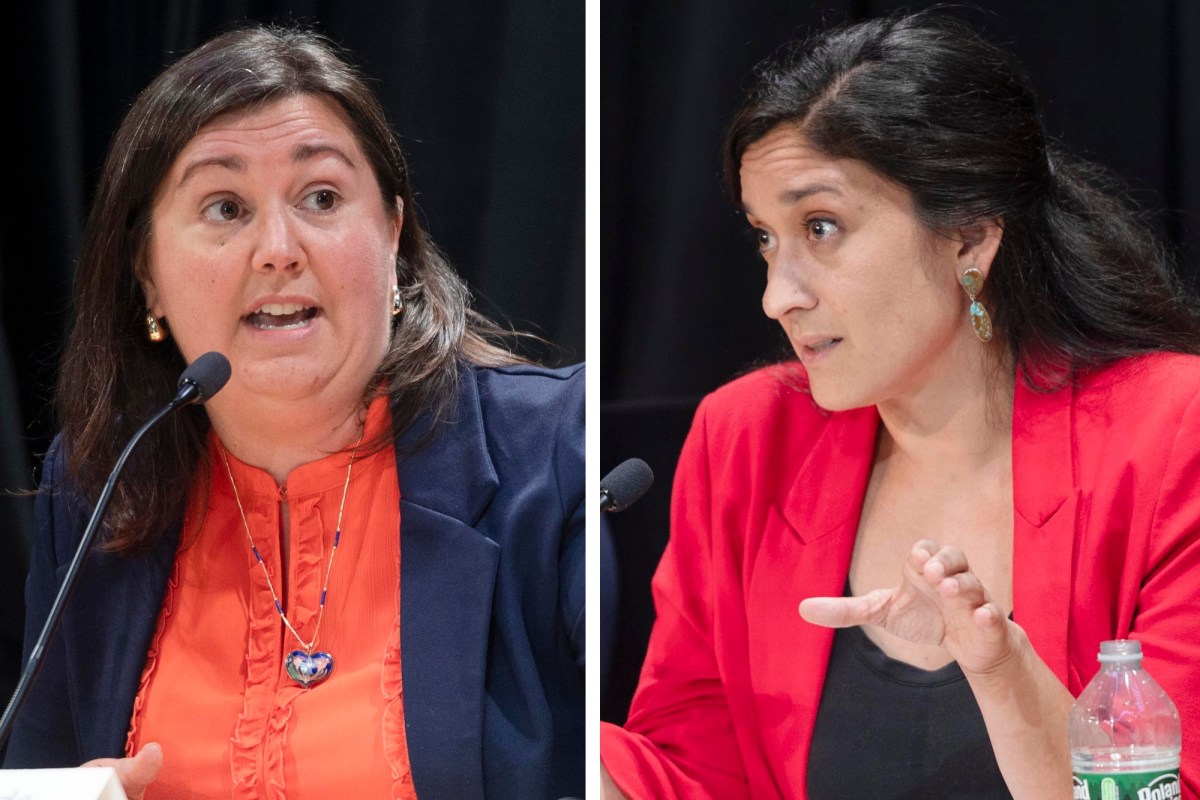
The two Democrats vying to take on Vermont’s Republican Gov. Phil Scott this year have never run for office before. But they’ve also raked in far more money at this stage in the race than either of the Democrats who challenged Scott in 2024 and 2022.
Ask Amanda Janoo and Aly Richards why that might be the case, and they point to the same trend: Across the country, voters’ support for incumbents has been slipping. Data shows an above-average number of incumbent members of Congress have lost their seats across the roughly 30 states that have held primary elections for 2026 so far.
They also point out that Scott, who is seeking what would be his sixth term, scored his lowest job approval rating on record among likely voters in a University of New Hampshire poll this week. It’s a ripe moment for Democrats to back a challenger, they’ve told voters, pointing to the recent success of first-time Democratic candidates in primaries in New York City and Denver.
“You know, thank you for your service,” Richards said in an interview, addressing the governor. “We don’t have term limits in Vermont. But we have common sense.”
Not since 2020 had a Scott challenger raised more than $40,000 at this stage in the race. But this year, Richards and Janoo hauled in $366,000 and $245,000, respectively, according to the latest filings with the Vermont Secretary of State’s Office.
So far, that money does not appear to have bought them significant name recognition among likely voters in their party. Another UNH poll found this week that a majority of Vermont’s Democratic primary voters did not know enough about the candidates to say which they would rather vote for.
Meanwhile, the same poll found, Scott would beat either of them, by at least 10 percentage points, if the general election was held today. And to be sure, while the governor’s approval rating slipped even further in that latest survey, nearly half of Democratic voters still like the way he is doing his job, the poll found.
Richards and Janoo agree that unseating Scott will take a monumental effort. And as they make their pitches to voters with just weeks before the primary, one narrative has become clear. Richards argues she’s the only one with the experience to hit the ground running; Janoo says only she is truly thinking big.
“What if the system itself is part of the problem?” Janoo asked in an interview.
An economist who was born in Strafford and now lives in Burlington, Janoo, who’s 38, was the first Democrat to announce a bid for governor this year. She’s spent much of her career working with think tanks and international development organizations, both in the U.S. and abroad. More locally, she co-founded an organization called Wellbeing Economy Alliance of Vermont that, among other projects, hosts events and workshops focused on economic development.
She also served on the board of Fund Vermont’s Future, an organization supporting recent legislative proposals to raise taxes on the state’s highest income earners.
That’s in some contrast to Richards, who entered the race with more name recognition within political circles from the decade she spent working as the CEO of Let’s Grow Kids, long one of the state’s most prominent lobbying groups. The organization counts as its biggest success the passage of a 2023 law creating a new 0.44% payroll tax and directing the revenue, along with annual earmarked state funds, to income-based subsidies for families in need of childcare.
The law passed, notably, because a supermajority of Democrats in the Legislature overrode Scott’s veto of it.
Before taking the helm of the childcare juggernaut, Richards worked on former President Barack Obama’s 2008 campaign and then in the office of former Vermont Democratic Gov. Peter Shumlin, finishing her tenure there in 2015 as deputy chief of staff. Richards, who is 40, hails from Newbury and now calls Montpelier home.
‘We have to do more than tinker’
On the campaign trail, Janoo has made the case that Vermont needs “a much more ambitious economic policy agenda.” Part of that, she says, is taking drastic steps to reduce Vermont’s reliance on a federal government that is “aligned around an authoritarian, nationalist vision for our country.”
Janoo said the state needs to look inward, rather than out, to grow its economy. That includes finding new strategies to keep more wealth in small communities and out of the hands of large corporations, she said, pointing to laws some states have enacted that tax the revenue large technology companies earn from targeted online ads.
“We need to have a populist approach to economic policy that is not based in a militarization, AI, crypto, libertarian, kind-of-feudal vision for the future of society — and is really centered in coming back to some of the basics,” Janoo said.
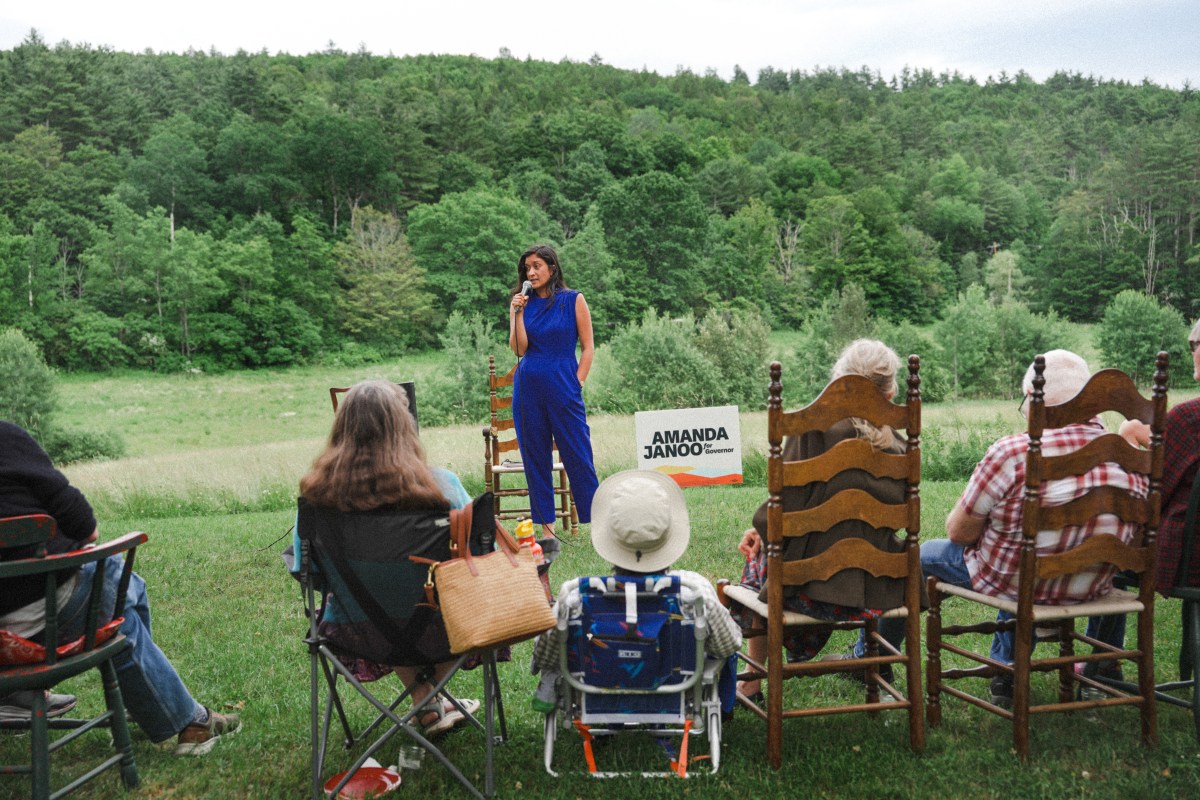
Part of that approach means reducing the share of Vermont’s state budget — currently, about a third — that comes from the federal government, she said.
She pointed to the uncertainty injected into the state’s healthcare system by recent federal changes to Medicaid policy, saying it shows that Vermont needs to raise more money on its own to pay for healthcare. Her campaign is pitching using an income tax surcharge on personal income over $500,000 to pay for free primary care for every person in the state.
Asked how she’d differentiate herself from Richards, Janoo said she has been “more critical of the conventional wisdom and establishment, broadly,” than her opponent. That includes both Republicans like Gov. Scott but also Democrats, Janoo said, both of whom she thinks share responsibility for an entrenched wealth inequality that makes life in Vermont and around the country difficult for so many households.
She also echoed that sentiment at a recent candidate forum in South Burlington.
“This is a moment where we have to do more than tinker with the systems that created these problems in the first place,” Janoo said, contrasting herself with Richards.
The UNH poll this week found that among Democrats who were familiar with both candidates, those who identified as socialists or progressives had a slight preference for Janoo while those who called themselves liberals or moderates leaned toward Richards.
‘You have to know how the system works’
In an interview, Richards pushed back on the idea it was easy to draw such political distinctions between herself and Janoo. She said her leadership of the childcare campaign shows she has already fixed “a broken system,” as opposed to only talking about doing so. And, it put in place a policy that is now considered “a sacred plank of the progressive agenda,” she added.
“Nobody thought we could fix it and no one had fixed it yet. We didn’t take that for an answer. We built a movement,” Richards said. “It’s not everything, but it is working — and it is bringing real financial relief.”
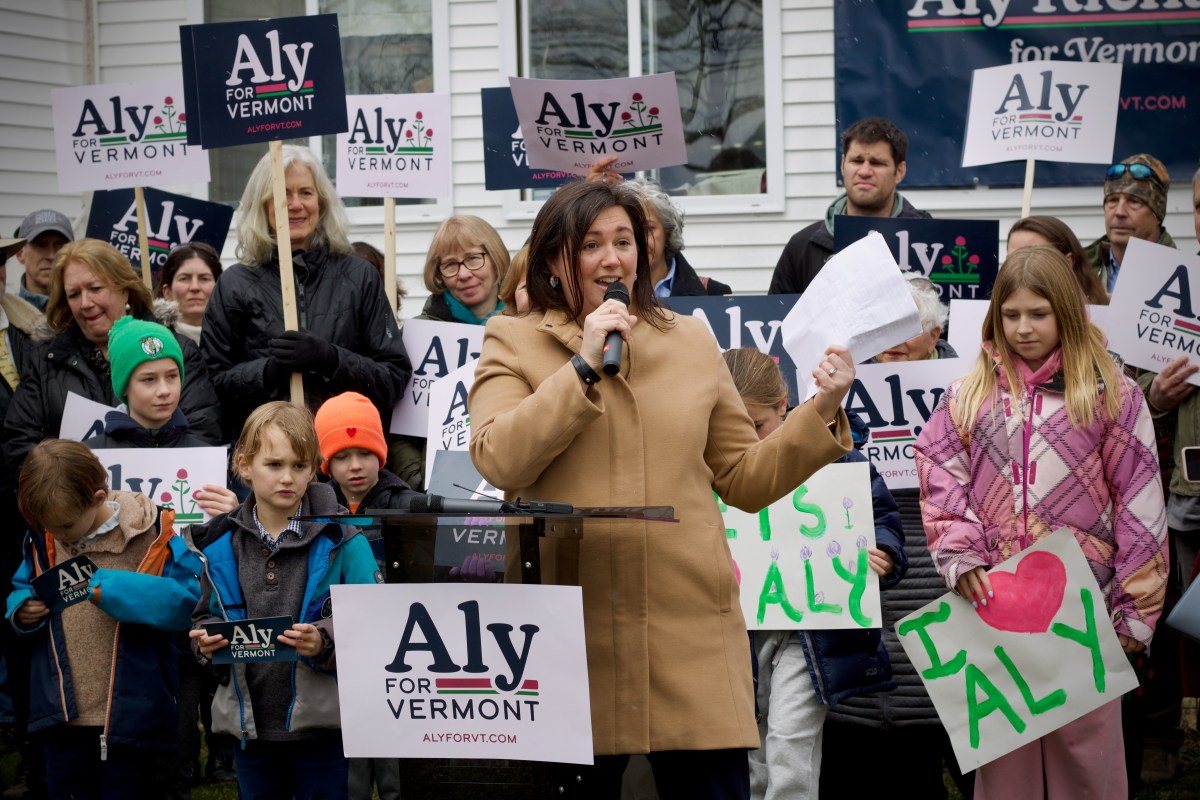
The law has led to a significant increase in the number of families using those state subsidies, according to a report published in January. Experts told lawmakers at the same time that Vermont saw 100 new childcare programs open in the last three years, and 1,700 new child care slots had become available. At the same time, some regions of the state, particularly Franklin and Essex counties, still have an outstanding need for more child care.
Richards says her top policy priority would be to develop an “economic action plan” for the state, the leading goals of which would be to build more housing and expand access to healthcare. When it comes to federal funding for healthcare — as well as other state services — she wants to “fight, fight, fight for every dollar that is owed to us,” she said at the South Burlington forum.
Richards is not opposed to raising taxes on high earners to pay for new initiatives, she said in an interview, but has not made it a tenet of her campaign the way Janoo has.
She’s also proposed creating a new cabinet-level division of her administration called the “office of rural prosperity.” It would work across existing state agencies to make sure rural Vermonters’ voices make their way into state government, she said, pointing to the contentious legislative debate over land-use measures in Act 181 as an example of why the office is needed.
To be sure, there are numerous policy areas where both candidates agree. Both have been clear, for example, that they oppose forcing school districts to consolidate, something Scott pushed for this year until later conceding it was not politically popular.
But Richards also made the case in an interview that a governor needs to have prior experience in the Statehouse to be effective. Scott served as lieutenant governor for six years and in the Senate for a decade before winning the state’s top job.
“I just don’t think you can hit the ground running if you don’t really know how the Vermont Legislature works,” Richards said. “You have to know how the system works so you can transform it. So you can change it. So you can bust against the status quo.”
She suggested Janoo was focused on “tech bros” or a “trillionaire” who may dominate many national political debates, but whose actions create broad societal challenges that cannot realistically be tackled by the governor of a small, rural state.
“A lot of that existential discussion is 100% true. I share that angst,” she said. She might be talking about those issues more, she added — “if I was running for president.”
Vermont’s primary election is Tuesday, Aug. 11.
