

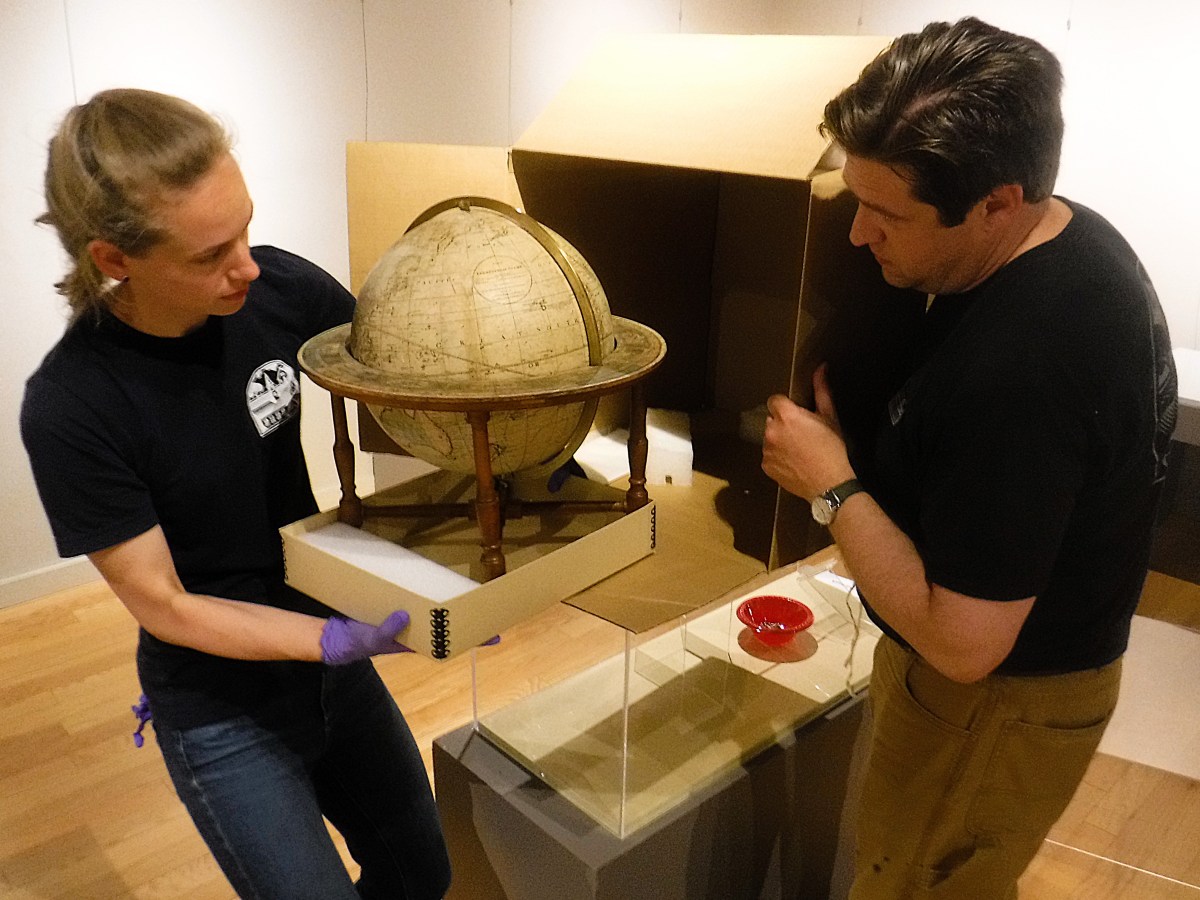
MONTPELIER — A century-old pair of ash and rawhide snowshoes — embodying subsistence and sport — seemed an obvious choice when the Vermont Historical Society perused its 30,000 artifacts to pick the most symbolic and storied for its new “50 for 250” U.S. semiquincentennial project.
But a billy club from one of the state’s most bitter labor disputes, the Vermont Marble Co. strike of 1935-36?
A blazer worn by a plaintiff’s lawyer when the Vermont Supreme Court ordered the state Legislature to extend marriage rights to same-sex couples at the dawn of the new millennium?
A Ku Klux Klan hood donned by Vermonters targeting French Canadian Catholics, Black people, Jews, immigrants and Native Americans in the 1920s?
“That’s not history that readily comes to mind when people think about Vermont,” said Amanda Kay Gustin, the society’s director of collections and access, “but that’s an important part we should talk about.”
The society is ready to start the conversation July 3 when it reveals those four artifacts and 46 others in an exhibit at its Vermont History Museum in Montpelier.
“Objects often speak for people who have no voice in the written record,” Stephen Perkins, the society’s executive director, notes in the introduction of a 350-page companion book. “They give insights into specific times, movements, communities, industries, conflicts and celebrations.”
Many of the nation’s semiquincentennial programs are marking the adoption of the Declaration of Independence on July 4, 1776. The state project’s scope, in contrast, is more expansive.

“We’re telling 250 years of Vermont stories and how the state has responded to and interacted with American ideas and ideals — sometimes in messy ways,” Gustin said in an interview. “We want to make sure people understand that our history is, at times, complicated.”
Some of the chosen artifacts document a pioneering past. Take the 1877 cream separator invented by Waterbury’s William Cooley to revolutionize the dairy industry, or the 1897 sap evaporator designed by St. Albans’ George H. Soule Co. to accelerate the production of maple syrup.
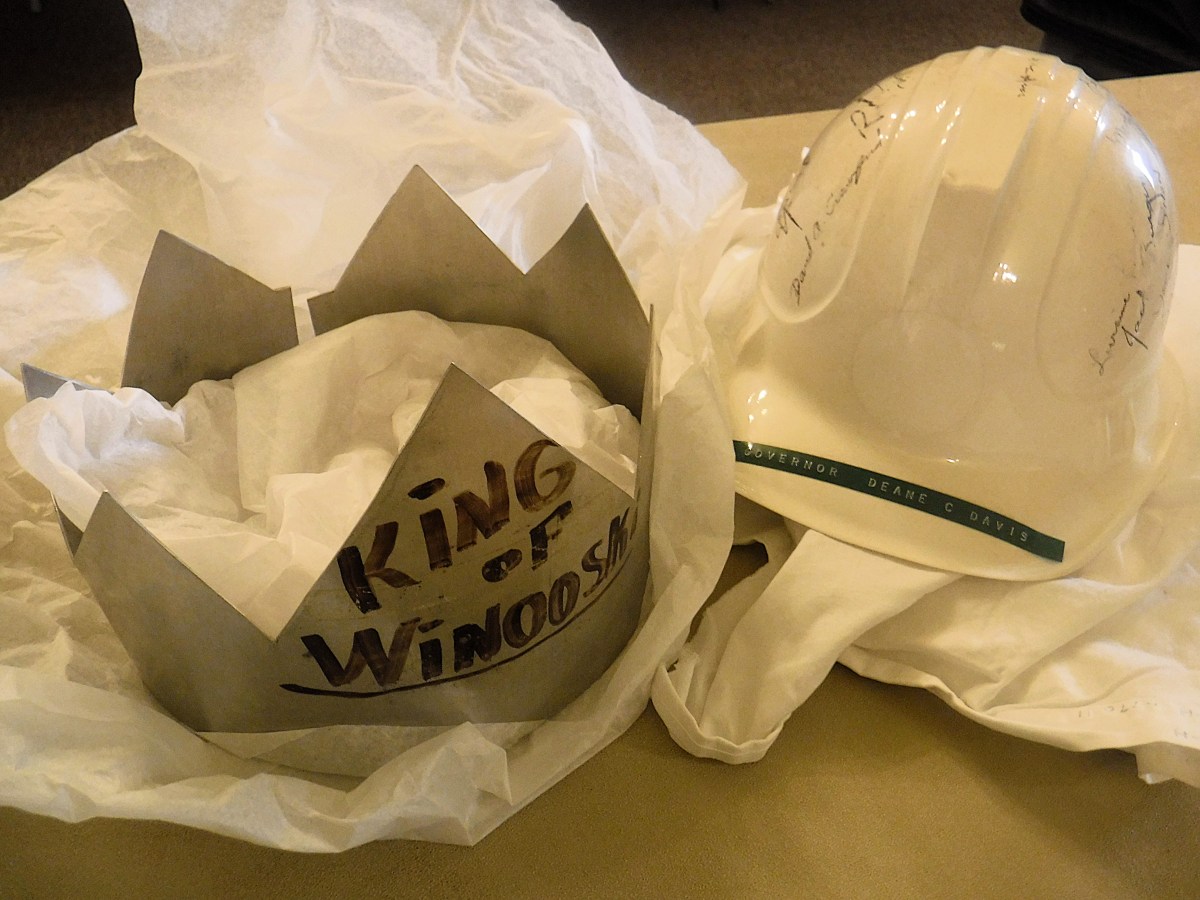
Other objects reflect more current times. Consider the metal crown thrust upon Philip Hoff in 1962 when a Winooski crowd heralded his victory as the first Democrat elected Vermont governor by popular vote.
Or the ceremonial hard hat Gov. Deane Davis wore in 1970 for the state’s first Green Up Day.
Or the “Walmart Sucks … The Life from Your Town” bumper sticker the grassroots group Citizens for Responsible Growth deployed in its 1990s fight against big-box chain stores.
“When we started brainstorming, we had 200 to 300 objects just off the top of our heads that we knew represented a moment in Vermont history,” Gustin said.
The society pondered a “250 for 250” show before pruning it to 50.
“Frankly, 250 things are too many for anyone’s attention span,” Gustin said.
The oldest and largest object is a 1700s printing press that predates the state’s founding. Brothers Ethan and Ira Allen used it to produce broadsides that proclaimed Vermont’s independence during the American Revolution.
Next comes a panorama of early papers: A bundle titled “Charters and Proprietors Deeds of Vermont Towns, 1761-1792;” the 1791 petition asking Congress to admit the state to the union; Abby Maria Hemenway’s 1800s collection of local histories, “The Vermont Historical Gazetteer.”
As for the wooden hand covered in peeling white paint? That’s the last remnant of the original 14-foot statue of Ceres, the goddess of agriculture, introduced atop the Statehouse in 1858.
The brass-knobbed cane with an embedded bullet? That’s evidence of the northernmost gunfire of the Civil War, when 20 Confederate soldiers raided St. Albans in 1864.
The taxidermied cougar with haunting yellow eyes? That’s believed to be the state’s last catamount, shot in the woods of Barnard on Thanksgiving 1881.
Individual items also aim to tell larger stories.
A patriotic pin from Plymouth-born President Calvin Coolidge’s 1924 reelection campaign represents Vermonters whose public service has led to national prominence.
A 1940 signboard map from the Green Mountain Club’s Long Trail — the nation’s oldest such hiking path — shows the state’s engagement with its natural environment.
And an “If You Enter VT You Must Isolate” road sign from the recent Covid-19 pandemic signals the state’s ongoing efforts toward public health.
“We want them all to speak to big ideas,” Gustin summed up the selected artifacts.
The society will present “50 for 250” at its Montpelier museum from July 3 to the end of the year. It then plans to follow up with a 2027 show on the 250th anniversary of the founding of the pre-statehood Republic of Vermont.
“We’ve made choices at a particular moment in time using a particular set of objects, but there are certainly many other stories we have not captured,” Gustin said. “We invite people to tell us what others are out there and important to them. This is just the start.”
