

This commentary is by Caroline Sherman-Gordon, who is the legislative director of the farmer member-led nonprofit Rural Vermont.
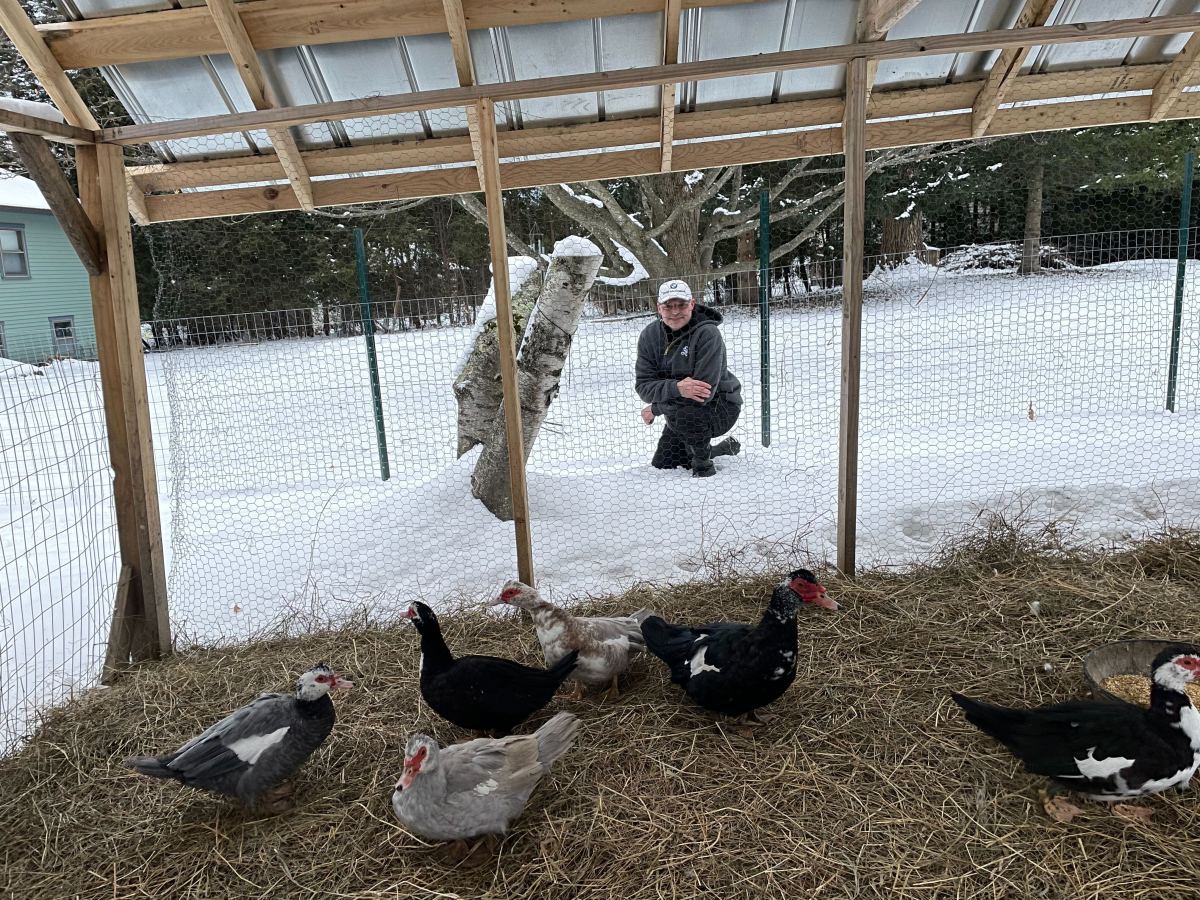
Municipal regulation of farming drew public attention in the Essex Junction duck case and the Orleans pig case, and became a farmer-led priority during the 2026 legislative session.
For decades, the precedent was that farming was exempt from municipal regulation. In 2025, however, the Vermont Supreme Court ruled that farming is not exempt from all local regulation. Instead, the court interpreted the agricultural exemption as applying only to agricultural water regulations, concluding that municipalities may zone all other aspects of farming.
In response, one of the broadest coalitions of agriculture and food system stakeholders came together to restore the farming exemption and codify a new right to grow that would protect homestead-scale production from ambiguous local regulations. Led by Rural Vermont, the coalition included the Vermont Farm Bureau, NOFA-VT, the Vermont Association of Conservation Districts, Agri-Mark, Cabot Creamery, the Connecticut River Watershed Farmers Alliance, Farm to Plate and the Land Access and Opportunity Board. The coalition drew inspiration from Maine’s 2021 constitutional amendment on food sovereignty and its 2017 Food Sovereignty Act.
On May 21, the Legislature passed H.941. In major ways, this version of the bill moves in the opposite direction from what the coalition requested.
A positive aspect is that the bill restores the municipal exemption for farming and farm structures as defined by the Required Agricultural Practices Rule. A coalition success was to maintain the low threshold for commercial farming at $2,000 annual gross income and continuing eligibility for programmatic support once farmers begin filing Schedule F with the IRS.
The bill also codifies a new right to grow plants exempt from local zoning, excluding cannabis and hemp from this exemption for plants grown for personal use, donation or sale.
Before passage, the Senate removed a stakeholder group that our coalition requested to continue to work on unresolved conflicts around municipal regulation of small livestock and poultry homesteads and farms, including how zoning can either support or hinder food sovereignty and local food security. The Land Access and Opportunity Board was willing to facilitate the group, with participation from farmer-led organizations and the Vermont League of Cities and Towns.
Under the bill as passed, livestock farms smaller than 4 acres may not benefit from the farming exemption in Title 24 because the Agency of Agriculture, Food and Markets is being granted new discretion over whether required agricultural practices apply. It remains unclear how that discretion will be exercised. This effectively preserves the Vermont Supreme Court decision by allowing towns such as Swanton, Wallingford and Barre to expand local restrictions on livestock types and numbers. Only pigs are protected from local prohibitions to remedy the Orleans pig case with some new performance standards related to swine waste.
The bill also adds a new provision on noncommercial poultry. While it raises the standard in some towns that currently prohibit more than six chickens, H.941 still allows towns to limit residents to 12 chickens or impose other caps on poultry. Although towns cannot prohibit poultry outright, arbitrary caps can function as prohibitions by limiting reasonable land use and future farming opportunities. Lawmakers clarified that ratites — large flightless birds — are excluded from these protections, yet failed to consider protections for noncontroversial meat rabbits.
In Maine, a pending lawsuit challenges the town of Calais for limiting a family with three children to six chickens despite them raising 19. Earlier this month, the coalition successfully opposed a Senate floor amendment from Sen. Tanya Vyhovsky, P/D-Chittenden Central, that would have imposed a six-hen statewide limit in H.941. Yet the House version still falls short of establishing a consistent statewide framework that prevents ambiguous caps.
The coalition asked lawmakers to require towns to relate any cap on animal numbers to the land base available. Instead, the bill specifically allows towns to impose numerical caps without considering land base at all, potentially limiting people’s ability to use their land for poultry, livestock and for starting commercial farms in the future.
Why this matters requires a broader context. The American Farmland Trust testified in January that Vermont is losing agricultural land to development at roughly 2,833 acres per year based on observations from 2016 to 2023. This rate is 65% faster than previous projections, with 83% of development occurring as low-density residential sprawl.
Last year, policy staff at the Agency of Agriculture, Food and Markets testified that Vermont would need to double its land base in food production by 2030 just to produce 30% of the food consumed in the state. Meanwhile, Vermont has permanently conserved 27% of its landmass toward its “30 by 30” conservation goal. Yet the state’s continued loss of farms and farmland shows not enough progress toward food security or local self-reliance.H.941 does little to change that trajectory. If left unchanged next biennium, it may do more to support housing development targets than local food production. At the end of a legislative session focused heavily on the consequences of Act 181, H.941 ultimately advances a future in which agriculture is pushed out of town centers and public view through expanded local control over livestock and poultry farming. The Legislature missed an opportunity to better balance housing development with stronger protections for Vermonters seeking to grow more food.
