

This commentary is by Vicki Rutledge, who is a board member of Safe Eyes America, a nonprofit organization dedicated to preserving safe and quality eye health and surgery. She lives in Hugo, Oklahoma, and is a member of the Choctaw Nation of Oklahoma.
It’s easy to take your eyesight for granted. Only when something goes wrong do most folks understand how much clear vision matters. That’s also when they realize just how much trust you must place in the person caring for your eyes.
That’s why I was devastated when I permanently lost central vision in my right eye after an optometrist botched my eye surgery. I underwent laser eye surgery that my optometrist said would be “quick and painless.” Instead, it left me legally blind. I had no idea that optometrists, who are neither medical doctors nor trained surgeons, lack the education and proper clinical training necessary to perform eye surgeries.
This tragedy happened because my home state of Oklahoma passed a law allowing optometrists to perform eye surgery with lasers and scalpels after sitting through only a 32-hour seminar. When compared to the rigorous medical school curriculum and thousands of hours of supervised clinical training that ophthalmologists undergo to become medical doctors, it becomes clear why only ophthalmologists are legally allowed to perform eye surgeries in most states.
This loophole created by lawmakers has serious consequences for patients. Unfortunately, a similarly dangerous bill is now being debated in Vermont. While I can never gain my vision back, I feel compelled to speak out so other patients can avoid irreparable harm.
After intense lobbying by optometrists, several lawmakers in Montpelier introduced S.64 to grant them the privilege of operating on patients’ eyes without attending medical school or a full residency similar to that of an ophthalmologist. Although they sound similar, the training and responsibilities of optometrists and ophthalmologists differ significantly and should not be overlooked. Since my injury, I’ve learned that neither is interchangeable.
Ophthalmologists are medical doctors and eye surgeons. After college, they complete four years of medical school, a hospital internship and at least three more years in surgical residency focused entirely on diseases and surgery of the eye. Ophthalmologists spend over 17,000 hours diagnosing complex problems, performing surgery under direct supervision and learning how to respond when complications occur. As my story makes clear, lasers and surgical incisions in and around the eye can lead to severe complications, including infection, retinal damage, bleeding or permanent vision loss, if something goes wrong. So having a medical doctor in the room who is well-trained and has the experience not only to perform the surgery, but to handle any immediate surgical complications if they arise, could be the difference between a minor inconvenience and permanent blindness.
Optometrists, on the other hand, are not medical doctors. Their training path is distinctly different from that of ophthalmologists. They play an important, defined role in the delivery of eye care in our country’s health system by providing vision exams, prescribing glasses and contact lenses, and diagnosing common eye conditions. Optometrists are often the first professionals a patient sees when something is wrong with their vision. However, they do not attend medical school or complete surgical residencies. Their education focuses primarily on basic vision care and primary eye health, not surgical intervention.
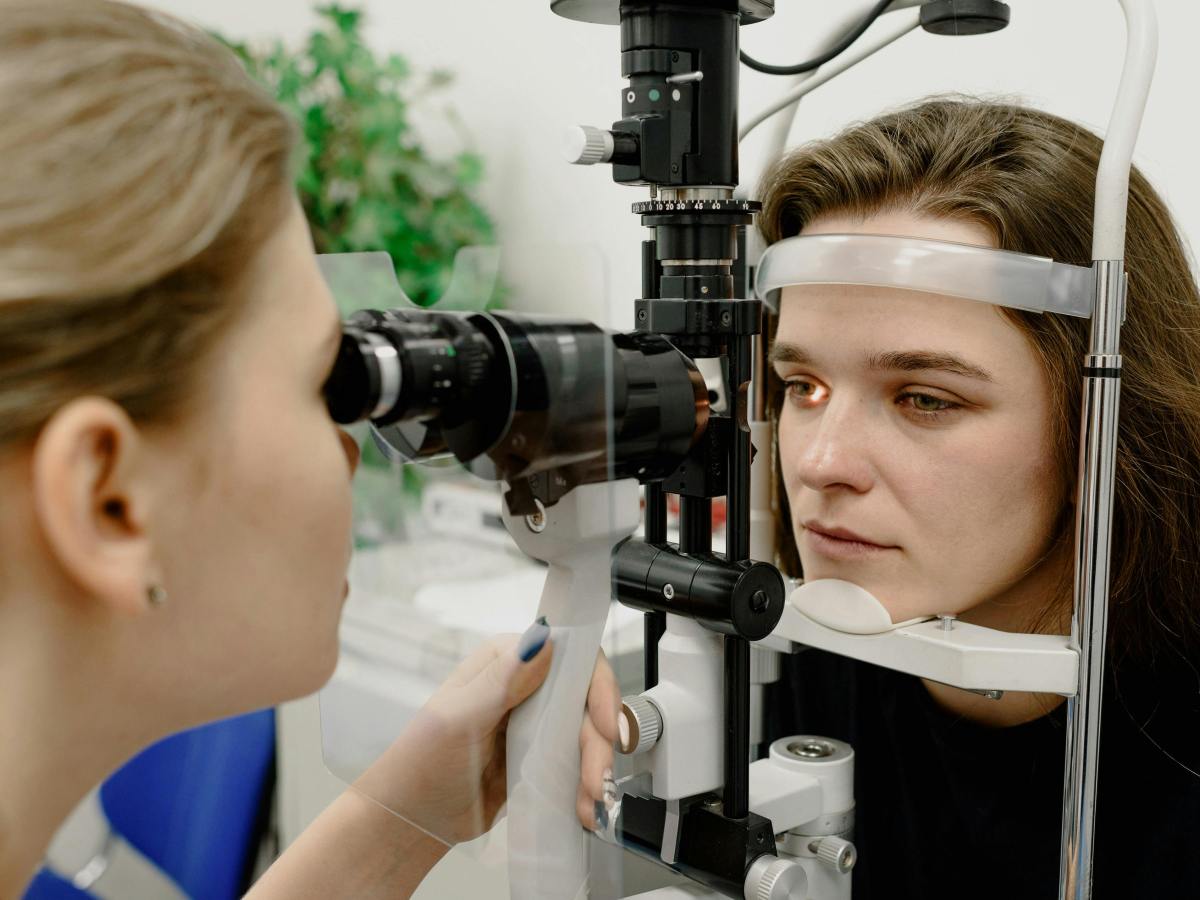
That distinction matters when patient safety is on the line. Recent cases in Kentucky illustrate what happens when oversight and training standards fall short: optometrists licensed to perform surgery without completing or passing required national examinations, and an ongoing malpractice lawsuit involving a patient allegedly blinded unnecessarily after an optometrist used the wrong laser setting — an optometrist who, reportedly, had never passed her national licensing exam. These are the unintended consequences of states failing to uphold rigorous standards for eye surgery.
Collaboration between optometrists and ophthalmologists has always been central to the delivery of high-quality eye care. Optometrists help identify problems early and refer patients when surgery or specialized care is needed. Ophthalmologists step in when treatment requires medical management or surgery. It’s a system that works because each provider operates within the scope of their training and experience.
Unfortunately, S.64 threatens to upend this evidence-based approach. Supporters of the bill say the goal is to improve access to care, especially in rural areas. However, experiences in other states demonstrate that those gains don’t necessarily materialize. In fact, relatively few optometrists actually go on to perform surgical procedures, and such policies did not improve drive times to surgical care. Expanding scope doesn’t fundamentally solve access challenges. It only significantly lowers the educational and training requirements to perform eye surgery in Vermont. And when the surgery involves someone’s eyesight, lowering that threshold should give policymakers pause.
This year, a similar bill was rightly rejected by the governor in New Hampshire. I plead with leaders in Montpelier to listen to my story and remember what’s at stake as they consider proposals to expand the scope of optometry into surgery. When it comes to surgery in and around the eye, the safest course is also the simplest: Maintain the high standards that protect patients today. Reject S.64.
