


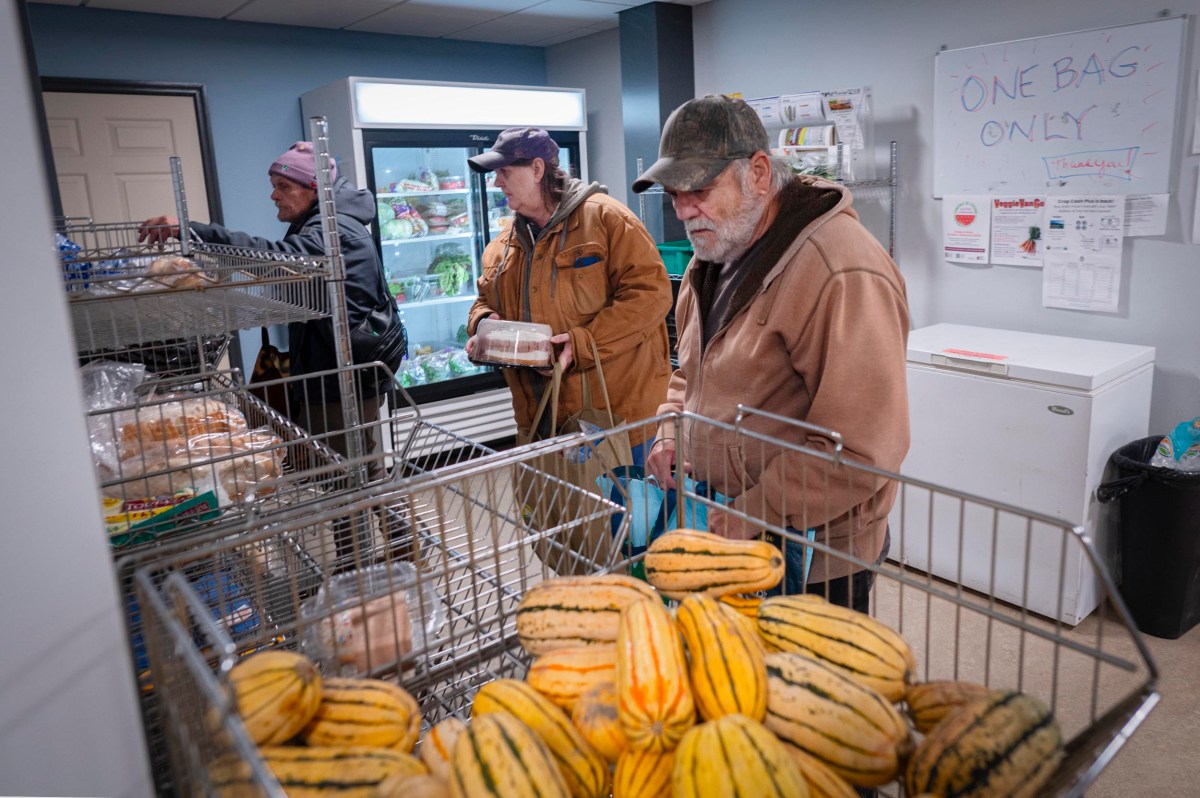
Theo Wells-Spackman is a Report for America corps member who reports for VTDigger.
Campbell MacArthur, 53, had never been to a food pantry before this week, but Thursday afternoon found him eating lunch in the busy lower level of Enough Ministries, a Barre church that operates a food shelf and meal service.
MacArthur moved to Vermont in June after losing everything in a North Carolina fire, and had always been able to get by with help from federal food benefits, called the Supplemental Nutrition Assistance Program, or SNAP, run by the U.S. Department of Agriculture. He said he was grateful the state is doing “the right thing” by sending state-funded food assistance out on Friday.
“If it wasn’t for being in Vermont, I’d be shit outta luck — pardon my language,” MacArthur said.
MacArthur was one of many newcomers at food pantries across the state this week amid the pause in federal food aid, according to the local providers that have been scrambling to try to meet the need. State-funded benefits covering half the month are set to become available on Friday, nearly a week after Nov. 1 payments were missed due to the ongoing federal government shutdown.
First-timers joined regular visitors like Helen Zamojski, a Bristol resident who comes to Helping Overcome Poverty’s Effects, or HOPE, in Middlebury for food each week.
Zamojski said some SNAP recipients had expressed confusion about how the state-funded benefits would be administered this week. State officials have told VTDigger those benefits will arrive on Electronic Benefit Transfer cards Friday in the same manner as traditional assistance.
Zamojski said she was 70, and didn’t have a family, so had been able to plan ahead for food this week.

“I can’t imagine what it’s like if you have, like, kids,” she said.
‘A roller coaster’
Anna McMahon, the associate director at Feeding Champlain Valley, under the Champlain Valley Office of Economic Opportunity, said Thursday that each of the organization’s three food shelves had seen sharp increases in need this week, with an unusually high rate of new clients.
November’s first three days saw visits to the Addison Food Hub in Middlebury almost double compared with the same period last month, while traffic at NorthWest Family Foods in St. Albans and the Burlington Food Shelf increased by 61% and 31% respectively.
Food pantries would normally expect to see some increase in need over the late fall and winter as utility bills rise, McMahon noted, but the combination of factors this year has resulted in a much earlier spike than normal.
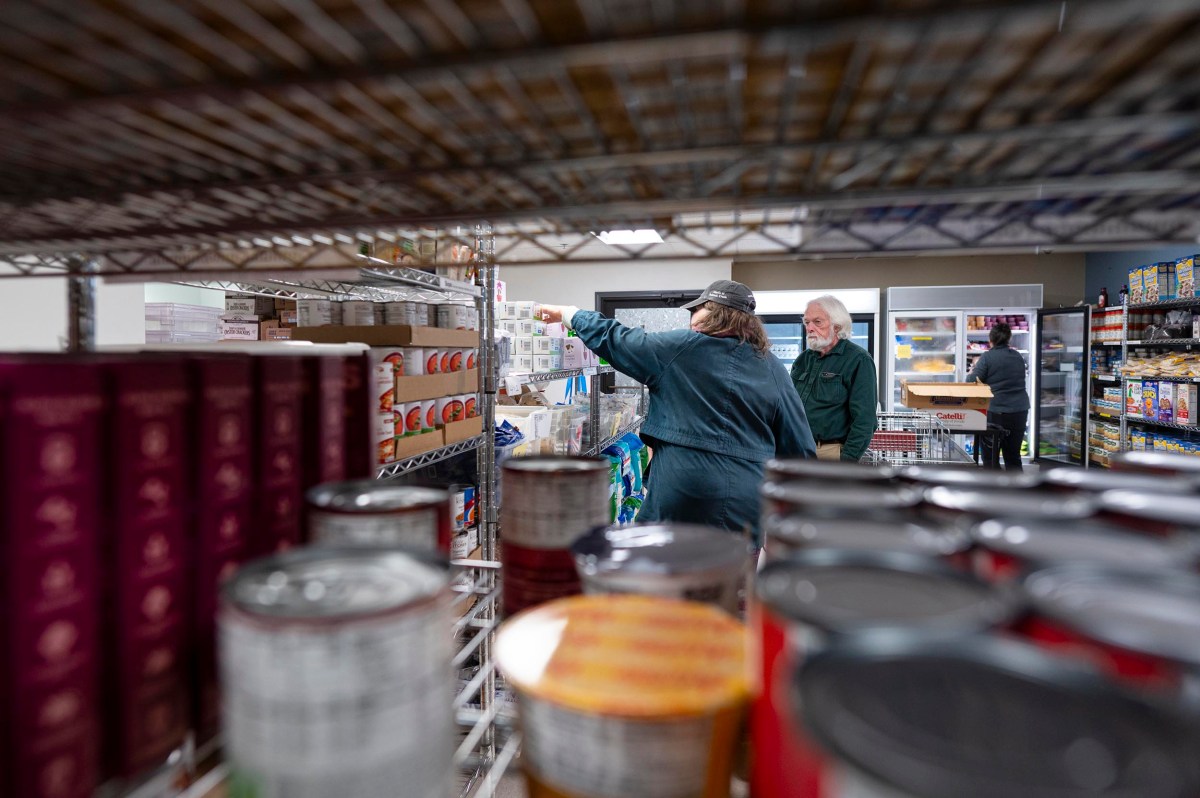
“We’re talking to people who are saying they’re watering down their meals or skipping them altogether,” McMahon said.
Jennie Sperry, the community care coordinator at Enough Ministries, said her food programs had seen an increase in traffic this week, and over 200 people had taken $25 food vouchers available to Barre City residents during this trying time.
Charles Clark, a pastor at the Barre organization, was unsure of the increase, and said there was no imminent danger of the pantry running out of food, pointing to a number of full produce bins stacked around the room.
Feeding Champlain Valley has been able to order more food than usual to offset the rise in demand, McMahon said, thanks partially to increased support from the community and a grant from the Vermont Food Bank.
Carrie Stahler, the Vermont Food Bank’s government and public affairs officer, said that the state’s $250,000 emergency allocation to her organization had gone “a long way.” But ultimately, she said, a lapse in federal funding of this scale isn’t a problem the grant was able to completely solve. In fact, the assistance network — including the food bank and its partners — has long been stretched past the capacity it was designed to hold each year, she said.
3SquaresVT, Vermont’s name for its SNAP program, costs about $3 million per week. For the Food Bank’s partners, many of which are small-scale and serve rural communities, the week has been a challenge, she said.
“I think if you asked any of our partners across the state, the way they would describe it is as a roller coaster,” Stahler said.
‘We were prepared’
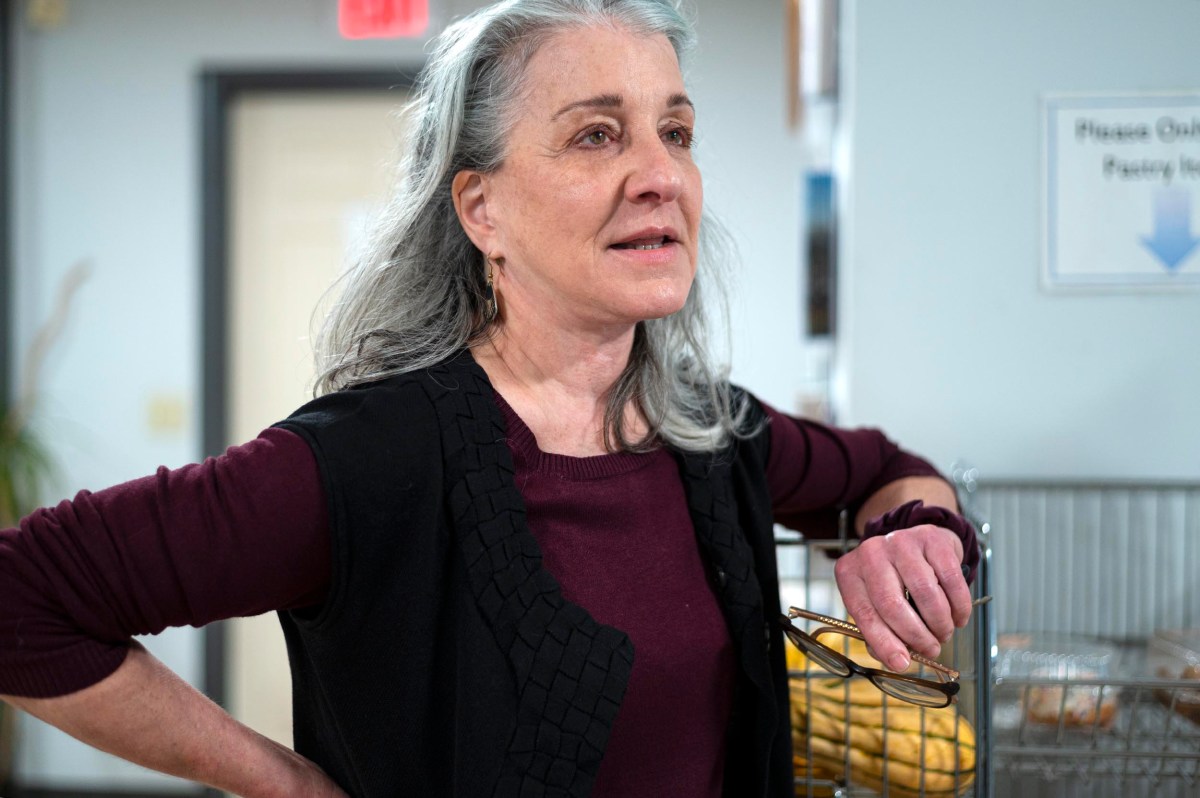
Jeanne Montross, executive director at HOPE in Middlebury, said the stream of 80 people her team helped Tuesday was several times larger than a busy day under normal circumstances. On Wednesday morning before opening time, nearly every chair in the pantry’s waiting room was occupied.
The people Montross serves weren’t panicking this week, she added, but have often been worried, frustrated, or confused.
Montross paused in her explanation to remind staff that many recipients on the organization’s nine delivery routes would need extra food this week. Many, Montross said, are elderly people who began receiving the deliveries during the pandemic.
As the largest food assistance provider in Addison County, HOPE received nearly $8,000 from the Food Bank’s emergency funds. Staff had also ordered extra food in anticipation of rising need this week, and the organization isn’t in immediate danger of running out of stock.
“We were prepared,” Montross said.
On the whole, the network has shown real resilience this week, Vermont Food Bank’s Stahler reflected.
“We have so many incredible people who are willing to step up and help in an urgent moment of need like this,” she said.
Still, Stahler said she is concerned about the long-term effects of this pause in benefits.
“November is already intense,” she said. “What we have done now is exhaust everyone at the beginning of the month and hope they’re all going to make it to the end.”
The status of a federally funded SNAP benefit for November became more unclear Thursday after a federal judge in Rhode Island ordered the Trump administration to fully fund the program by Friday. District Court Judge John McConnell gave an oral order that rejected the current USDA plan to partially fund SNAP this month.
The USDA filed statements in two separate federal cases Monday — including the multistate lawsuit joined by Vermont Attorney General Charity Clark last week — that it would use contingency funding to cover half of the normal November SNAP payments.
Zamojski and MacArthur both expressed frustration with the lack of decisive political action to remedy the crisis. MacArthur called Washington, D.C., a “dog and pony show.”
“They just held a Great Gatsby party,” he said, referring to a gala thrown by President Donald Trump as food benefits ended for Americans. “That’s the American tragedy, if you’ve ever read that novel.”
