

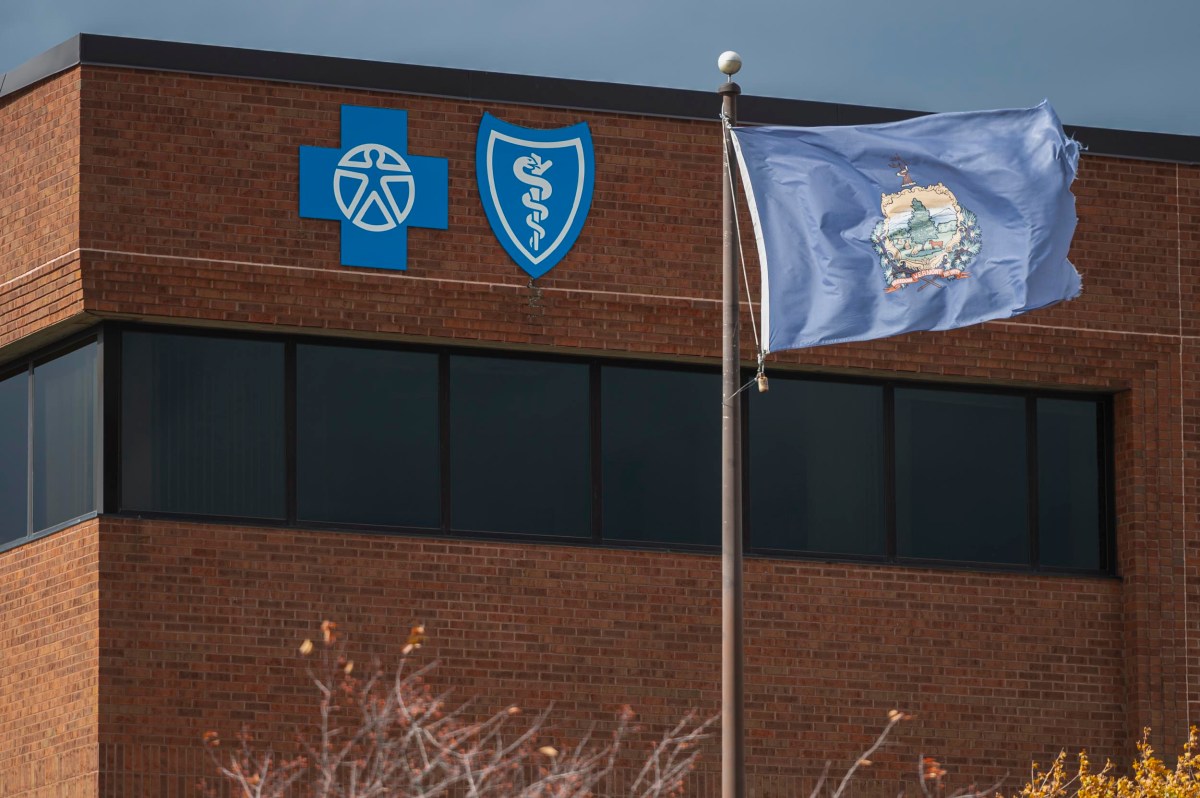
After years of financial precarity, BlueCross BlueShield of Vermont, the state’s largest health insurer, is on the path to financial recovery for 2025, the company reported Monday.
In 2025, the insurer saw $2 billion in revenue and paid out $1.8 billion in claims. It had an operating gain of $53 million for 2025, company executives reported in a press call Monday.
It’s a change from the past four years of financial challenges, when revenue from member premium payments did not add up to cover the costs of care that the insurer paid out.

“I am pleased to say that our recovery in 2025 was stronger than expected for the year end,” Ruth Greene, BlueCross BlueShield of VT’s chief financial officer, said on Monday’s call.
In 2024 BlueCross BlueShield of Vermont had a loss of $62.1 million. The company’s reserves dropped to $58.4 million at the end of 2024.
Amid that year’s loss, the insurer borrowed $30 million from BlueCross and BlueShield of Michigan, which it paid back by the end of 2025. The Vermont insurer became a subsidiary of the Michigan insurer in 2023.
On the Monday call, Greene and CEO Beth Roberts described the insurer’s financial recovery plan. In 2025, they said that the insurer reduced its operating budget by nearly $7 million from 2024.
To do so, BlueCross put a hold on hiring for all but “mission critical” positions. They described limiting administrative expenses as much as possible.
Settlements with the University of Vermont Medical Center and BlueCross’s Pharmacy Benefit Manager also gave the insurer a one-time injection of cash, Greene detailed.
She said BlueCross BlueShield of VT was better able to set its premiums to cover the costs of the medical expenses it pays out, after previous years’ premium increases could not keep pace with the quickly rising cost of prescription drugs and health care.
As a result, BlueCross BlueShield of VT reports that it was able to increase its member reserves to $105 million in 2025.
Still, that number is about two-thirds of what the Vermont Department of Financial Regulation mandates that the insurer keeps as a reserve to protect its financial stability.
The department’s commissioner, Kaj Samsom, called the insurer’s 2025 report a “significant and positive step” toward meeting the surplus target. Still, he voiced a concern for what the overall picture of high health care costs in Vermont could mean for BlueCross in the future.
“Vermont is a relatively small market and continues to experience a very high cost of care,” he wrote in an email to VTDigger, reiterating that he remains concerned that claims could still outpace the insurer’s revenues. “Continued vigilance and contribution to surplus will be required in the coming years,” Samsom wrote.
Working across stakeholders to bring down the true cost of health care is “the only sustainable way to make health insurance more affordable and ensure the long-term financial viability of insurers and the market,” Samson added.
The insurer also acknowledges that it still has strides to make toward more financial stability as it is still under the Department of Financial Regulation’s requirement for cash reserves.
“I am focused on the continued work on our financial recovery. One year of positive financial performance does not eliminate the need to continue addressing the rising cost of care, nor does it undo the need for adequate future premiums to cover that care,” Roberts, the CEO, said.
It’s a fine balance, explained the state’s health care advocate Mike Fisher, to protect the insurer’s financial stability while keeping premiums low and affordable for Vermonters.
“It’s good that they have a good cushion, so that they can comfortably pay claims. But we also don’t want them to hold too much of our money, because Vermonters need that money too,” Fisher said.
Looking ahead to 2026, the insurer reported a successful contract negotiation with the University of Vermont Health network. The two entities agreed to reduce reimbursement rates by 12.3%.
Late last year, the insurer launched an affordability campaign, highlighting the cost of basic procedures at UVM Medical Center, Dartmouth Health hospitals and the state’s independent facilities, in an effort to drive its members to consider the larger health care pool when making health care decisions.
The insurer also stopped providing its Medicare Advantage plans for 2026. Because of changes in the federal pay structure for the Medicare plans and high payout costs, BlueCross BlueShield of VT’s Advantage plans saw a net loss of more than $50 million. They covered 35,000 Vermonters.
A partnership with BlueCross BlueShield of Michigan meant that the Vermont insurer did not take on the lion’s share of the Advantage plans’ loss — the larger, affiliated insurer in Michigan absorbed more than 90% of that impact. Vermont’s insurer only saw a $3.6 million loss for the Advantage plans.
