

This commentary is by Todd Heyman of Hartland. He is co-owner of Fat Sheep Farm & Cabins, and an Act 250 permit holder.

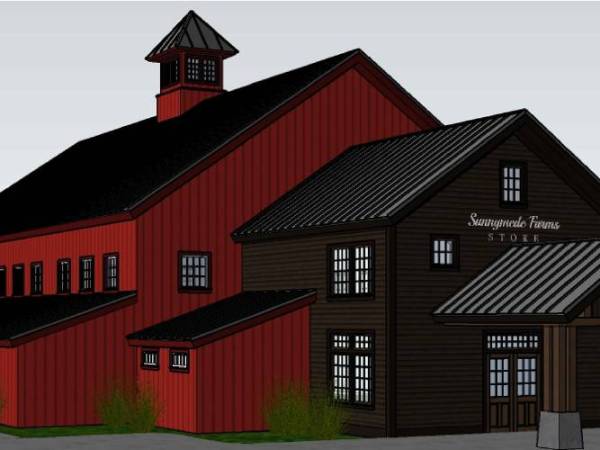
The Vermont Supreme Court recently ruled that a Sunnymede Farm store and restaurant could open just off I-91 in an area the town of Hartland had designated as rural in its 2017 town plan. The project was granted an Act 250 permit over the appeals of the Hartland Planning Commission and the Two Rivers Ottauquechee Regional Planning Commission. Notably, the Hartland Selectboard, a body of elected officials, did not appeal the permit.
The Court’s decision was based on the inconsistent language in the town plan. In one section, there was language severely curtailing commercial activity in rural areas and, in another, that particular area by the highway was described as suitable for rural business development. The Court held that the inconsistency did not give fair notice to landowners of what was proscribed.
The decision highlights a need for Act 250 reform.
First, Act 250 should not enforce land use rules in plans that have not been individually warned and voted on by the town’s selectboard.
Second, neither regional nor municipal planning commissions should be afforded party status in Act 250 proceedings.
These reforms would promote transparency, eliminate some appeals, increase efficiency and leave land use decisions in the hands of accountable, elected officials.
The Legislature’s current approach to Act 250 reform is to determine which projects should be spared the full brunt of Act 250 permitting instead of improving the permitting process for all applicants. It’s an unnecessary surrender to the unspoken consensus that the permitting scheme will never work well, and certain projects, like housing, should be exempted from Act 250.
The Sunnymede case is just one of dozens where lawyers collected hefty fees squabbling over which plan language was meant to be mandatory. These disputes arise almost exclusively in no-zoning towns because zoning ordinances must be warned and voted on by both planning commissions and selectboards. Accordingly, the intended mandatory effect of the ordinances is obvious.
This is good government. Notice should be given for proposed laws that impair property rights so the public can deliberate prior to any vote on the rule.
Ironically, no-zoning towns express much less interest in regulating development but can hide new land use regulations in large plan documents that address dozens of issues about the town’s future without ever calling attention to the proposed rules in a meeting warning, let alone warning an individualized vote on each proposed rule. Without such protections, lawyers and courts are kept busy deciding which handful of sentences in a hundred-plus page plan are mandatory.
This is bad government. It is undemocratic.
The Hartland Planning Commission itself, an unelected body, has buried significant changes in land use rules in past proposed plans. The meeting warnings referenced the plan’s various sections without mentioning the specifics of the new rules.
And plans are approved by both the planning commissions and selectboards with a single vote. No rule is guaranteed an individualized vote or debate before its inclusion in the plan. Those missing democratic protections are needed not just for fairness but also better outcomes.
By requiring individualized warnings and votes on the rules, disputes like Sunnymede would be eliminated because the selectboard would have made clear which plan language was mandatory. Eliminating this uncertainty would make Act 250 work better and reduce its deterrent effect on good projects whose principals are wary of the cost and time constraints of Act 250 permitting.
Indeed, because abutting neighbors are given party status, they can (and do) block projects for years in court based on inconclusive language in enormous planning documents.
But that’s not the only reform needed. Planning commissions should not be afforded party status in Act 250 proceedings. With just a few municipal exceptions, planning commissions are not elected officials who can be replaced by the voters. Nor is there any independent ethical oversight of commission members who are frequently members of the business community.
For example, the Two Rivers Planning Commission chair is an angus beef producer who operates a restaurant. How could Sunnymede, also an angus beef producer seeking to open its own restaurant in a neighboring town, raise the ethical conflict without antagonizing the commission and risking the project?
Even if the chair had recused himself (he did not), the staff’s impartiality could also be fairly questioned. Regional planning commissions are small organizations and the relationships between the staff and board tend to be close and familiar.
In addition, staff answer to their board members, and their continued employment depends on their board’s approval of their work. Act 250 applicants should be concerned about these incentives in the absence of any meaningful ethical oversight.
In short, nothing would be lost by limiting planning commissions to proposing rules for selectboard adoption as mandatory, and letting only selectboards decide whether to enforce them in an Act 250 proceeding.
Taxpayer money, tens of thousands in the case of Hartland, was spent by unelected officials fighting over vague plan language that they themselves drafted. The days of scouring enormous planning documents to identify the “mandatory” rules should have ended long before now.

