

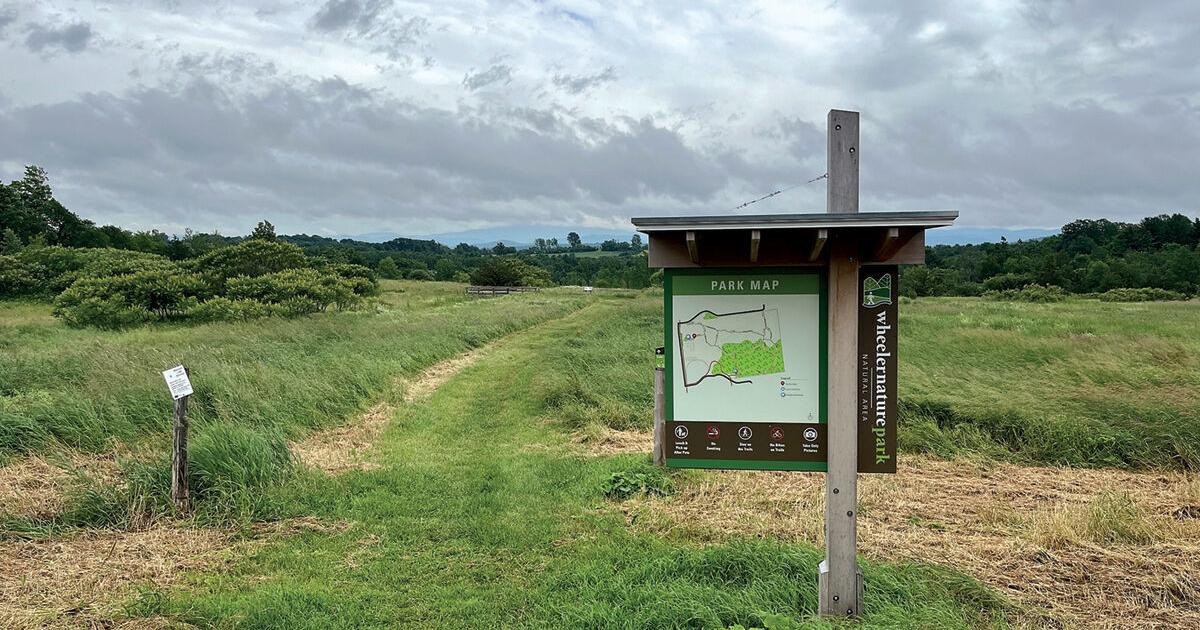
This story by Liberty Darr was first published in the Other Paper on June 19.
The Vermont Supreme Court has ruled in favor of the developer looking to build on the 7-acre slice of land next to South Burlington’s Wheeler Nature Park.
The decision issued last month affirms the Vermont Environmental Court’s decision that also favored the development following a six-day trial last summer.
But appellants James Leas and two other neighboring residents, Alan Luzzatto and Jeanne Zagursky, have not given up the battle to protect the property from development. Earlier this month, they filed a motion that requests that the court restore the case to the calendar for resubmission of briefs and arguments, which they say the court misapprehended in its decision.
The project calls for 32 mixed-housing units directly adjacent to Wheeler Nature Park, an area in the city that has long been designated as an area of high public value. The parcel sits at the intersection of Dorset Street and Park Road in South Burlington, part of a larger area that itself was once the subject of a lengthy court case.
Although the project’s developers won development review board approval in 2021 and Act 250 approval in 2022, the project was quickly appealed by a group of 125 nearby neighbors from the Inverness, Glen Eagles and Villas at Water Tower Hill homeowners’ associations and the Neighbors Committee to Stop Neighborhood Blasting. That decision was then appealed to the Supreme Court in September.
Key issues for the appellants include their contention that the scenic view of the Green Mountains over the nature park would be disturbed, as would the wildlife from the blasting of rock needed to build the homes. Overall aesthetics and undue traffic burdens were also mentioned as concerns.
They argue the development would “demolish” the nature park and ultimately “destroy” the “last traditional Vermont view of the Green Mountains from those recreation paths” adjacent to the property.
However, the environmental court sided with the developer last summer, finding that the project complies with Act 250 criteria for aesthetics, noise and traffic, adding that the project is consistent with the characteristics of the residential area where the development is planned to be.
But residents contend that city plans and reports have called for this land to be preserved in perpetuity, and they say it should be.
The 110-acre Wheeler Nature Park has had years of legal history since it was first acquired by the city in 1993. The parcel at the heart of this latest court battle was first created in 2015, the result of a settlement with landowner JAM Golf that included swapping these 7 acres for 22 acres that have been conserved forever as part of Wheeler Nature Park. A second amended agreement between the parties was reached in 2017.
The land swap was approved by city voters in 2011, although the vote, according to former city attorney Jim Barlow at a council meeting in 2015, was not legally binding and only considered a “good faith” gesture on the part of the city.
That agreement created specific zoning for the parcel and ultimately laid out specific development guidelines.
But neighbors throughout the court case have claimed that this 2015 agreement between the landowner and the city was “improper.”
Appellants in their most recent motion bring up nine points — or as they call them, “a stack of errors” — they hope to reargue in court.
“We believe review of the points of law that the court overlooked or misapprehended would affect the result,” they wrote.
