



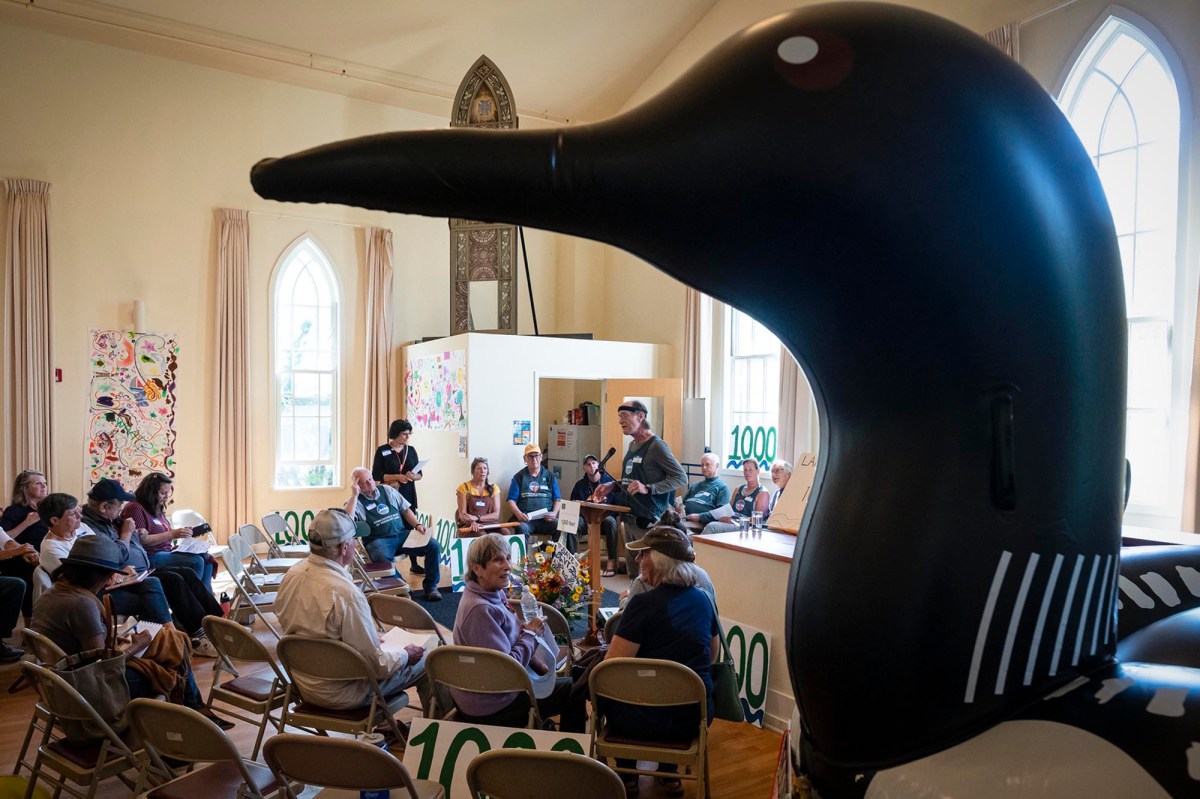
A heated debate over wake boats seems to be approaching the dock.
Almost two years ago, the group Responsible Wakes for Vermont Lakes filed a petition asking the Agency of Natural Resources to change the rules governing wake boats. This week, the agency released that draft rule and presented it to lawmakers on the Legislative Committee on Administrative Rules, a little-known but powerful panel of legislators charged with approving executive branch regulations.
Wake boats are designed to create large wakes that people can ride on wakeboards. It may sound like fun to many, but in the last several years environmentalists and scientists have raised concerns about the boats’ impact: They can disrupt the sensitive ecology of lake shorelines — disturbing loon nesting areas, for example — and they threaten to transmit invasive species from one lake to another via their ballast systems.
In addition to that, those recreating with paddleboards or kayaks can get walloped by the powerful wakes, creating potentially dangerous situations.
After reviewing the petition, the Agency of Natural Resources agreed with its basic premise: that wake boats needed their own specific regulations, Laura Dlugolecki, lake and shoreland permitting analyst at the Agency of Natural Resources told LCAR members on Thursday. But the agency and the petitioners definitely disagreed about the details.
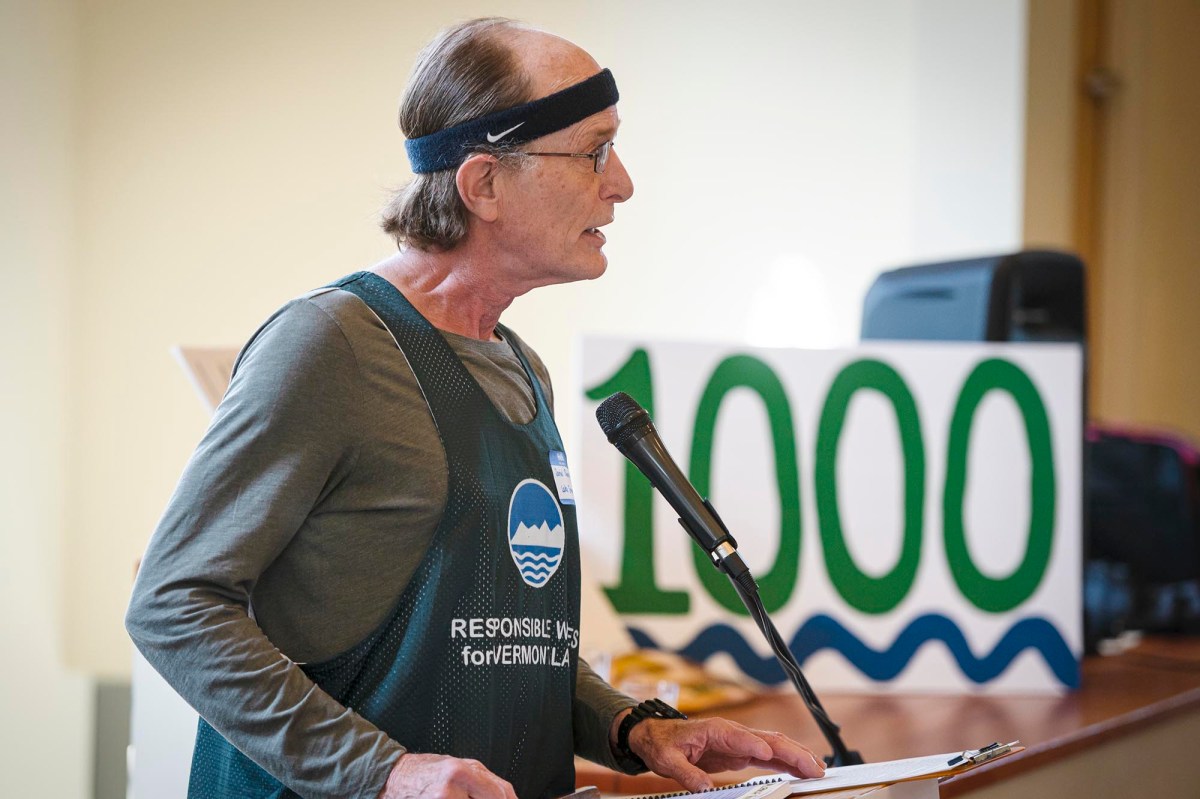
The petitioners wanted the agency to allow wake boats to operate only in areas with 60 contiguous acres of lake, 1,000 feet away from shoreline on all sides, and in water at least 20 feet deep.
If the agency were to adopt a rule with those parameters, wake boats would only be allowed on 15 of Vermont’s inland lakes, Dlugolecki said. (The rules don’t apply to waters that share borders with other states and countries — for example, Lake Champlain, Lake Memphremagog and the reservoirs along the Connecticut River.)
Current state law directs the agency to resolve such conflicts “using the least restrictive approach practicable,” Dlugolecki said, and the agency determined that the petition’s proposal was not the least restrictive approach.
The rule, filed on Jan. 31, proposes allowing wake boats to create wakes in zones with 50 contiguous acres, 500 feet from the shoreline, and where the water is at least 20 feet deep. This proposal would allow the sport to continue on 31 inland lakes.
Vermont has 73 inland lakes that allow motor boats to travel more than 5 miles per hour. Wake boats are currently allowed on all of them.
When it first proposed its rule, the agency received 750 public comments, 92% of which favored regulation for wake sports, generally. Of those, 82% of the commenters wanted a rule that was stricter than what the agency proposed.
In response to those comments, the agency took a closer look at limited available scientific literature and found that it did not “support an increase in the distance from shore to achieve the regulatory objectives for a statewide rule,” Dlugolecki said.
Still, she noted, the rule drafted by the agency would be the “most protective statewide wake sport regulation in the country to date.”
Meg Handler, who spoke to LCAR on behalf of Responsible Wakes for Vermont Lakes, said the organization stood by its original petition and planned to advocate for something stronger — but, at the same time, she said the organization supports the rule.
While Handler said the organization is “not happy or satisfied,” its top priority “is to have a rule put in place in time for this summer,” she said.
LCAR is set to vote on the rule later this month.
— Emma Cotton
In the know
In the past week, members of the Vermont Senate had twice expected to vote on a proposed state constitutional amendment. But the anticipated floor vote on Proposal 1 — which would enable the Legislature to set qualifications for elected county officials — never took place.
Instead, on Wednesday, one of the proposal’s sponsors asked that the Senate suspend its rules and send Prop. 1 to another committee for further review.
Some of Prop. 1’s proponents believe the sheriffs’ opposition has eroded support for it.
“I think the fact that sheriffs are actively lobbying us senators has made advancing a vote on Proposal 1 more difficult and has delayed the vote,” said Sen. Ruth Hardy, D-Addison, chair of the Senate Government Operations Committee and a lead sponsor of the proposal.
— Tiffany Tan
A long-awaited report on how Vermont should address its billions of dollars in school construction needs arrived in the Legislature on Thursday.
In short, the report suggests the state should consider incentivizing districts to build in ways that align with the state’s goals. That could mean a “newer and fewer” approach, building healthier schools (perhaps by remediating PCBs), and considering equity, such as supporting districts with more impoverished students or a smaller tax base.
Vermont ended its school construction aid program in 2007. Since then, officials say, deferred maintenance has grown significantly, with an estimated $300 million in construction needed each year for the next 21 years if schools were only to replace buildings as they already are.
— Ethan Weinstein
The Senate Committee on Government Operations is still in the weeds about S.55, a bill that aims to set new standard requirements for public meetings to go into effect before Covid-19 pandemic-era policies expire this summer.
The bill would require that many state and municipal public meetings be hybrid, in order to provide opportunities for the public to participate both in person and virtually. The committee took testimony on the bill Wednesday and Friday.
The newest version adds a section about the intent of the bill, saying that lawmakers recognize that hybrid meetings are not always possible but that “in all cases, accessibility and safety for members of the public and members of the public body should be paramount.”
On Friday, lawmakers heard from Matthew Lawrence LeFluer, a member of the Vermont League of Cities and Towns’ equity committee.
“The reason I support S.55 is for equity, diversity, inclusion, acceptance, transparency and sense of belonging for individuals that are like myself,” LeFluer said. “We have a right to participate under the Americans with Disabilities Act.”
If approved, the bill would provide municipalities with additional time and grants to accommodate the hybrid requirement — a concern raised by Devon Neary, executive director of the Rutland Regional Planning Commission.
Rutland City, Vermont’s fifth-largest city, currently does not have a hybrid option available due to the cost, Neary said.
— Babette Stolk
On the move
A new bill created and backed unanimously by the House Health Care Committee would create paths for certification for peer support providers and peer substance use disorder recovery support specialists. The bill does not yet have a number.
Both certifications would be overseen by the Vermont Secretary of State’s Office of Professional Regulation, though the rules for receiving them would be developed in consultation with the Department of Health and Department of Mental Health.
For several years, federal regulators have allowed state Medicaid offices to provide reimbursement for peer support services provided by people with personal experience of trauma or of mental health or substance use challenges. However, doing so is only allowed if those peer support workers hold state-level certification, which Vermont does not yet have.
Lawmakers took testimony from peer service providers and their employers and debated several ways of expanding or revising the bill. In the end, committee members agreed not to delay the implementation further.
“I think we could make it better, but I think this is long overdue,” said Rep. Daisy Berbeco, D-Winooski. “I think we need to get this out so folks can get to work.”
— Kristen Fountain
Visit our 2024 Bill tracker for the latest updates on major legislation we are following.
What we’re reading
Thousands of Vermonters applied for FEMA assistance after last summer’s floods. What became of them?, VTDigger
Hoping for a comeback, the Hardwick Gazette goes nonprofit, VTDigger
‘No further comment likely’: Windham Southeast closes sexual abuse investigation, The Commons News

