

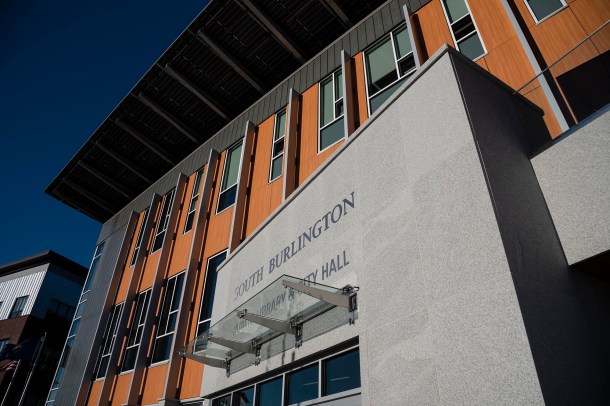
This story by Corey McDonald was first published by The Other Paper on Oct. 12.
Electric vehicle charging stations, a new park and ride, car-sharing programs at multi-family housing buildings and other proposals are being considered as part of the city’s climate action plan, which calls for replacing 75% of the city’s gas vehicles with electric and plug-in hybrid vehicles to reduce carbon emissions.
These “high-action items” are part of a wide-ranging blueprint called the transportation implementation plan, which was first presented to the city council this month, to meet goals laid out in the city’s climate action plan.
The climate action plan offers hundreds of recommendations, but this month’s transportation implementation plan begins to focus the scope of where to start within the transportation sector and would work as a planning tool that city staff can then bring to city council for approval and outline how to best implement the actions. The full plan can be read here.
The plan lays out “how we’re going to implement the policy that the council has developed,” city manager Jessie Baker said.
“When the council adopted the climate action plan just about a year ago, one of the things we talked about at that point was that the implementation of that policy would then move to city staff,” Baker said.
The city is still working to development similar implementation plans for the building and thermal sector, and for government operations.
Finalized and approved in October 2022, the city’s climate action plan calls for reducing South Burlington’s 2019 greenhouse gas emissions by 60% over seven years by addressing the city’s biggest emission contributors — transportation, commercial and industrial building energy usage and residential energy usage.
By 2050, the city hopes to reduce emissions by 80% below 1990 levels.
Climate change’s effects continue to be seen with alarming regularity. Experts say the flooding that devastated much of Vermont in July was exacerbated by increasing temperatures and extreme weather patterns.
The city’s climate action plan task force was in 2021 directed by the city council to produce the plan. The group held 17 meetings with various groups and identified high impact actions to significantly reduce South Burlington’s share of Vermont’s emissions.
Written in consultation with the Chittenden County Regional Planning Commission, the plan is meant to align with goals set in Vermont’s Global Warming Solutions Act and the Paris Climate Agreement.
Since its adoption, the city council has passed amendments taking aim at emission reduction. In June, the council approved regulations requiring the installation of solar photovoltaic systems in new commercial buildings and some new residential buildings.
In November 2022, an ordinance passed that required new buildings to use renewable energy sources for their primary heating and domestic water heating systems.
A similar ordinance that would have regulated thermal energy systems in existing residential and commercial buildings was voted down 3-2 a month later, with the two dissenting votes coming from former council members Thomas Chittenden and Matt Cota. Councilor Tim Barritt also voted no.
The transportation implementation plan remains in draft form for now. A public hearing is scheduled for Oct. 12 in city hall at 6 p.m.
Among the 10 items for recommendation, it includes:
- Revamping land use regulations to help with the installation of electric vehicle charging stations at existing multi-family housing buildings; mandating that developers of new projects include electric charging stations in their plans; and partnering with Green Mountain Power to continue the buildout to other non-residential properties
- Continuing to prioritize higher density, mixed use development and affordable housing through the land development regulations in areas with existing or planned reliable transit options, services and infrastructure. A park and ride near public transportation, built in coordination with other local partners, would encourage the use of public transportation.
- Creating a master plan for walk and bike infrastructure. Notably, the blueprint calls for plans to reduce vehicle travel lanes to accommodate more bike lanes on city roads.
The goal for the city, ultimately, is to get people out of their cars, or at least increase the use of electric vehicles by making charging stations accessible. High density, mixed-use development with both residential and commercial use would eliminate the need to get in the car in the first place.
It’s no small task, said Erica Quallen, the city’s deputy director of capital projects who, along with planning and zoning director Paul Connor, led the efforts to develop the plan.
“As we get ready to have a lot of budget conversations, this will not have a small impact,” Quallen said. “There will be plenty of hurdles” related to “how this impacts municipal operations, first from a staffing standpoint, and then that leads directly into budget, not just for additional staff, but all of the projects that come out of this.”
Implementing the regulations will require staffing to not only shepherd the regulations through city hall, but also to search for outside funding and grants to help pay for the project, some of which could cost as much as $5 million to complete.
“This is not in place of core municipal services,” Baker said. “This is in addition to that to further the policy goals you all have set. Not saying it can’t be offset with grants, but grants aren’t going to pay for the staffing we’re going to need, and grants are not going to pay in total for the capital investment we’re going to need.”
The city council during its meeting last week suggested that the city plan on hiring two full-time staff members over the next two years, budgeted through both fiscal year 2025 and 2026. That will be presented as the fiscal year 2025 budget is shaped in the coming months.
City councilor Andrew Chalnick, who before his election this year was the vice chair of the city’s climate action task force, called the cost estimates “pretty daunting,” and suggested the city take a harder look at which items would have the most impact in reducing emissions.
“We can pass regulations to require all new buildings have EV charging, and I would really urge us to think of that as a quick, easy win and do that with due haste,” he said. “While we’re comprehensively thinking about this and budgeting out for the next 10 years, what are the things we can do in next three to six months that are easy, quick and tactical,” he said.
Helen Riehle, chair of the council, agreed that “going after low hanging fruit makes sense.”
“Some of that might be generated by what grants are available,” she said. “It may not be the lowest hanging fruit, but if it has the most amount of money to fund it, it may make more sense to select that as a priority.”
