

Gov. Phil Scott’s midyear budget proposal would shift $283 million in state spending towards broadband, health care staffing, rural infrastructure assistance and more.
The administration unveiled the plan, which is paid for mostly through federal funding and Medicaid savings, to lawmakers on Friday. Scott’s proposal would return about $1.3 million in savings to the state’s general fund.
The plan’s one-time expenditures are primarily “coming from state dollars that are available because of more generous federal funding — predominantly, but not exclusively, health care,” said Adam Greshin, the state’s commissioner of finance and management, after a presentation to state lawmakers Friday.
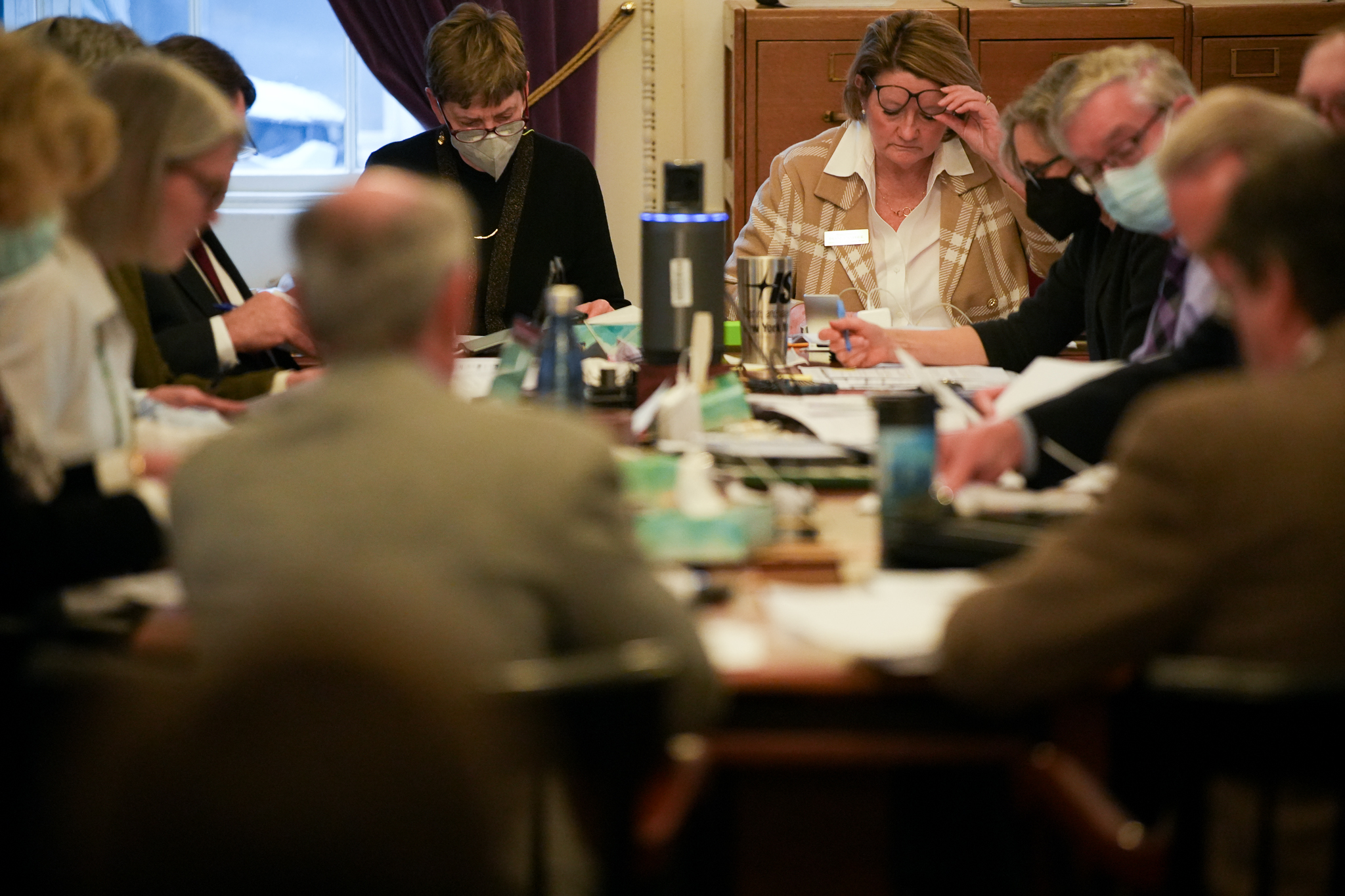
The annual budget adjustment act is a midyear true-up of the current budget. (The state fiscal year begins in July.) The administration’s proposal mainly serves to outline the governor’s short-term spending priorities. Over the next few weeks, lawmakers will develop their own plan.
In pre-pandemic years, the budget adjustment altered state spending by approximately $10 million to $30 million, according to Doug Farnham, deputy secretary of the Agency of Administration. Big-ticket spending had generally been reserved for the annual budget bill, known in state government as “the big bill.”
But last year, with the influx of federal pandemic aid, the budget adjustment became a $367 million spending package that guided a range of policy decisions on state programs. It allowed lawmakers to continue tuition relief at the Vermont State Colleges, extend the state’s emergency housing program and fund retention bonuses for workers in child care, corrections and human services.
Scott’s proposal for this year’s budget adjustment again includes multimillion-dollar line items, as inflation and increased usage of some government programs drive up costs.
“The BAA is normally important, but we definitely don’t normally have the scope of money that we’re looking at in this BAA,” Farnham said. “It’s definitely above, significantly above, average.”
Among the administration’s requests is an additional $11.2 million for traveling nurse contracts for the Department of Mental Health, as well as more than $20 million in additional funding to the Brattleboro Retreat. The Vermont Veterans’ Home requested an additional $5.8 million to put toward staffing and utility costs. The proposal also includes $3.3 million for the Vermont State Police to fulfill an 8% pay increase won by troopers in a collective bargaining agreement after lawmakers finalized the budget last year.
The proposal also asks lawmakers to make several one-time appropriations, including $3 million for a new Rural Infrastructure Assistance Program, which would help small towns apply for and administer grants so they don’t leave federal pandemic relief money on the table. Scott previewed this program in his inaugural address last week.
“The basics, like water, sewer and stormwater, housing, and high-speed internet — those are the sparks that ignite revitalization,” Scott said. “But we need to follow through to give more communities what they need, so those sparks don’t burn out.”
According to an administration memo explaining the proposal, the assistance program would help smaller communities, many of which rely on volunteer administrators, to “identify priority projects, submit applications, and then actively manage projects and corresponding reporting, should funding be awarded.”
Scott also requested $9.2 million to help Southwestern Vermont Medical Center fast-track construction on a new inpatient psychiatric facility for youth. The Bennington hospital plans to retrofit an existing space to create about a dozen beds for 12- to 18-year-olds, Greshin told lawmakers on Friday. The hospital hopes to open those beds by January 2024, he said, on “a pretty aggressive schedule.”
The administration’s proposal also includes $30 million in one-time funding toward a competitive federal broadband grant. The grant, which Vermont applied for midway through the fiscal year in October 2022, requires the state to put up its own funds to access an additional $67 million in federal dollars. Private companies — including Consolidated Communications, Waitsfield and Champlain Valley Telecom, VTel and First Light — have pledged an additional $16 million toward the project. The grant would fund “middle mile” infrastructure — lines that are expensive to install, and crucial to expanding broadband access, but not profitable for telecommunications companies.
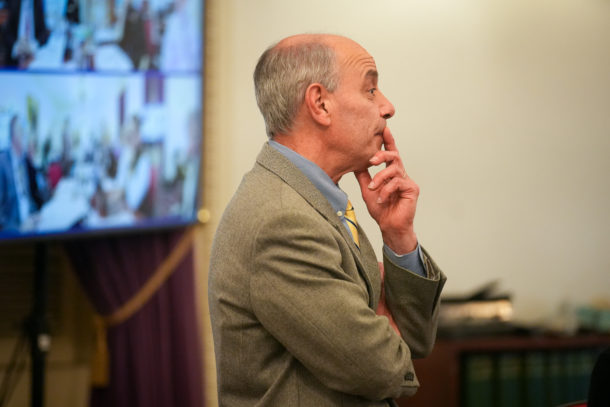
The proposed new spending would be offset primarily by federal funding, Greshin said, mostly via the state’s Medicaid program. With the onset of the Covid-19 pandemic, the federal government picked up a larger-than-usual portion of Medicaid costs, saving the state millions of dollars. When state lawmakers crafted the budget last year, Greshin said, they didn’t expect those Medicaid savings to continue for as long as they have.
State agencies are also returning an unusually large amount to the general fund this year, said Farnham. According to the governor’s proposal, state agencies would return $10 million in unused money back to the general fund, to be reappropriated elsewhere. More than half of that is unused rebates meant for renters and homeowners.
