




Thanks to an enhanced lobbying disclosure law passed in 2015, the special interests (we sometimes like to call them ‘stakeholders’ here in Vermont) paying to influence lawmaking must report their spending every month during the legislative session to the Secretary of State’s Office.
The first filing deadline of the session was midnight on Tuesday, covering the period between Jan. 1 and 31. So let’s dig in.
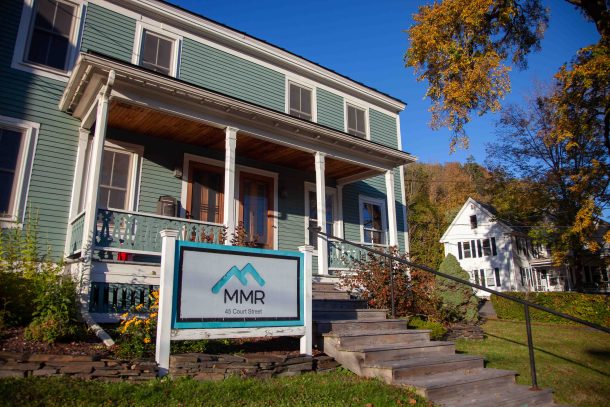
The single biggest spender in the first month of 2022? That would be St. Johnsbury Academy. The Northeast Kingdom boarding school spent $32,264 on lobbying in the first month of the year. Chris Rice, a lobbyist with MMR, the firm that represents the private school, argued that number is a bit inflated, since it also includes compensation for services billed prior to this reporting period. But St. J is still typically a big spender, and has consistently paid lobbyists $130,000 or more each biennium since as early as 2015.
The No. 2 spender this January was the Vermont Association of Hospitals and Health Systems. The industry group for the state’s health care providers spent $19,317 last month on lobbying, and $180,814 so far this biennium. Individual hospitals will also often pay lobbyists to advocate on their behalf: the University of Vermont Health Network, for example, spent $8,493 in January.
Coming in at No. 3 is the Vermont State Employees Association, which spent $15,818. Next up is Burr and Burton Academy in Manchester, which spent $13,200, followed by Vermont Home and Community Care, which spent $13,000.
Montpelier’s top three lobbying firms remain familiar names: the Necrason Group (which got paid $181,845 in the most recent reporting period), MMR ($174,892) and Leonine Public Affairs ($112,170). So far this biennium, MMR received a total of $2.09 million to lobby on behalf of its clients. Necrason reported $1.7 million and Leonine reported $1.2 million.
As for advertising, the single biggest spender — by a mile — was the Vermont Public Interest Research Group, in concert with Represent.Us, a national organization advocating for democratic reforms. Together, the two groups spent $50,000 in January on a 30-second TV spot pushing a ranked-choice voting initiative.
That nifty new disclosure law also requires businesses and advocacy groups to disclose all advertising spending within 48 hours as long as it tops $1,000. VPIRG has spent $6,606 so far in February on Front Porch Forum, $3,030 with Seven Days, as well as $10,000 for ads with — full disclosure — VTDigger.org. Awkward!
— Lola Duffort
IN THE KNOW
Ninety-eight percent of Vermont schools and child care centers met a Dec. 31 lead testing deadline, Health Commissioner Mark Levine told the Senate Education Committee on Thursday afternoon. Lead testing protocols were established under Act 66, passed in 2019.
Seventy-six percent of schools and 14% of the non-school-based child care facilities had at least one tap with lead levels at or above a four parts-per-billion action threshold, Levine said.
Remediation measures have generally been inexpensive, Levine said to the committee, at least among the schools that have filed for reimbursement so far. Generally, a fixture just needed to be replaced, and 90% of the time those fixes cost less than $500 per tap.
— Riley Robinson
Two Vermont lawmakers — Rep. Jim Masland, D-Thetford, and Rep. David Durfee, D-Shaftsbury — were elected Thursday to the boards of trustees of the University of Vermont and the Vermont State Colleges.
The election, a regular and largely undramatic affair, was Masland’s fourth. And, if a new bill in the Vermont legislature becomes law, it also could be his last.
S.248, a bill before the Senate Committee on Education, would shake up the boards of trustees of Vermont’s public institutions of higher education, the University of Vermont and the Vermont State Colleges System.
If passed, that bill would put in place a two-term limit for trustees. And, by adding over half a dozen faculty and staff members, it could also spark a dramatic shift in the power dynamic of both boards, which oversee the education of nearly 25,000 students at five colleges across the state.
“We are going through very big transformations,” said Linda Olson, a professor at Castleton University who is among those spearheading the bill. “And so I think it’s more important than ever that we have these voices at the table.”
— Peter D’Auria
ON THE MOVE
On Thursday, the House preliminarily approved H.411, which states that a person cannot intentionally kill certain animals “and intentionally, knowingly, or recklessly fail to retrieve and dispose of” them.
“Each year, game wardens report between 60 and 90 incidences of wasted game in Vermont,” Rep. Amy Sheldon, D-Middlebury, told representatives on the House floor Thursday. “The bill will limit the wasting of game by making it a violation to kill a covered wild animal and not use it.”
The bill, notably, would not cover coyotes “taken by lawful means other than trapping.”
H.411 is one of several wildlife bills lawmakers are currently considering. Senators in the Committee on Natural Resources and Energy are also taking testimony on bills that would ban leghold traps and the hunting of coyotes with hounds.
— Emma Cotton
The Senate on Thursday voted 28-2 on the second reading of S.265, a bill bolstering the state’s criminal threatening laws.
The bill would increase criminal penalties for those who threaten violence in certain settings, like schools, government buildings and places of worship, as well as limit a legal defense against criminal threatening charges.
Sen. Dick Sears, D-Bennington, told his colleagues on the floor that the “genesis” of the bill was a response to repeated threats issued to elections officials in Vermont following the 2020 general election, as well as health officials during the coronavirus pandemic — threats that he called “profane,” “ugly” and “to (his) mind, threatening.”
— Sarah Mearhoff
WHAT’S FOR LUNCH
Sesame chicken is on the menu for Friday. Yum!
— Sarah Mearhoff
WHAT’S ON TAP
FRIDAY, FEB. 18
8:45 a.m. — Senate Natural Resources and Energy to mark up and vote on changes to Act 250.
15 minutes after House floor — House Education plans to mark up and possibly vote on H.483, which would require the Agency of Education to explore new funding models for career technical education.
1 p.m. — House Health Care will take testimony on hearing services, as background for H.266, a bill that would require Medicaid and some other insurance plans to cover hearing aids. Closed captioning for this meeting will be available here.
WHAT WE’RE READING
What if we funded public education differently? (VPR)
Environmental groups urge Biden administration to stop logging mature forests on national lands (VTDigger)
Senate panel rejects bill to turn former Windsor prison into juvenile detention facility (VTDigger)
