

As policy committees wrap up their work for the 2021 legislative session, some panels are already preparing for 2022.
In the Senate Committee on Natural Resources and Energy on Friday, members began to discuss a bill that would create Vermont’s first environmental justice policy.
Many states already have similar measures on the books. The U.S. Environmental Protection Agency has its own office of environmental justice tasked with ensuring the “fair treatment and meaningful involvement” of all people with respect to policy, regulation and enforcement.
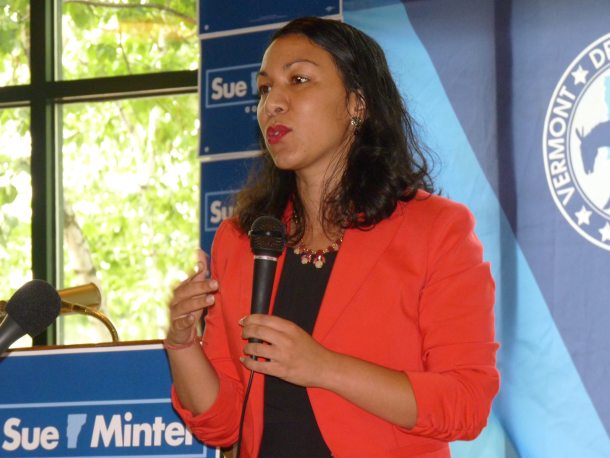
Sen. Kesha Ram, D-Chittenden, introduced the state legislation, S.148, on Friday and briefed the natural resources committee on it. Its goal, she said, is to address the intersection between historically marginalized communities and the environment.
In addition to crafting a general guiding policy, the measure would include additional support for the officer of civil rights at the Vermont Agency of Natural Resources and would include a mandate to identify and map environmentally distressed areas throughout the state.
The goal of that provision would be to gather information on whether there are cities or towns with high rates of air pollution and possibly respiratory issues, or lead paint in buildings and perhaps cognitive developmental delays.
Ram, who advocated for a similar bill in 2007 before she was elected to the Legislature, told the committee Friday that the goal is to address the connection between “pollution, poverty and power.”
“Anytime someone comes to you and says, ‘we don’t want to look at that. We don’t want that here,’ it will end up in the community that has the least political wherewithal to come and say that to you,” Ram told her colleagues.
Sen. Chris Bray, D-Addison, who chairs the committee, mused that legislators often fail to hear from people outside of the Statehouse or the political realm.
“We’re part of that problem, right. The way that we work doesn’t necessarily lend itself to finding the answers you’re talking about,” Bray said.
Ram added that the legislation is meant to reinforce how the state has relied on the “flooding of tribal lands” for hydroelectricity, shipped nuclear waste to Texas and exported plastic recycling to China.
“It’s essentially a global perspective but also can be very much localized,” she said.
Bray said Friday that he intends to continue discussing Ram’s proposal during the remaining weeks of the session and plans to continue the conversation over the summer.
“I’m sorry we’re in the awkward spot of it being our last full-time week,” Bray said. “The most meaningful work we ever do happens all year round — not just during session.”
Click here to get Final Reading in your inbox.

