


With three Democrats, three Republicans and four independents vying for three seats in the Vermont Senate, possibilities abound in Rutland County, which has been a Republican stronghold in recent decades.
Incumbents Cheryl Hooker, a Democrat, and Brian Collamore, a Republican, say they aren’t taking anything for granted. Republican James McNeil will not seek re-election, and the open seat offers an opportunity for newcomers.
Also in the race: Democrats Greg Cox and Larry Courcelle, Republicans Terry Williams and Joshua Terenzini, and independents Michael Shank, Brittany Cavacas, Casey Jennings and Rick Lenchus.

With only six Republicans in the 30-member Senate, GOP candidates say they’re looking to increase representation in the Statehouse. After Hooker broke through in 2018, becoming the first Democrat in 12 years to hold a Rutland County seat, Democrats are looking to expand in the county.
All four independent candidates cited local and nationwide division as a prominent reason to transcend party lines.
Based on the primary results, the race appears tight. County residents cast 22,059 votes in the Republican primary, and 21,046 in the Democratic primary; the county has about 58,000 residents. The November election is expected to yield higher voter turnout.
While candidates typically need to acquire signatures on a petition to qualify for a spot on the ballot, Covid-19 prevented door-to-door signature requests, so the Secretary of State’s office abandoned the requirement. This year, candidates simply completed a consent form, opening the field for hopefuls with and without political experience.
All 10 candidates aim to advocate for Rutland County, which is often overshadowed, they say, by the needs of constituents in Montpelier and Burlington. Plans for that advocacy, however, differ greatly for each candidate.
Jump to candidate: Cheryl Hooker | Brian Collamore | Terry Williams | Greg Cox | Larry Courcelle | Joshua Terenzini | Michael Shank | Brittany Cavacas | Casey Jennings | Rick Lenchus
The incumbents
Cheryl Hooker (D)

As a lifelong Rutland resident and retired teacher, Hooker, 70, has ridden several political waves in Rutland County. She was a representative in the House from 1993 to 1995, a state senator from 1997 to 1999, returned to the House from 2001 to 2003, and was re-elected to the Senate in 2018.
When she was young, Rutland was “blue,” she said, then trended Republican. “I think things are changing again. We certainly are seeing a lot more participation by young people.”
She thinks Rutland County has a lot to gain from Democratic policies, citing the party’s support for child care, paid family leave, health care, affordable housing, and educational opportunities, like tuition reimbursement for the Community College of Vermont.
Hooker, who lives in Rutland City, also believes legislators have an obligation to speak out against racism in Rutland County, referencing local NAACP leader Tabitha Moore’s decision to move away.
From her last two years, Hooker has three standout moments. One was her decision to vote for Act 47, a law that established a woman’s choice to have an abortion as a fundamental right. Hooker, who is Catholic, said she thought hard about the decision.
“I’ll tell you, it wasn’t a happy moment for me. But it was something that really affected my life,” she said. “I was not allowed to receive the sacraments at my church for a while.”
She worked to secure federal grants that funded housing projects on Rutland’s Pine Street and Woodstock Ave.
And, on the last day of the legislative session, a bill she introduced, S.296, unanimously passed by the Senate. It caps out-of-pocket expenses for insulin.
Hooker acknowledged the number of strong candidates in the race.
“I would like to see another Democrat,” she said. “It’s been a long time.”
Brian Collamore (R)
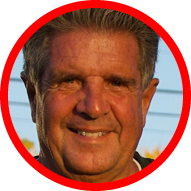
As he seeks his fourth term, restoring a pandemic-afflicted economy is Collamore’s top priority.
“We’ve done a tremendous job with the safety of the public,” he said, citing Vermont’s low case numbers. “Now it’s time, I think, to get the economy back in shape. … If you can get the economy perking the way it was eight, nine, 10 months ago, everything else seems to work out OK, whether those are social issues or environmental issues, or anything else.”
Collamore, a Rutland Town resident, attributes Vermont’s success managing Covid-19 to residents’ behavior: wearing masks, washing hands and staying in.
He’s proud of S.233, a bill signed by Gov. Phil Scott on Sept. 23 that relaxes licensing challenges that occur when, for example, a nurse moves to Vermont from another state with different licensing procedures.
When asked about the issue of racism in Rutland County, Collamore said legislators “absolutely” have a role to play.
“We need to continue to make people feel welcome, regardless of where they come from, and regardless of color,” he said. “I don’t think there’s any doubt about that.”
He said a few bills passed at the end of the session could address systemic racism in Vermont, and work needs to continue.
While Collamore believes that climate change is a problem, he voted against the Global Warming Solutions Act, which would legally require the state to meet emission reduction standards and allow citizens to sue the state if they’re not met.
He objected because the new climate council, which would determine how to meet the reduction standards, would have been an unelected body. He’s also concerned about the cost of potential lawsuits against the state, and he doesn’t think the emission targets are feasible.
“We need to continue to do our best to reduce our carbon footprint, for sure,” he said. “But Vermont already does a great job.”
Collamore, 69, was a radio personality and sales manager at Catamount Radio before he retired. He believes that the sheer number of candidates may stack the odds in favor of the incumbents.
“For someone that doesn’t have a real high level of name recognition,” he said, “it’s going to be tough to break in that first time.”
Running again
Terry Williams (R)
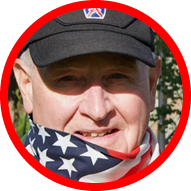
In his second bid for office — he narrowly lost in the 2018 Senate primary — Williams points to leadership experience following a long military career, and a desire to slim down the state budget significantly.
“I think the state — they need to cut regulations,” he said. “Somebody needs to go through all the laws in the state of Vermont and look at the redundancy there. We continue to pass laws when there’s already a law on the books that could suffice.”
Williams, 68, advocates expanding broadband access and cutting taxes. Asked about bringing newcomers to Vermont, he said New Hampshire and New York have tax systems that are more attractive to business owners and residents.
Williams said he’s been disappointed that people of color don’t always feel welcome in Rutland County, he doesn’t believe legislators have a role to play in addressing the situation, and is put off by the idea of mandated training on implicit bias.
“I feel bad because people think, because I’m from Vermont, that I’m racist,” he said. “It bothers me to think about it. So consequently, I stand off. As a human being, I would like to be considered welcoming and friendly.”
Although he’s “very conservative,” Williams said, he wants to talk to people who think differently than he does.
“I’m going to convince you that we can sit here and talk,” he said. “You’re a liberal, I’m a conservative, but at the end of the day we’ll say, you know what, we don’t agree on everything. But we will talk about it again tomorrow.”
Greg Cox (D)
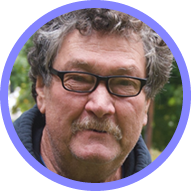
West Rutland farmer Greg Cox believes a modern desire for efficiency is the root of many problems, most of which require deep, systemic change.
“I don’t fit. I’ve never really fit. I’ve always asked too many questions,” he said. “I’ve always looked at systems and go, what’s the alternative? How can we make this better? Most people don’t want to see the dirt.”
Though Cox, 69, is running as a Democrat, he hopes to use his experience as a farmer to bring an everyday mindset to the Senate and walk the line between parties.
“Most people that run for office are almost, they’re very similar,” he said. “Whether they’re a Democrat or a Republican, their way that they operate is party-driven.”
Cox founded the Vermont Farmers Food Center, a Rutland-based organization that aims to improve infrastructure that helps Vermont farmers reach a regional market. Cox said he’s pro-business — as long as it’s really small business. The Walmart located in downtown Rutland extracts money from the community, he said.
“They don’t add anything,” he said. “When I’m talking to people, I always go, the $2 you saved on your pair of jeans is coming out of your children’s future to be able to stay here.”
He supports organic, diversified farming, and thinks he could be a go-between for those who believe strongly in environmental regulation and those who advocate for agriculture — groups that are sometimes at odds with each other.
Cox would take a ground-up approach to revitalize the parts of Rutland that are hurting. “Everything we need is right here,” he said.
First time running
Larry Courcelle (D)

After watching missteps by Vermont State Colleges leadership that led to several resignations earlier this year, Mendon resident Larry Courcelle, who’s on the Castleton University alumni board of directors, decided to run for state Senate.
“I just couldn’t understand how they were operating, and how we got into such a huge debt,” he said. “I was wondering who is watching this whole situation.”
Courcelle, 70, worked as the chief estimator and account executive for the Vermont Roofing Co., and chaired the Rutland Regional Planning Commission from 2006 until 2009. He also had a six-year stint on the Mendon Selectboard — including two years as chair — and served another six years on the Rutland Free Library Board of Trustees, where he was president for two years.
“I certainly don’t have a thin resume,” he said. “I don’t think I’ve ever been on a board where I didn’t end up as a chair or president.”
He attributes Rutland’s lack of representation in the Statehouse to the fact that two of Rutland’s three senators are in the minority party.
“I think it’s a situation where, if we get more Democrats in the Senate from Rutland County, then we can work with the other Democrats and Progressives and get more recognition, and some more funding rolling out,” he said.
Courcelle thinks gaining another Democratic seat is possible.
“I think there is that swing,” he said. “And especially this year.”
Joshua Terenzini (R)

The economy is Terenzini’s top priority. Chair of Rutland Town’s Selectboard since 2015, Terenzini, 33, said he brings to the race municipal experience and a passion for the county.
“In many ways, we know that Montpelier is great at wasting money,” he said. “And we know that at the municipal level, every last dollar is scrutinized and accounted for before it’s spent.”
Terenzini said he doesn’t yet know what he would work to cut from the state budget, but “tough choices will have to be made. The answer out of Montpelier cannot always be to raise taxes to cover that budget deficit. Vermont is already, in many cases, pretty unaffordable for hard-working, middle-class Vermonters.”
While he believes the state has handled Covid-19 well, he wishes businesses had been allowed to reopen sooner.
The biggest issues facing Rutland County? A declining population, and consequently a declining workforce. Terenzini hopes to attract more people to Vermont, which will require better access to broadband and a lower cost of living.
Terenzini acknowledges “there is work to be done” on issues of racism and inclusion in Rutland County.
“I will be a voice for everyone, regardless of who they are or what they believe in,” he said. “We need leaders who are going to represent all minority groups.”
As chair of Rutland Town Selectboard, Terenzini said he’s tried to bridge a divide between the town and Rutland City, and has worked with Rutland Mayor David Allaire to acknowledge the interdependence of the two municipalities.
“I would point to my ability to collaborate with other leaders throughout the county to improve relationships, and to make sure that Rutland County is as special as possible.”
Michael Shank (I)
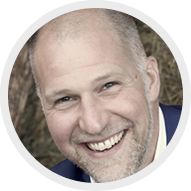
Michael Shank’s face and name will be familiar to many — the communications director for the Carbon Neutral Cities Alliance was formerly an opinion columnist for The Washington Post and US News & World Report, and a contributor to USA Today, CNN, TIME and Newsweek, among others.
Shank, 46, moved to Brandon in 2017 from New York City, citing a long-held desire to run a farm and live a small-town lifestyle. When he got the OK to work remotely, he searched for the right place to settle, and asked business owners about the area.
“There’s so much volunteerism, so much time spent helping people,” he said. “I know this is a characteristic of Vermont generally, but what really moved me about Brandon is that there’s so much engagement. And so I picked that up right away when I moved here.”
When he talks about issues in Rutland County and Vermont as a whole, Shank said it all comes back to physical, social and economic infrastructure. Among his top priorities would be better access to broadband — something he’s pushing now as vice chair of the Rutland Regional Planning Commission.
He’s also interested in upgrading bridges, roads, rails, and water and sewer systems.
“And then other things like, you know, retrofitting the building stock and housing so that it’s accessible and affordable,” he said.
Shank has a PhD. from George Mason University’s Carter School for Peace and Conflict Resolution, and teaches a graduate class there called Communicating Conflict. He believes that experience would serve him well as a state senator in 2020. As an Independent candidate, he says he’s required to appeal to voters in a way that extends outside of party lines.
“How do I talk about my work, and the future of Rutland, in ways that resonate with everyone?” he said, “because that’s what’s most interesting to me. I think now, more than ever, we need to bridge this deep, deep chasm, this divide.”
Brittany Cavacas (I)

Brittany Cavacas, 33, said her generation can provide a new perspective in the Statehouse.
“In my county, we’re very dominated by older white men,” she said. “So I really felt, as a young woman, that I would bring a new voice.”
Though she says she’s always been a moderate Democrat, she recently felt “pushed away” by county Dems.
“I saw gray in a world of black and white,” she said. “I don’t feel like an ‘R’ or a ‘D’ over our heads defines us as individuals.”
Cavacas has worked in nursing homes, and currently works in the state’s Adult Services Division in adult family care.
In Rutland County, she believes the biggest obstacles to constituents are affordability and sustainability. “We don’t have the population in the area to grow and sustain,” she said. “Let’s make sure that General Electric stays. Let’s make sure that the hospital is growing.”
While Cavacas said local businesses are integral to Vermont, she would advocate for large stores to come to Rutland, and to reopen the Diamond Run Mall. Some can’t afford clothing sold in downtown businesses, she said.
Attracting new people, she said, requires Rutland County to become a more accepting community for people of color.
“We really need to work harder at accepting and being more welcoming and open to people,” she said.
Casey Jennings (I)
Casey Jennings, 34, who’s new to politics, said he felt emboldened by easier access to the Senate race this year.
“I have had an interest in running for office for a while,” he said. “There are issues I have ideas on that I don’t really see being talked about.”
Jennings, who holds a bachelor’s degree in history and a master’s degree in forestry, points to a divide between rural and urban areas. He’d like to see Vermont challenge the U.S. Supreme Court’s 1964 decision, Reynolds v. Sims, that ruled the electoral districts for state legislatures should be roughly equal in population, based on the one-person, one-vote principle.
When he traveled the country, working seasonally for the U.S. Forest Service, he said he met people who lived in rural areas and felt underrepresented.
“Because of the way legislatures are set up, a small urban area can essentially run the whole state,” he said. “A legislature run by a small part of the state often doesn’t represent the interest of the needs of the rural residents. And that’s what’s been playing out, I think, nationally.”
He cited gun control as an example: “The cities want gun control, the rural areas don’t.”
Jennings also favors lower property taxes and better-paying jobs in Rutland County.
He said his experience in meeting people with different opinions during his travels would help him in a legislative role, he hopes to work to quell division locally.
Rick Lenchus (I)

An architect and a master of martial arts, Rick Lenchus is running for Senate — and also as a state representative for the Addison-Rutland district — to fight for better access to health care for the elderly and people with special needs, with mental illness and with varying physical abilities.
His architecture background has allowed him to spend time in schools, and he doesn’t think regulations are up to snuff.
Lenchus, 80, says he’s running as an independent out of frustration with both political parties.
A political newcomer, Lenchus says he has broad knowledge of the Americans With Disabilities Act, years of managing his architecture business, and experience in the military. Lenchus was a jet plane captain in the Marine Corps.
He was also an auxiliary police officer in Rockaway, New Jersey. While he didn’t have a gun, Lenchus said, he said he was recognized for carrying out peaceful encounters with people he arrested.
“I walked him to jail, and I put him in the cell and I locked him in, and I got him a cup of coffee while I wrote up his report,” he said, describing one such encounter.
Lenchus is relying largely on face-to-face encounters for his campaign.
“I’m just going to find myself a couple of signs and put them in front of my house,” he said, “and I’m going to make as many connections as I can.”

