


VTDigger posts regular coronavirus updates on this page. You can also subscribe here for daily coronavirus news. Please send your Covid-19 questions to coronavirus@vtdigger.org
Last month, Vermont received the largest federal grant it has ever seen.
Once the state cashes the checks it receives from Washington, D.C., Vermont’s coffers will have $1.25 billion in funding that can be used to cover costs related to the Covid-19 crisis.
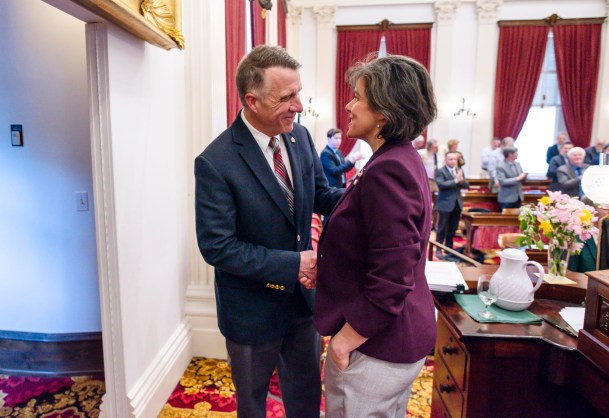
Gov. Phil Scott and lawmakers have until the end of the year to decide how to spend the money, which was sent to Vermont after President Donald Trump signed the CARES Act last month.
The federal funding, which represents more than 16% of the state budget, can be used not only to help fund the state’s response to the pandemic, but also to make major investments in state infrastructure, related to Covid-19 costs.
Already, interest groups, lawmakers, and members of the Scott administration have proposed using the money for purposes that include expanding broadband to every home in the state, bailing out the farmers and the dairy industry and stabilizing the state college system — after officials considered closing campuses last month.
Amy Shollenberger, a lobbyist with the firm Action Circles who closely follows the state budget process, said the $1.25 billion is a “once in a lifetime opportunity.”
“The crisis shows you all the vulnerabilities that we have because we’ve had an attitude in this state that we don’t have enough money to make these investments,” Schollenberger said.
“And now you can see the results of the lack of investment and there’s a pot of money available.”
The state has already spent, or committed to spending, about $60 million in an immediate response to the pandemic.
But with the full scope of the pandemic unknown, officials are working to understand federal guidelines for the dollars, and as requests to spend the money begin to pile up, it’s unclear how far the funding will go. The money must go towards Covid-related expenditures incurred between March 1 and Dec. 31.
Speaker of the House Mitzi Johnson, D-South Hero, said federal restrictions that limit how the money can be used make it difficult for the administration and lawmakers to decide in what ways it should be appropriated.
“Right now, there are a lot of restrictions on the money, so there’s a feeding frenzy, but there’s also caution — what uses are eligible — it’s complicated,” Johnson said.
“When there’s extra money, there’s never enough money. We have 180 legislators and the administration wanting to spend it in different ways. We’ll have to use it carefully and in ways that set us up for a stronger future,” she added.
Senate President Pro Tem Tim Ashe, D/P-Chittenden, said it’s unclear whether using the money to stabilize Vermont’s struggling state college system or to provide additional aid to hospitals would even be possible.
“There is great confusion about what’s eligible for use by the CARES funds,” Ashe said.

Ashe said the Senate will have committee chairs work on “priority areas” for rebuilding expenditures to “help us build back out of this thing.”
Preliminary proposals include an emergency plan from the Department of Public Service to connect every home in the state to the internet. That initiative has a $85 million to $293 million price tag. Affordable housing and homelessness solutions would cost $106 million. About $9 million would be funneled into a farming assistance program. And hundreds of millions dollars could be made available to save the state colleges.
Rep. Kitty Toll, D-Danville, chair of the House Appropriations Committee, said spending the $1.25 billion won’t be as simple as directing the dollars to the state’s many areas of need.
Lawmakers will have to make sure that their use is “directly related Covid expenses” which will complicate how they’re budgeted.
“There’s a lot of money there that can be put toward a lot of good things, but we have to stay within the rules,” Toll said.
“And that’s going to be frustrating for some because the availability of this money could fix some serious problems which are very clear due to the crisis that we’re in. But making them fit the exact rules from the Treasury may prove to be difficult.”
While the money could be used to ensure students have access to broadband for remote learning, for example, providing internet service to every home in the state may not be realistic.
“If we had to make changes to get broadband out to schools either through hotspots, or equipment for kids to do their work, those are very concrete examples of expenses,” she said.
“To expand broadband into every corner of Vermont is a little more difficult.”
Justin Johnson, a lobbyist with the firm MMR and a former secretary of administration for Gov. Peter Shumlin, said he expects Scott administration officials will be “more careful than some people would like them to be” about how the money is spent.
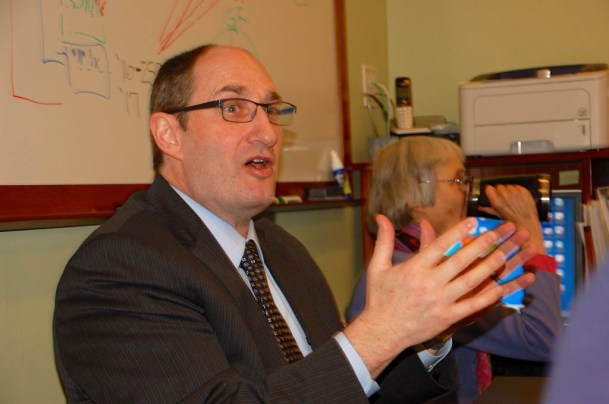
Johnson, who led the Agency of Administration between 2015 and 2016, said that five years after Hurricane Irene, officials in Washington were still looking into how Vermont used federal dollars they awarded the state during the 2011 crisis.
There was always a threat that they would find the state’s spending ineligible, and demand the money back.
“There’s staff folks in the administration that remember that experience and are not going to just start throwing money around before having a long hard think about what we’re able to do with it and what we’re not able to do with it,” Johnson said.
Vermont Finance Commissioner Adam Greshin said the Scott administration is concerned about making sure that “every penny” of the CARES Act dollars the state spends is in accordance with the Treasury’s guidance.
He said most of the proposals for the $1.25 billion sound promising.

“With few exceptions all of the advocates have spoken about worthy causes,” Greshin said. “But the nature of allocating resources means you have to make choices.”
While some of the requests will make it onto the governor’s list of spending priorities, others won’t.
Greshin said the governor will propose spending the federal CARES Act money as the administration starts putting a budget together for fiscal year 2021.
Most of the money will have to be spent with some level of legislative approval.
But under guidelines proposed by lawmakers, the governor can unilaterally spend $60 million to cover the cost of immediate Covid-19 expenses.
Scott administration officials have said they want more flexibility to cover expenses from the pandemic as they arise.
There has already been some disagreement between the governor and the Legislature over what the money can be used for.
On Friday the Senate passed an essential worker hazard pay proposal worth $60 million — funded by the CARES Act — despite the governor signaling he does not believe the legislation meets the stipulations attached to the federal money.
“The governor had indicated he wasn’t sure that the CARES funds can be used for hazard pay,” Ashe said. “Legislative attorneys believe it is.”

Ashe, the Senate leader, is confident that, in the coming months, “expansive permission” will be handed down to the states by the federal government — giving lawmakers more latitude to use the money.
Ashe added he does not think Vermont will be in danger of misusing the federal money.
“We should always be careful about the way we use the dollars but I’m not worried we’re going to wander off into uses that are going to result in penalties or needing to send dollars back five years from now,” he said.
“So many states are in the same league as us right now,” he added. “We’re all in desperate need of federal resources to get things moving again.”
In particular, lawmakers are hoping Congress and the Trump administration will give states the ability to use the funding to fill revenue holes in their budgets that have been depleted by plummeting tax revenues. The current guidelines explicitly prohibit states from using the CARES Act monies to balance budgets.
The latest forecast from state economists projects that Vermont will lose $430 million in revenues next fiscal year.
While lawmakers and the administration try to figure what is eligible and what is not, special interests are busy advocating for how portions of the money should be spent.
Migrant Justice, an advocacy group that represents immigrant farmworkers, has asked the Senate agriculture panel to use some of the $1.25 billion to set up a Covid-19 relief fund for the state’s undocumented farmworkers, similar to a $75 million California measure.
Vermont manufacturers want the state to set up a grant program for businesses that are making medical personal protective equipment (PPE).
Austin Davis, a lobbyist for the Lake Champlain Regional Chamber of Commerce which has advocated for a frontline workers assistance plan, said he has been in contact with lawmakers to discuss possible ways some of the money can be used to assist tourism marketing to attract more people to the state during a summer that is expected to be dominated by social distancing measures.
But Davis also said the money should be used with caution, adding there are still many unknowns about how the money can be spent as well as the long-term economic impacts on the state
“Before we start thinking how to spend it, it would be nice to hold some in reserve. We have until December,” he said. “We don’t know what we don’t know yet.”
John Walters contributed reporting
Get the latest statistics and live updates on our coronavirus page.
Sign up for our coronavirus email list.
Tell us your story or give feedback at coronavirus@vtdigger.org.
Support our nonprofit journalism with a donation.


