

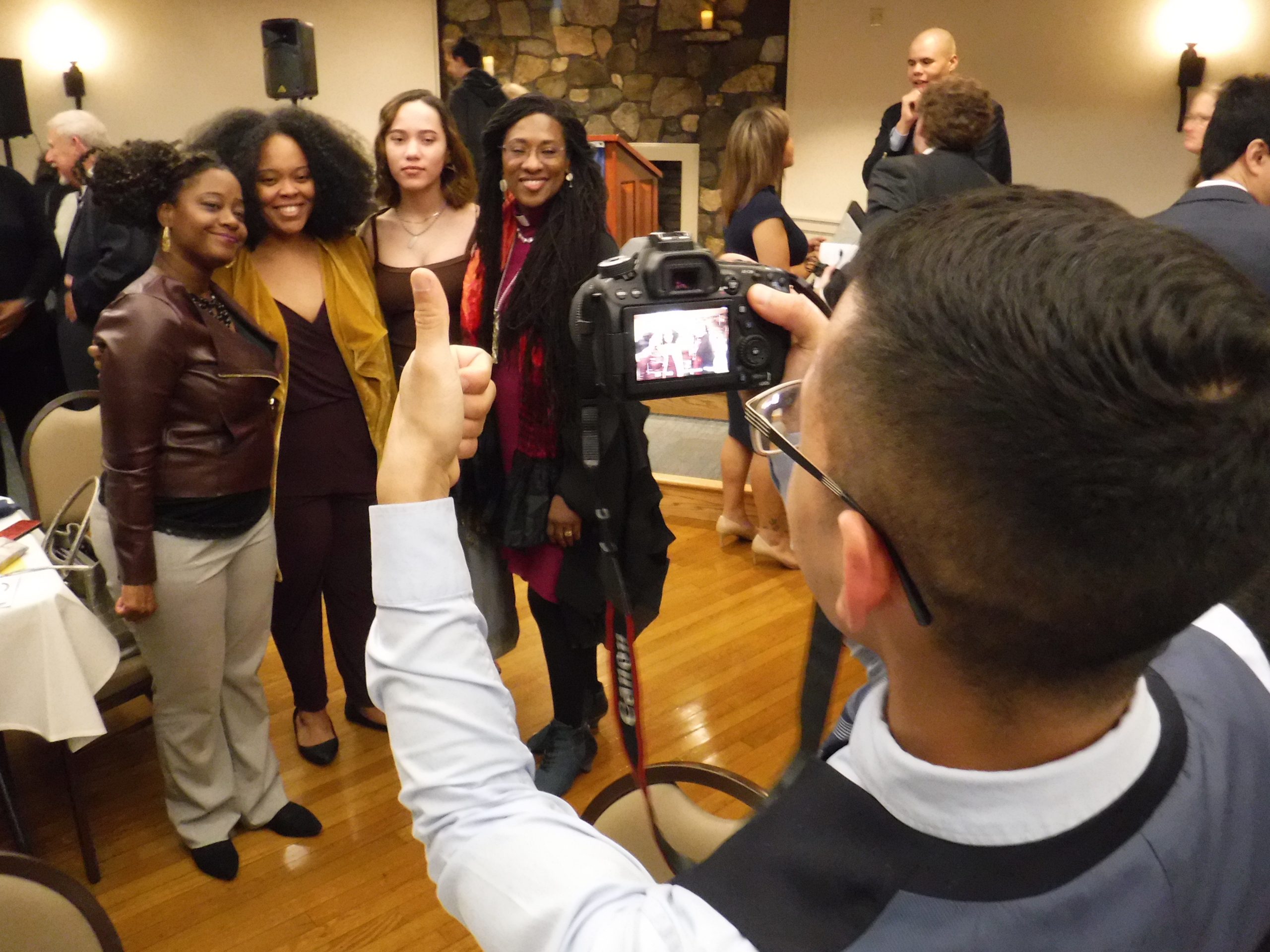
Ever since Kiah Morris resigned as Vermont’s only black female legislator because of racial harassment in 2018, she has been sought out by the press and event presenters wanting to share her perspective. On one hand, she welcomes the opportunity to educate a state only 0.6% more diverse than Maine, the nation’s whitest. On the other, she knows she’s not the only person of color with something to say.
That’s why, after taking the stage to applause at a recent TED Talks program in Stowe, the Bennington-based newsmaker spent most of her time telling the crowd why it shouldn’t focus on her.
“I regularly turn down media interviews,” she said, “and refer other persons of color to share their expertise and stories. I regularly cede power to try to promote real collaboration with people who are not at the table but absolutely should be.”
Morris isn’t alone in her thinking. As racial justice leaders observe Martin Luther King Jr. Day, they say a state that’s 92.5% white needs to listen to more of the 7.5% minority population they represent. Advocates believe for people to see the true diversity of Vermont — and why that matters in a time of socioeconomic stagnation in the state — they need to seek out more diverse voices.
Take the experience of Curtiss Reed Jr., executive director of the Vermont Partnership for Fairness and Diversity. Before Morris hit the headlines, the 65-year-old Brattleboro resident was often the sole source many reporters spoke to about racial issues in the Green Mountain State.
“I used to be the only one the press had on speed dial,” Reed says. “The narrative that people narrowly focus on is Vermonters of color as victims of injustice, but our experience is not simply limited to civil rights, white supremacy and racist knuckleheads. People need to have a much fuller picture of who we are.”
Xusana Davis relates. Starting her job as the state’s first executive director of racial equity last summer, the 31-year-old New York native suddenly found herself Vermont’s newest go-to spokesperson.
“This is the first time we’ve seen a position of this nature, so to some extent I can understand,” Davis says at her Montpelier office. “But people of color are not monolithically motivated or offended by the same things. One person can’t nor should be a voice for everybody.”
At a time when Vermont is facing an aging and declining population, promoting diversity is paramount, advocates say.
“It is of critical importance that Vermonters of dominant groups recognize that equity — in this case, racial equity — benefits the whole,” Davis wrote in a just-released report. “Continuing to ignore or actively resist efforts to undo structural inequity will lead to the continued shrinking of Vermont’s local and tourist economies, the hollowing of its school systems and underperformance of students from marginalized groups, the weakening of its state workforce, and the exodus of its young people who are leaving in search of greater diversity and social cohesion.”
‘We can disagree without being disagreeable’
Racism is still a major problem in the state, with three examples making news in the past two months alone:
- The number of Vermont hate crimes reported by police is at its highest rate since the Federal Bureau of Investigation began collecting data in 1995.
- Police are more likely to pull over black or Hispanic drivers than white motorists, according to a new online database created from more than 700,000 traffic stops in the past decade.
- And the state lacks enough training for authorities and information about the people most affected by racial disparagement, according to a new report by the Vermont Attorney General’s Advisory Panel on Racial Disparities in the Criminal and Juvenile Justice System.
To address that, Mark Hughes, the Burlington-based coordinator of the new Vermont Racial Justice Alliance, kicked off the statewide public program series “Hidden in Plain Sight: The Truth About Systemic Racism” this past week in Montpelier.
“There’s a disconnect between the level of understanding about systemic racism and its roots and impact,” Hughes says. “We’ve got a lot of work to do.”
In the 150-member Vermont House, five representatives identify themselves as other than white: Kevin “Coach” Christie, D-Hartford, Brian Cina, P/D-Burlington, Harold “Hal” Colston, D-Winooski, Diana Gonzalez, P-Winooski, and Nader Hashim, D-Dummerston. They’ve teamed with allies to form the new Social Equity Caucus to help racial and ethnic minority and indigenous populations, the LGBTQ community and people with disabilities.

Says Cina: “It’s not exclusive, but inclusive.”
And Colston: “We want to make sure we’re bringing in people who are just as concerned about social equity issues. There’s something about having numbers.”
The caucus wants the Legislature to explore an anti-racism bill, requirements for more police practice standards and training and criminal justice data collection, as well as an anti-slavery constitutional amendment and a committee to study the idea of a state apology and reparations.
Over in the 30-member Vermont Senate, Sen. Randy Brock, R-St. Albans, is the only person of color.
“I’m the black caucus here,” he says, “but to quote Groucho Marx, I’d never join a club that would have me as a member.”
That isn’t why Brock has declined to join the new Social Equity Caucus.
“I frankly have always had a problem with identity politics,” he says. “Groups don’t vote, people vote. There have been long periods of time I’ve run for office and my race hasn’t been mentioned. I do think talking to a wider audience is worthwhile. We can disagree without being disagreeable.”
Brock notes different people have different priorities. As one of six Republican senators amid 24 Democrats and Progressives, he wants to strengthen the state’s economy, tackle government affordability and accountability, curb health care costs, plan for an increasingly aging population and plug rural areas into the rest of Vermont through internet and cellphone coverage.
“I could go on and on — there are lots of things we really need to focus on,” he says.
Racial justice, Brock adds, is one of them.
“Each individual should be treated fairly and appropriately, and bias has no part of that,” he says. “We need to root out incidents of discrimination aggressively.”
‘What are we doing to make things different?’
A rising number of Vermonters of color are fighting for racial justice at the local level, starting with two new branches of the country’s largest civil rights organization, the National Association for the Advancement of Colored People.
The Rutland Area NAACP successfully lobbied its city Board of Aldermen to schedule bias training for local leaders in the coming month.
“People are concerned our leaders don’t have a basic understanding around issues of fairness and diversity and equity and want to add that support,” branch president Tabitha Moore says.
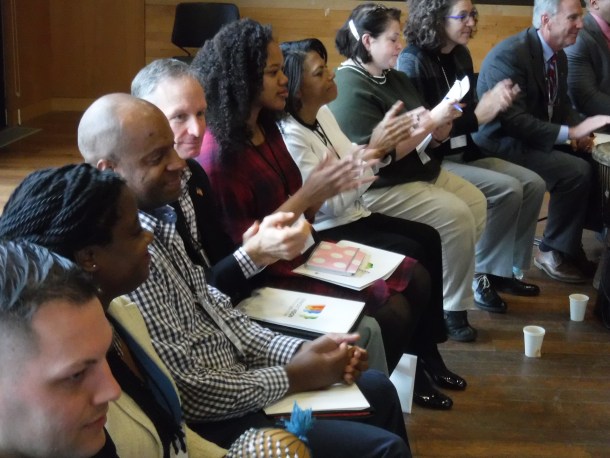
The Windham County NAACP, for its part, recently hosted more than 200 people at its first annual Freedom Fund Dinner.
“We must remember our humanity and commitment to justice for everyone,” branch president Steffen Gillom told the capacity crowd, “and we must do it hand-in-hand.”
At the state level, newly named Vermont Episcopal Bishop Shannon MacVean-Brown is sharing her experience as the first African American woman to serve in a post initially held by John Henry Hopkins, who offered the 1851 lecture “Slavery: Its Religious Sanction, Its Political Dangers, and the Best Mode of Doing It Away” before helping to end the division between northern and southern dioceses after the Civil War.
“Clearly it’s not the only story that should be told in this diocese,” MacVean-Brown said at her ordination, “but it is part of our story. It holds importance in relationship to my presence and future ministry here.”
As Vermont’s first executive director of racial equity, Davis is addressing issues in state government.
“I worry that people assume this work is all taken care of because we now have one person in a position,” she says. “It’s everybody’s work.”
Davis isn’t simply seeking a display of greater diversity.
“Diversity means you’re putting nonwhite bodies in the room,” she says. “Inclusion means not just that you’re in the room, but you’re at the table and meaningfully engaged in leadership and decision-making.”
Davis knows that although some Vermonters take pride in the state’s early historic efforts to abolish slavery and adopt same-sex unions, some don’t understand the need to address racial injustice as part of the state’s effort to attract more newcomers.
Vermont’s population of 623,989 has dropped by 400 in the past year and by 1,800 in the past decade, the U.S. Census Bureau reports. The population has also aged — there are more seniors and fewer children and working-age adults.
Gov. Phil Scott, in his State of the State address this month, identified Vermont’s declining population and aging demographics as his “biggest concern.”
The Vermont Tax Structure Commission echoed that sentiment in a recent report that concluded: “In-migration, both domestic and international, is crucial for maintaining population stability, achieving generational balance, and addressing workforce shortages, which will then benefit the state’s revenue system.”

Davis affirmed the challenge in her update to the Legislature, and drew a direct connection to racial inequity. “The fact is, Vermont cannot survive the economic, legal, and demographic tolls of inequity — this cannot be overstated. And yet, too many Vermonters see racial equity as a project that does not impact their lives, or as a handout to groups with interests that do not align with their own.”
To reverse the state’s demographic trends, people have to want to settle here.
“Vermonters need a reality check that this isn’t the only great place to live in America,” Davis says. “The more unwelcoming we are to people, the more we’re hurting ourselves.”
Reed — the advocate many Vermont racial justice colleagues view as their elder — concurs.
“We’re talking about consumers — do you care what color they are?” he says. “If they decide to stay and create jobs, that’s going to support our tax base and the employment of others.”
Reed is promoting the state to people of color through the online promotion of the Vermont African American Heritage Trail and the website IAmAVermonter.org.
“Our target consumers need to know Vermonters of color passionately engage in a broad spectrum of activities,” he says before listing everything from agriculture to athletics to the arts.
But that can be a challenge when out-of-staters search “Vermont” and “diversity” and see headlines about harassment.
“We can’t attract people here with a story of ‘come and join the black and brown victims of Vermont,’” Reed says. “I consider myself a survivor of racial injustice, but we need to move beyond that narrow narrative to a fuller representation of who we are and what we do.”

To achieve that, advocates say the state must work to both stop racism and spotlight the diversity it already has. Many see Martin Luther King Jr. Day as a good time to start — as long as it extends past the usual traditions.
“We hear the ‘I Have a Dream’ speech, sing ‘We Shall Overcome,’ hold hands — and go back to where we were,” Colston says. “Dr. King was an anti-racist champion. What are we doing to make things different?”
The black Vermonter aims that question at the white majority.
“My white brothers and sisters need to take the lead,” Colston says. “If there isn’t a solidarity between black, brown and white, it’s not going to move anywhere.”
Morris, for her part, says the work shouldn’t be contained to one holiday weekend.
“I don’t want to see your clever MLK memes today,” she posted on Twitter this time last winter. “Doesn’t mean a damn thing if you aren’t having this conversation year round.”
