


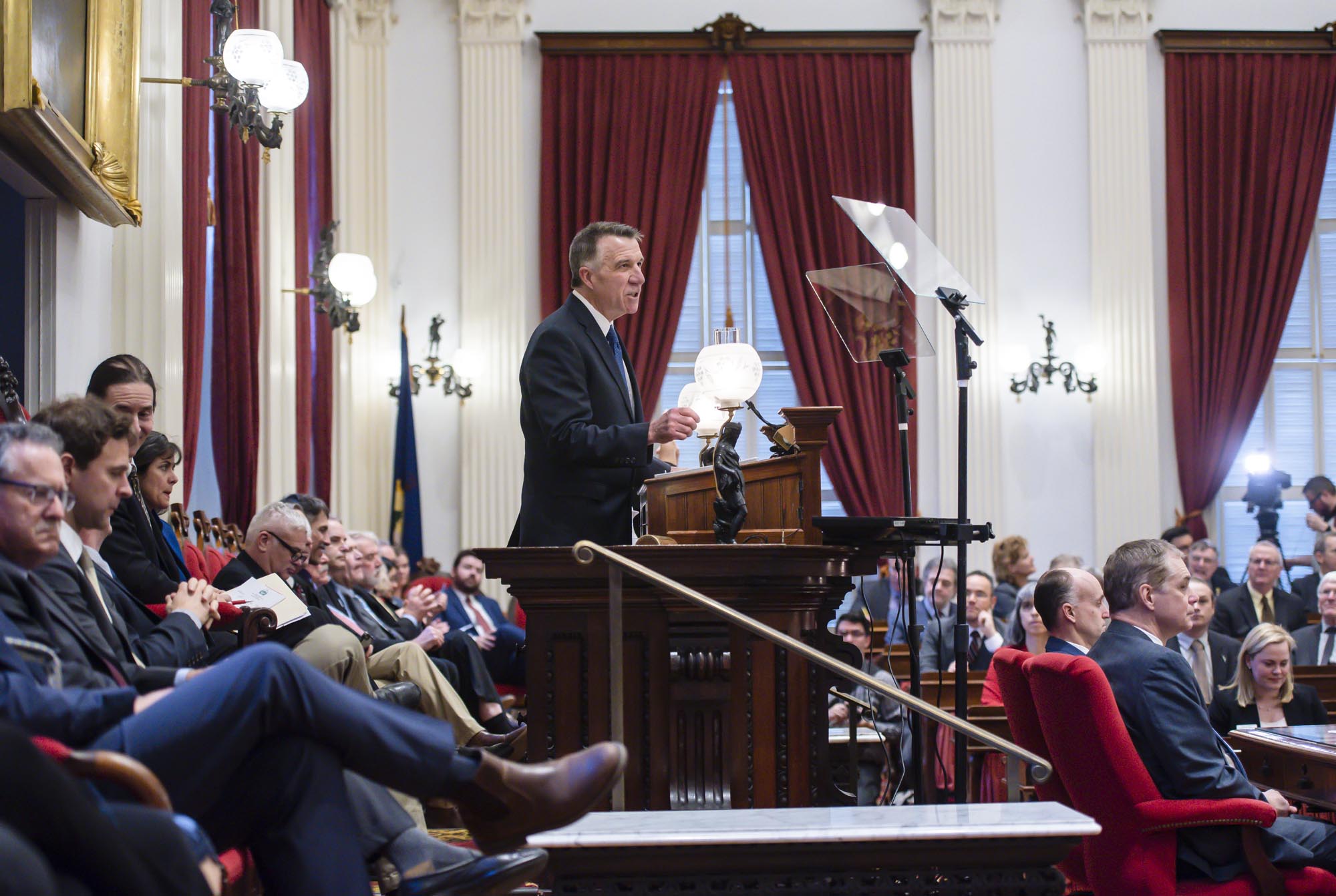
Gov. Phil Scott’s annual address to the Legislature calling for civility was interrupted by cries from demonstrators in the gallery demanding action on climate change.
The Republican governor, now in the second year of his second term, listened patiently at first.
“Now it’s time for you to listen to us,” Scott said, attempting to break up the chants of protesters, who declared a “climate emergency” from the gallery. “If you don’t want to listen to what I have to say, you can be removed.”
Climate activists protested throughout the day in the lead-up to the Republican governor’s annual speech Thursday, and eventually forced Lt. Gov. David Zuckerman to call a recess in order to clear the House chamber as demonstrators cut off Scott just as he began to speak.
Against the heightened emphasis on climate change from protesters, Scott returned to familiar themes as he addressed the Legislature in his State of the State address: affordability and demographics.
Scott said he plans to propose initiatives in his forthcoming budget to protect the environment “without making Vermont less affordable for families and businesses.” But he set the course for a clash with Democrats on their top climate initiatives, which he and other Republicans believe could raise prices for the state, and for Vermonters at the gas pump.
He instead emphasized the importance of investing in electric vehicles while expanding the state’s renewable energy and storage sector, and changing regulations to give electric utilities “more flexibility in order to innovate.”
Scott’s vision conflicts with top Democratic environmental priorities, including two major pieces of legislation aimed at cutting carbon emissions that the governor has already indicated he would oppose.
In particular, the governor has expressed reservations over the Transportation and Climate Initiative, a multi-state push to charge companies for bringing fossil fuels into the state, and use the funds to invest in carbon-cutting initiatives.
Participating in the agreement could mean that gas prices in Vermont would increase by as much as 17 cents per gallon, according to an early version of the plan. Republicans have blasted the proposal as a “carbon tax.”
“I hear from Vermonters across the state, like those traveling long distances for work out of necessity, not choice, and others, like our seniors living on fixed incomes, who struggle to fill their gas tanks and heat their homes,” Scott said.
“I simply cannot support proposals that will make things more expensive,” he said.
Senate Minority Leader Joe Benning R-Caledonia, said he thought the governor’s plan to increase investment into renewable energy and battery storage infrastructure is an effective way for Vermont to address climate change.
“I am absolutely in favor of this state government improving the infrastructure that will get us to where all those kids want us to be,” Benning said, referring to the protesters.
“The idea, however, that we are all by ourselves going to change the world climate situation is another disservice we are handing those kids,” he added.
Sen. Anthony Pollina, P/D-Washington, disagreed with Scott’s incremental approach to climate change.
“His reaction to climate change is to take very minor small steps, when in fact we are facing a real crisis and we need to lead,” Pollina said. “his response to climate change is quite meager.”
“I understand why they are frustrated and I think their action was a minor and non-violent disturbance and a healthy show of democracy,” he added of the protesters.
Rep. Heidi Scheuermann, R-Stowe, said she is in favor of moving forward on climate action policy as long as it is does not disproportionately affect low-income Vermonters.
“Putting the burden of climate change on working rural Vermonters is, in my view, really problematic,” Scheuermann said.


The governor also outlined plans for a universal after-school program, criminal justice reforms, and changes to Vermont’s landmark land use law — Act 250.
He stressed, yet again, his “biggest concern” for the state: Vermont’s aging demographics and shrinking population. The state’s working population, in particular, is dwindling, Scott stressed that only three of the state’s counties, including Chittenden County, have added workers, while the other 11 have lost about 18,000 workers since 2008.
“If we don’t break this cycle, our institutions, including state and local government, won’t be able to afford what they currently do, or what they would like to do in the future, because costs will continue to rise much faster than our tax base can contain,” he said.
And he reiterated Thursday that he believes the state’s tax and fee burden is “still growing far too fast,” particularly property taxes. His administration is predicting that school spending will grow by $72 million in the next fiscal year, driving property tax bills up by 6%.
One of the largest initiatives the governor promised in his speech Thursday, was to create a “universal afterschool network” to ensure “every child has access to enrichment opportunities outside of the current classroom time,” and sync up students’ schedules with those of their working parents.
He touted the after school strategy, which was adopted by Iceland in the 1990s, as an effective way to significantly reduce substance abuse. Iceland has reduced youth cannabis use from 17% in 1998 to 6% in 2015 and drinking from 42% to 5%.
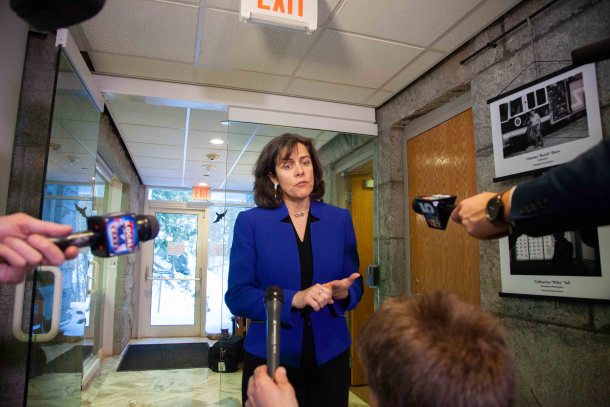
Democratic leaders said they saw areas for potential collaboration with the Scott administration in 2020, highlighting governor’s intentions to modernize Act 250 and expand affordable housing.
House Speaker Mitzi Johnson, D-South Hero, said the speech sent “signals of working together and a real willingness to finally come to the table and work with [lawmakers] on issues.”
Johnson and Sen. President Pro Tem Tim Ashe, D/P Chittenden, both said they would consider the idea for a statewide afterschool program, but had questions about how it would be funded.
Lawmakers briefed about the plan by Scott administration officials said it could take five years to adopt the program. The governor would like to form a task force this year that would design the afterschool system and find a way to pay for it.
“It clearly has the potential to be very positive for kids across the state and their parents,” Ashe said of the afterschool program after the speech.
“The issue of paying for it, that’s a question, because we don’t even know what the plan is at this point.”
Johnson wants to see more details.
“I am very supportive of expanded learning opportunities for kids,” Johnson said. “Again there are a lot of ideas in the speech and we’ve got to see where the money’s coming from.”
Ashe said that besides the governor’s emphasis on expanding the use of electric vehicles, he didn’t hear much in the address about cutting roadway carbon emissions, which the Senate leader believes is an essential step to fight climate change.
“I didn’t really hear how we’re going to do much about transportation emissions, I’ll just be candid,” he said.
Ashe and Johnson also both expressed optimism about the governor and his willingness to support the Transportation and Climate Initiative, with the Senate leader noting that Scott says he is waiting to see the final version of the agreement, which is expected later this year, before he makes a decision on the matter.
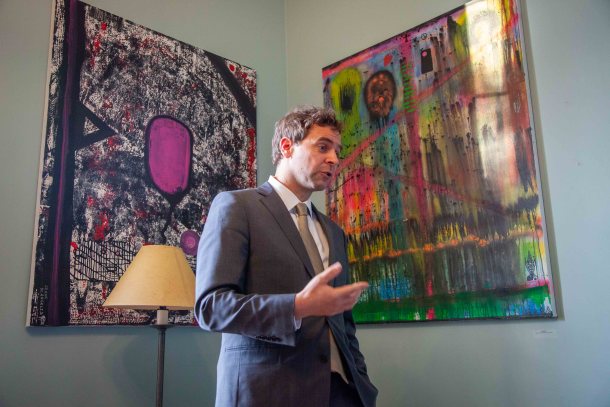
Scott also said he is “optimistic” Act 250, Vermont’s land use law, will be modernized during the legislative session, a goal shared by Democratic leadership in both the House and the Senate.
The governor has made reforming Act 250 part of his plan to add affordable housing units in the state, which he says will help economic development.
Scott’s proposed reforms to Act 250 include doing away with the regional commissions that currently review major projects and exempting some downtown areas from the permitting process.
“The balanced approach we’re working on would enable concentrated development where people want to live and work,” Scott said.
Scott also outlined plans for criminal justice reform during his speech.
The governor said he will push to eliminate license reinstatement fees for suspended drivers and provide additional support for inmates who are transitioning back into the workforce.
However, Scott said he believes there should be tougher mandatory minimums for human trafficking and that lawmakers should tighten restrictions for those who use an insanity plea when charged with a violent crime. Under current law, those found not guilty of murder or attempted murder because they were insane at the time of the crime can be released in 90 days.
Democratic lawmakers are crafting legislation that would extend the minimum sentence to three years. Insanity pleas have been used in several recent high profile murder and attempted murder cases. State officials have taken conflicting — and sometimes controversial — approaches to handling those cases. Chittenden County State’s Attorney Sarah George dismissed multiple murder and attempted murder cases involving insanity pleas last year, a move Scott criticized.
“As we continue to create a more effective criminal justice system, we must remember that justice for victims and accountability for criminals must be top priorities,” Scott said.
Scott made no mention of reforms to the prison system in the wake of allegations that the Department of Corrections has tolerated drug use, sexual harassment and misconduct for years.


