


Vermont officials are seeking a boost in mental health funding in order to meet a growing need among children and families throughout the state.
The Department of Mental Health is proposing an additional $1.55 million for children’s residential treatment in fiscal year 2020, along with a $17.9 million increase for a package of school-based programs called “Success Beyond Six.”
The Success Beyond Six request is up 33 percent from the current fiscal year’s budget. But Mental Health Commissioner Sarah Squirrell said it’s necessary funding for an “incredible partnership” with regional providers and schools.
“Given many of the complex social issues that we know (students) are facing … we are seeing increases in social, emotional and behavioral challenges in public schools,” Squirrell said.
The Mental Health Department’s fiscal 2020 budget is proposed at $266.6 million, up from $243.25 million as approved by the Legislature last year. The increase is partially due to larger salary and operational expenses, but it also illustrates the department’s attempts to address an overburdened mental health system.
The statewide shortfall in adult mental health services has made headlines recently. But officials say they’ve also identified a greater need among young people, and that’s reflected in the department’s fiscal 2020 budget plan.
The proposed changes include more than $1.5 million to pay for additional residential mental health treatment for children and youth. More than $800,000 of that would come from the state’s general fund budget.
Department statistics show 135 children in residential mental health treatment in fiscal 2018, up from 101 three years prior. Such treatment, which is state-funded but provided at private facilities, is “a continued pressure on our budget,” Squirrell said.
In notes on the department’s spending proposals, officials said problems like the opioid epidemic and parental mental health issues are contributing to the need for children’s services. They also cited “decreased access to community based services due to staffing challenges, and decreased risk tolerance in communities due to threats of violence.”
“Due to many factors, we are seeing an increase in need and acuity in children, which is requiring more residential placements,” Squirrell told members of the House Health Care Committee.
Statistics also show an annual increase in the number of days spent in residential beds, and Squirrell said the implication is that young people are staying in residential treatment longer. Reversing that trend is “an enormous priority area from our perspective,” she said.
Providing more school-based mental health services also is a priority.
Success Beyond Six includes a variety of services offered to students through the state’s regional mental health providers, also known as “designated agencies.” Examples include school-based clinicians, one-on-one behavioral interventionists and support for families in their homes.
“The most important thing is the comprehensive services we provide – kids don’t have behavioral problems, generally, in isolation,” said Julie Tessler, executive director of Vermont Care Partners, a statewide network that includes the designated agencies. “You can’t expect a teacher in the classroom to figure that out … it takes a more comprehensive approach to work with the child and the family.”
Tessler said all of the state’s designated agencies and 77 percent of Vermont’s public schools are involved in Success Beyond Six. The program also includes therapeutic schools outside the public school setting.
Despite the wide reach of Success Beyond Six, there’s a wait list, said Dillon Burns, mental health services director at Vermont Care Partners.
In proposing further expansion, “we’re just responding to the demand that’s coming in from schools,” Burns said.
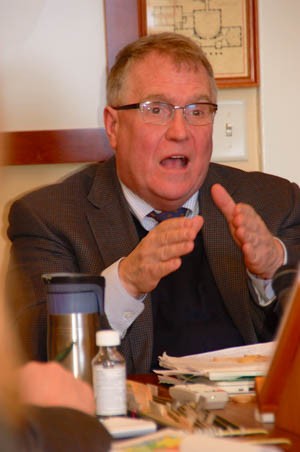
While he wasn’t able to speak directly about the Mental Health Department’s budget plans, Vermont Superintendents Association Executive Director Jeff Francis said he’s “heard increasingly about the problem of challenging behaviors in schools.”
“It is a compelling issue, and it is one educators talk about needing more resources for,” Francis said.
He added that “partnerships are important” in finding those resources.
That’s reflected in the department’s funding plan. The proposed $17.9 million increase for Success Beyond Six in fiscal 2020 includes $8.26 million from the state’s general fund; the remainder is federal Medicaid money, and officials said schools also match the state’s funding.
Advocates say there’s ample justification for spending money to treat mental health problems early in life. “We know that those kinds of early services end up having a huge return on investment,” Burns said.

