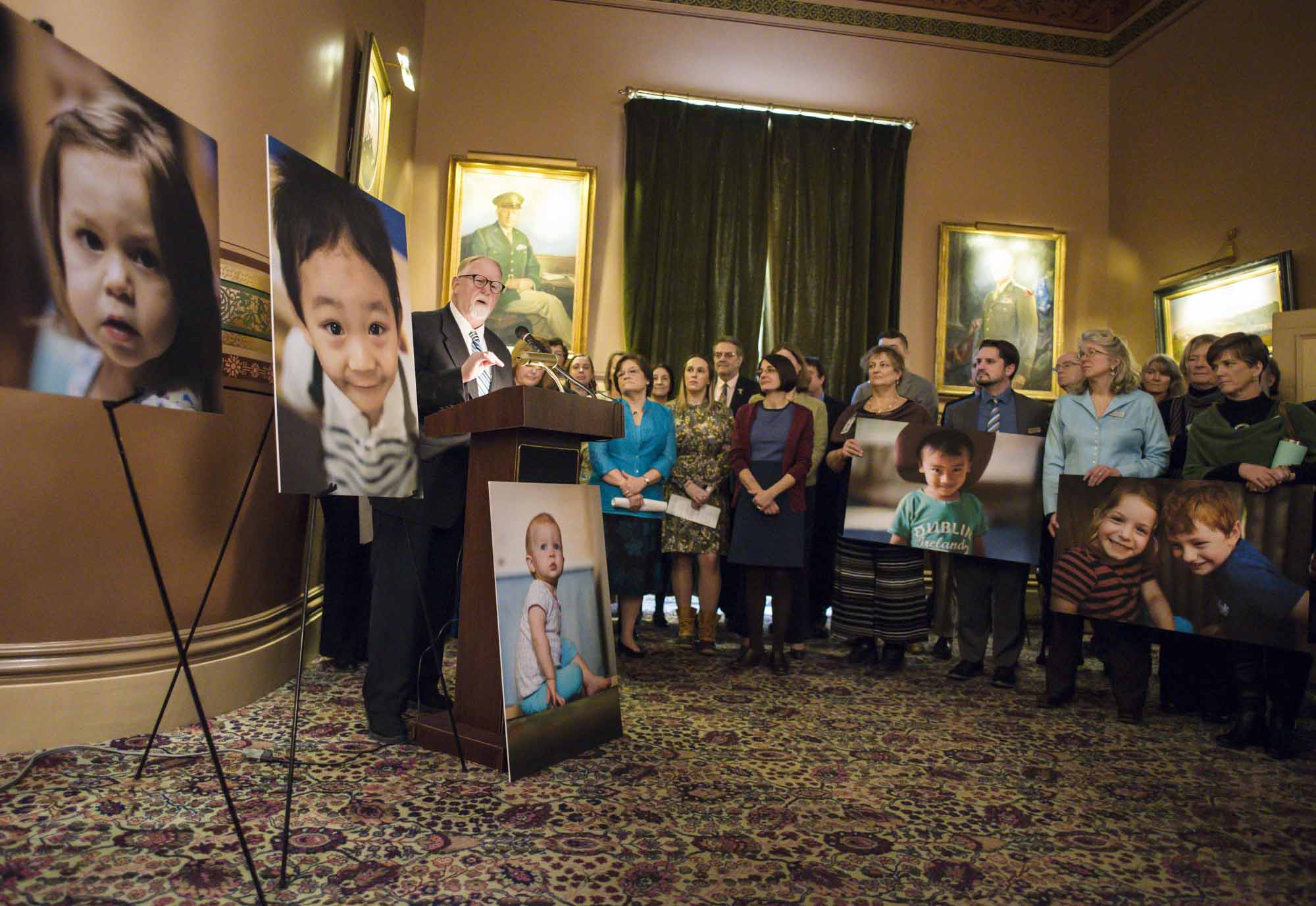
A tripartisan group of lawmakers announced Tuesday they would introduce legislation to beef up child care subsidies, support the early education workforce, and offer tax credits to businesses that help their employees access care.
The bill, which is still being drafted, would expand income eligibility, raise reimbursement rates, and increase financial assistance for child care subsidies. Lawmakers say the changes are estimated to cost an additional $26 million, which would more than double Vermont’s current spend on child care.
“In the face of a crisis, we need to step forward. We need acknowledge that there is never a good time to be poor – but especially not when you’re a child,” said Rep. Dave Yacovone, D-Morrisville, at a Statehouse press conference on Tuesday.
Vermont’s existing child care subsidies are underutilized, and advocates say it’s likely because only those in the absolute lowest income bracket are reimbursed at rates high enough to make paid child care an option for most who want to access the program.
The legislation would expand the income eligibility cap from 300 percent of the federal poverty level to 350 percent, and increase financial assistance levels so that families earning up to 200 percent of the federal poverty level – about $50,000 for a family of four – would received full assistance. No qualifying family would received less than 25 percent assistance. Yacovone said it is estimated that the proposed eligibility changes would bring an additional 1,000 children into the program.
Legislators also want to address a workforce shortage in the industry, where the median hourly pay is $12.71, according to Let’s Grow Kids, an early education advocacy group. The bill would launch a student loan repayment program for child care workers, provide them refundable tax credits, and offer scholarships. That part hasn’t been priced out yet.

Savannah McKenzie, a Hyde Park parent and child care worker who spoke at the press conference, said she knew firsthand how little those in the industry made, and how expensive care could be.
“Like many early educators, I don’t earn what Vermont considers a livable wage. The cost of child care for our boys nearly equals my entire yearly income,” she said.
The proposed legislation follows on the recommendations made earlier this month in two new reports from Building Bright Futures. Those reports highlighted the skyrocketing costs of child care, and the shortage of available slots. It noted, for example, that even with subsidies, a family with a household income of $50,000 will have spent an estimated 42 percent of the family’s total income for full-time care in 2018.
Early education is one of Gov. Phil Scott’s key priorities. But his budget only called for an additional $7 million in child care subsidies.