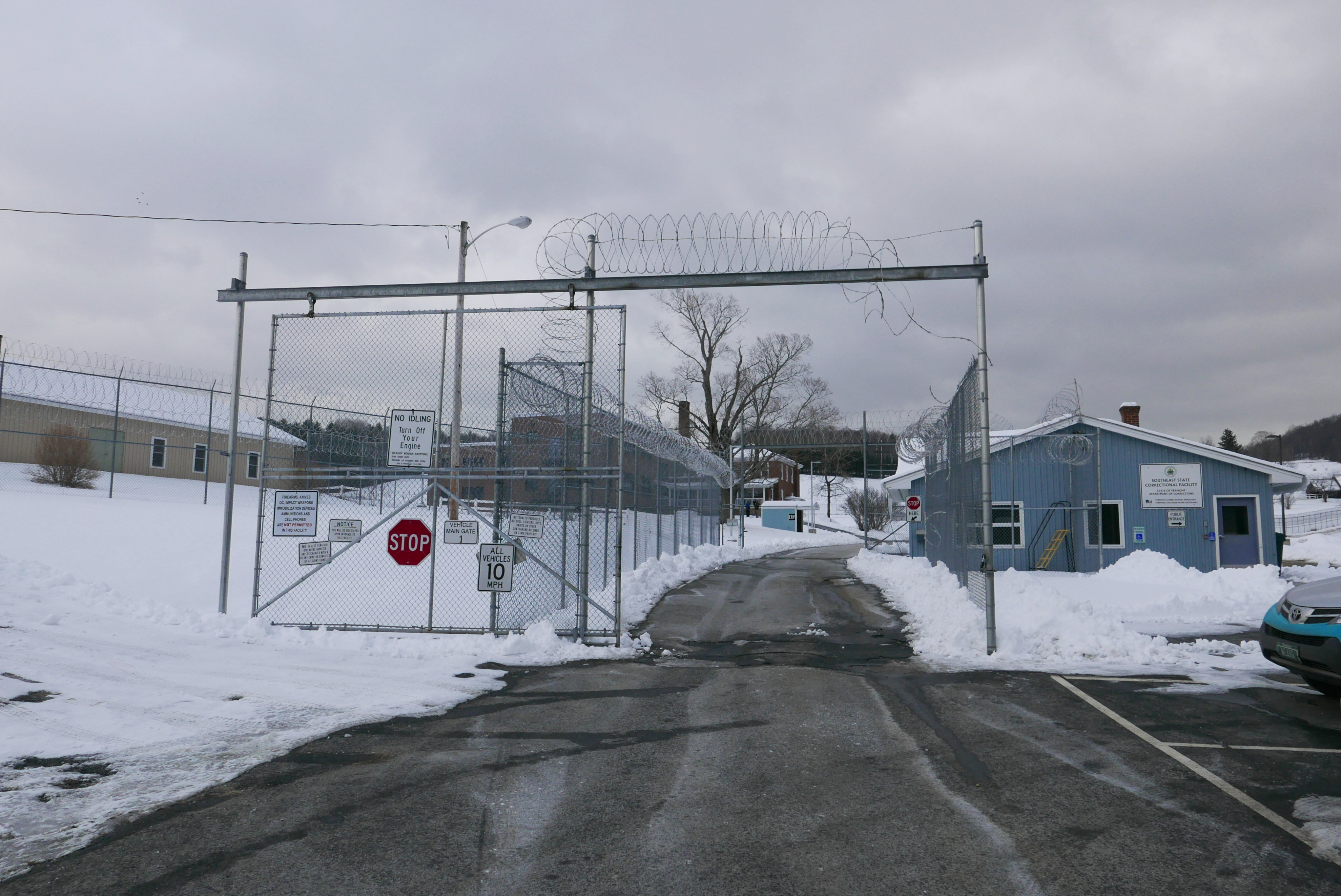
[W]INDSOR — In the last 100 years, the grounds of the Southeast State Correctional Facility have served as a dairy farm, a prison, a slaughterhouse, a wood shop and a license plate facility. There, inmates produced wooden toys and rehabilitated old bicycles.
Entrepreneur David Muller would like to bring new life to the buildings and grounds of the former Windsor prison, which closed in 2017, with an ambitious plan to open a hemp-growing cooperative and CBD laboratory.
“Basically this is going to be full-stop shopping for anybody and everybody,” said Muller on Tuesday, a day before touring the prison buildings and grounds with local officials, lawmakers and others.
While hemp and CBD businesses are rapidly opening in all the places where these activities are legal, Muller said that he thinks a leader with his scientific background and entrepreneurial experience can ensure better-quality production and testing than that found at more hastily assembled facilities.
“One of the attractive things about Vermont is it’s got a brand that will last forever, so when this thing is commoditized, it has the potential to have a very lasting brand if it’s done right,” said Muller, who has a doctorate in chemistry. “And by done right, that means you really have all the quality controls in there, that any pharmaceutical company would have.”
Since the prison closed for good in 2017, local and state officials have been trying to find the best use for the 120-acre campus and its 27 buildings, one that would contribute economically to the Windsor area.
The property includes 86,000 square feet of interior space in dorms and dining rooms, classrooms, a hay barn and two large silos, garages, offices, a license plate workshop, a saw mill, lumber storage, a greenhouse, a cow barn, a pumphouse and many other structures.
In a report released Jan. 15, the Department of Buildings and General Services said an appraiser had concluded the best commercial use of the property would to subdivide it and have a local or private entity redevelop it as affordable housing, offices, and light industrial space.
Many members of the House Committee on Corrections and Institutions toured the site with Muller on Wednesday. Committee Vice Chair Butch Shaw, R-Rutland, noted that Muller hasn’t submitted a concrete proposal yet to lawmakers.
“We’re really in the preliminary stages of discussion,” he said. “Today is our committee’s first real exposure to it.”
Rep. Zachariah Ralph, D-Hartland, a member of the Legislature’s Commerce and Economic Development Committee, participated in the tour because the site falls within the area he represents in the House.
“I’d like to make sure whoever comes in here fits into the culture and identity of Windsor, and adds to the economy,” Ralph said. He said he asked to join the tour because “I wanted to make sure Windsor has a voice in this.”
Muller is known in the medical world as one of the people who developed Lasik eye surgery through Summit Technology Inc., a former Massachusetts company. He later started two other ophthalmic companies. In 2002, he started a water buffalo dairy company in Woodstock.
The idea for the hemp-growing cooperative came to Muller as he talked to some of his neighbors in Woodstock about the poor returns on growing hay.
“Here are all these fields, and not enough cows to eat the hay,” he said. “What I realized was that the small farmers can really benefit from having small plots of hemp.”
The co-op would help growers get the hemp planted and then get it harvested, dried and prepared for sale.

Muller is proposing to lease the prison property from the state and extensively renovate the buildings and land. The state Department of Buildings and General Services has estimated that returning the land to “its natural state” would cost $1.4 million; the land if vacant has an estimated value of $430,000.
Muller estimated it would cost him $1 million for laboratory equipment alone. If it takes the state six months to make a decision on leasing the land to him, he said, he’ll start planting in the spring of 2020. He hasn’t drawn up all the costs for creating the cooperative and building the structures he’d need for the laboratory space and drying the hemp.
But he’s sure he could raise the money. He expects it to come from private funders.
“In the course of my business life, I have raised half a billion (dollars) in venture money,” he said. “I do expect to get outside investors for this.”