

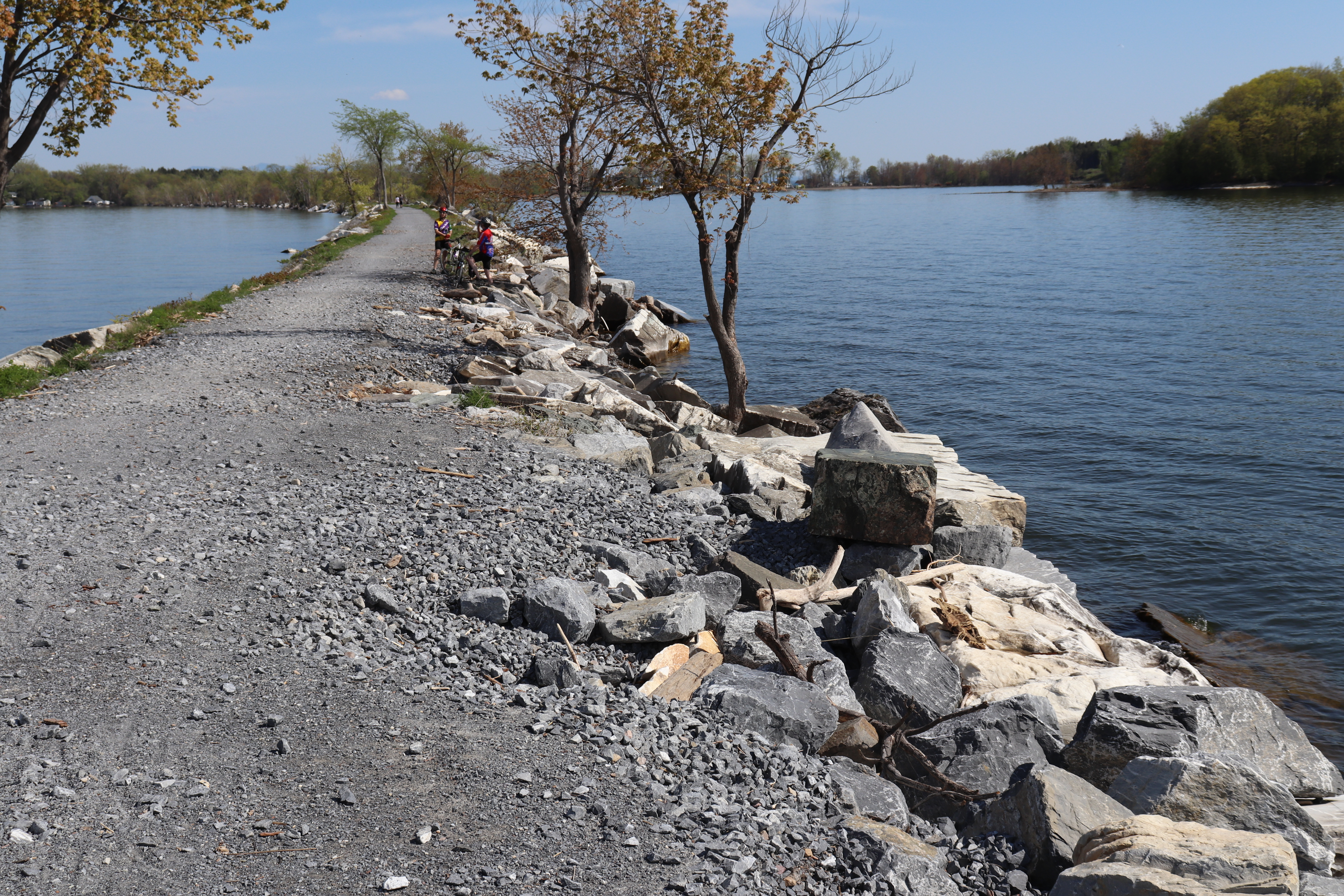
[C]OLCHESTER — The May 4 storm that ravaged Vermont and left thousands without power also caused an estimated $563,000 in damage to the Lake Champlain causeway.
Driven by high winds, waves battered the granite and marble blocks that buttress the former rail bed, eating away chunks of the gravel path, creating sinkholes and destabilizing the bridge.
Representatives from the Federal Emergency Management Agency, Vermont Emergency Management the state Agency of Transportation visited sites around Chittenden, Grand Isle, Lamoille, Orange, Orleans and Washington counties last Thursday and Friday to assess the cost of post-storm repairs.
To qualify for funding through FEMA’s public assistance grant program, damages to public infrastructure, including utilities, must total $1 million or more statewide. Individual counties then would qualify if the repair expense was shown to be $3.68 or higher per person, according to Mark Bosma, public information officer with Vermont Emergency Management.
Gov. Phil Scott can request a federal disaster declaration once the statewide estimate has been tallied following last week’s inspections. If the Trump administration agrees, Vermont can gain access to those federal funds. Six years ago, Hurricane Irene closed 34 bridges and 531 miles of state roadway in Vermont, prompting $600 million in federal funding for repairs. Colchester town officials previously had to work with state and federal officials to repair their town’s iconic railway turned bike path. Repairs to the causeway following Irene cost $559,000, mostly paid for with federal dollars.
Colchester kicked in 10 percent of the post-Irene causeway repairs, largely through fundraising efforts led by bicycle advocacy group Local Motion. The group runs a bike ferry shuttling cyclists across “the cut,” a short gap in the causeway, that will be shut down this year.
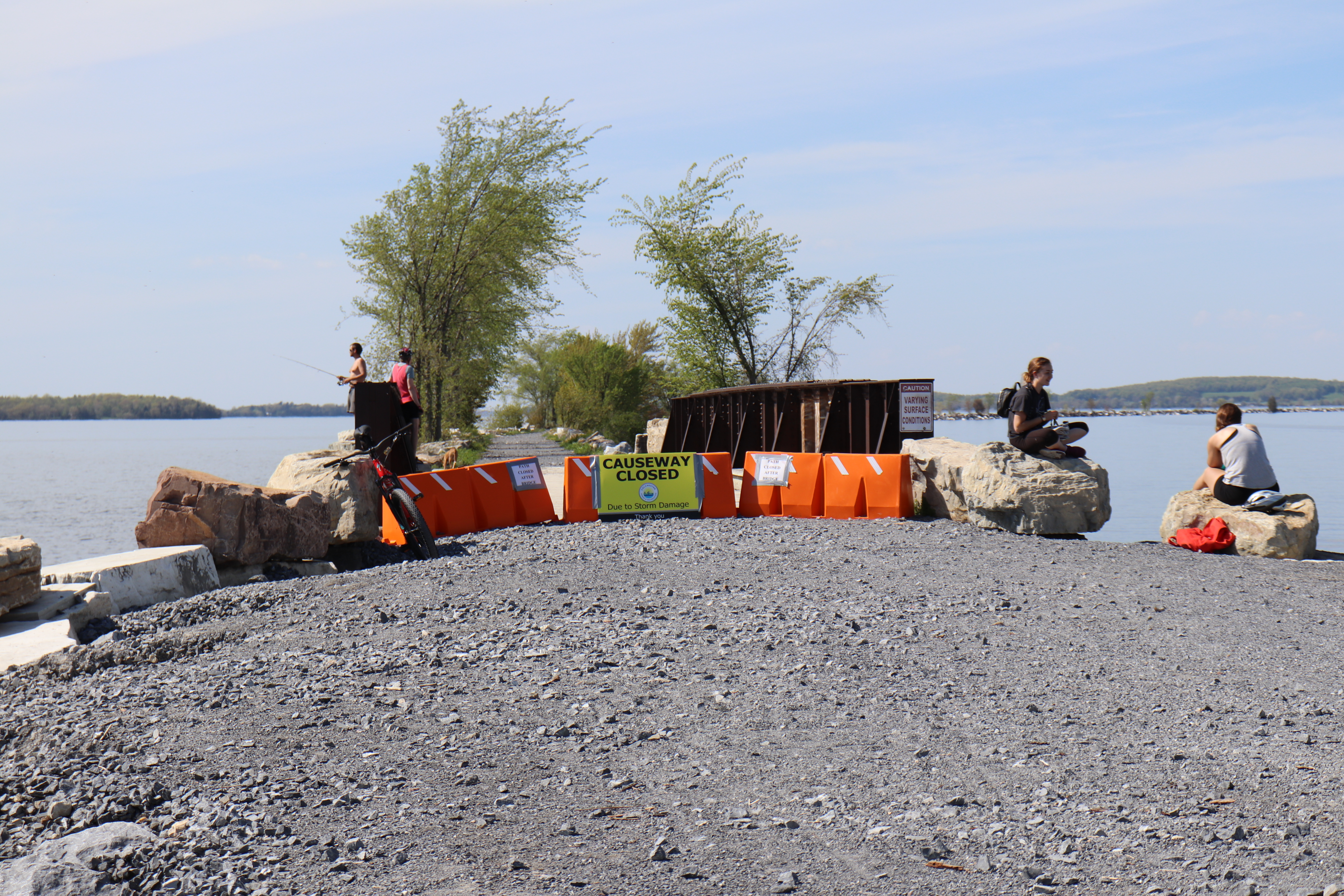
Recent University of Vermont graduate Michelle Phillips, who was taking in views of Mount Mansfield and Mallets Bay at the abrupt new end of the bike path, said biking the causeway was one of her favorite things about living in Burlington. She said the section of the path that remains still “makes you feel surrounded on both sides by water, like you’re on an island,” but hopes the path can be repaired soon.
“I’ve never gotten a chance to do the ferry, and I would love to get to do that,” said Phillips.
Montreal resident Oleg Osovitsky drove down across the border specifically to bike the causeway that he had heard about from friends. So intent was Osovitsky that he biked past the closed bridge, turning around only when he encountered a precipitously narrow path riddled with washed up stones. He said he was disappointed but said he might go hike Mount Mansfield later that day.
“I know a lot of people come here (from Canada) because it’s so beautiful,” he said, adding that he felt the path should be fixed despite the price tag.
Aaron Frank, Colchester town manager, said he’s hopeful Vermont would receive FEMA funding once againto fix the causeway, adding that the town is unsure yet what portion of repairs Colchester would have to pay. A town memo states that officials hope to create a Friends of the Causeway group to raise money for the town’s portion of the cost.
“The causeway is an asset to the community, not just to Colchester but to Chittenden County and the state of Vermont,” said Frank.
Frank could not provide an estimated date for when the causeway would be fully functional again, though a memo from the town states that the portion of the path beyond the first bridge will almost certainly be closed until next year.

