

[A] panel of stakeholders and state officials have been holding meetings since May to determine what financial information private schools must give to the state.
Representatives from private schools thought they were close to an agreement with the state about how they would report financial information, but at a meeting earlier this month, state officials said the proposed reporting requirements are too weak.

The draft legislation private schools support requires the following financial records:
a statement from an accrediting body, such as the New England Association of Schools and Colleges, verifying that a school has financial capacity for the current or previous school year; or a statement from a licensed accountant; or a review from an appointed team of peers from the Council of Independent Schools.
An audit report for the current school year or the last fiscal year written by an accountant, or a 990, which is an IRS form used by nonprofits.
The DFR review said those requirements are “very weak.”
“It provides little to assure the State Board of Education of the financial capacity of an independent school,” DFR officials wrote.
Pieciak recommends that private schools provide the most recent audit of their financials and quarterly unaudited financials that include balance sheets, cash flow statements, income statements and reserves. Student enrollments would also be included to see if the school is losing or gaining them. The state’s objective is to identify trends and to monitor the rate of school spending.
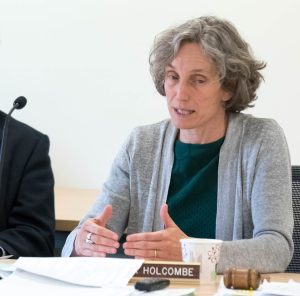
Holcombe would like to see DFR provide ongoing monitoring of school finances. Right now, the Education Agency receives a snapshot of a school’s finances when an institution applies or renews an application for public tuition dollars.
The purpose, she said, is to “trigger at which point it is no longer prudent to spend more state tuition dollars. In other words, there needs to be a point between approval and insolvency where the state discontinues paying.”
Mill Moore, head of the Vermont Independent Schools Association, said he and others were surprised by DFR’s analysis.

The Agency of Education is concerned that a private school reliant on public funds could go bankrupt or go out of business, leaving the state holding the bag.
When Burlington College closed last year, it fell to the Agency of Education to sort through, store and pass on student transcripts. The price tag for the agency? More than $18,000.
The state was faced with an even bigger financial burden when the Austine School in Brattleboro closed in 2014. The state put a $5.67 million lien against the school’s real estate for capital appropriations made to or for the benefit of the Austine School.
Holcombe referred to the closing of both private institutions in comments to the panel about tightening financial reporting for private schools. “When programs close precipitously, as was the case with the Austine School and Burlington College, the AOE is forced to spend taxpayer dollars and time managing any failure,” she said.
Last year, the state board tried to revise the rules for the approval process, but ran into opposition from the private school community, the governor’s office and some lawmakers. They continued working on the 2200 rules series until the Legislature passed Act 49, which created a study committee to examine financial requirements and special education opportunities for students. It has been meeting since May and will provide recommendations to the Legislature on Dec. 1.
Sen. Philip Baruth, D/P-Chittenden, who chairs the panel, asked legislative attorneys to draft language for financial rules and asked private school representatives to bring their edits to the October meeting for discussion.
“We seemed to be moving forward in our understandings with each other,” said Moore, a member of the committee. “At the last moment the secretary shows up with a new proposal at variance with everything we were talking about.”
“The local public schools have an interest in making sure an independent school serving public school kids (in their area) doesn’t close in the middle of the school year, or if they are serving 400 students and they don’t open up in the fall, that is a problem,” Francis said.
State board members said they are very worried about the viability of very small private schools as student rolls continue to fall.
“We have small independent schools operating on a shoestring, and that is very concerning to me,” said Bonnie Johnson-Aten, who represents the state board on the panel. Giving public dollars to such schools puts the state at risk, she added.
When private schools close students must transfer to another school. The problem is, tuition is paid in advance and can’t be recovered, Holcombe said.
The Education Agency went to DFR because the agency doesn’t have any expertise in this area. “We do public sector accounting, we don’t do reviews,” Holcombe said at the state board meeting in October. “Some of these schools have significant declines in enrollment and that would be looked at differently than schools with increases, but the agency doesn’t have expertise in that, so we consulted DFR to get their recommendations.”
Moore said he understood Holcombe’s concerns about Burlington College but didn’t see a direct link to K-12. “I understand the danger the secretary is referring to, but there isn’t evidence of a problem with elementary and secondary schools. I think her proposal is a big overreach for a problem that doesn’t exist.”
