


[V]ermont taxpayers are already looking at a projected 8 cent increase in property tax rates in fiscal 2019, and now they should prepare for another hit because health insurance premiums for teachers will also increase.
Nicole Mace, the head of the Vermont School Board Association, estimates the additional cost will add about $20 million to the education fund deficit in fiscal 2019, which is already in the hole by $50 million.
While teachers have been moved to new plans with lower premiums, health care costs will be more expensive for school districts in 2019 because of higher rates. That’s because in recently settled contracts, teachers are not paying a higher percentage of the costs.

Rate increases for teacher health care plans are expected to go up by 6 percent to 17 percent, depending on which benefit package is selected, according to a memo from the Vermont Education Health Initiative. Towns are agreeing to pay more of teachers’ out-of-pocket costs than expected and they are not using savings to curb health care use, the insurer said. The increases are based on a sample of settled contracts. Claims expenses are expected to increase by $3.5 million, according to VEHI.
The legislative session ended with a veto because the Scott administration wanted to maximize savings that were expected from switching to the new plans. VEHI, the education employee insurance pool, testified the state could save up to $75 million initially if teachers were asked to pay 20 percent of the costs. VEHI said there would be ongoing annual savings if the plans changed how school employees used their health care.
Mace said the state had a chance to establish a new health care norm, but school boards were pressured to maintain the current level of health care benefits. Employees are paying less in premiums and more in out-of-pocket costs, but getting the same benefit or better, she said.
“We had an opportunity to not just see one-time savings, but a new type of benefit that is more sustainable than we currently have,” Mace said. “The results show that opportunity has been lost. The NEA had no interest in establishing a new norm, so it hasn’t happened.”
VEHI officials testified before lawmakers that if local districts agree to pay 100 percent of teachers’ out-of-pocket costs there wouldn’t be any savings from switching to the new plans.
Rep. Scott Beck, R-St. Johnsbury, who pushed legislation to move bargaining from local school districts to the state, said the increases show that volunteer school board members are no match for teachers unions.
“Vermont school boards and school districts are just not qualified to negotiate health care, and Vermonters shouldn’t expect them to be,” Beck said. “These negotiations should be done by professionals on both sides that understand the implications of decisions to the entire health care insurance system.”
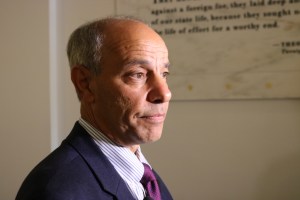
“The rate increase is precisely the result we were trying to avoid by moving to a statewide health benefit,” he said.
The statewide teachers union blames the rate hike on medical inflation and drug costs.
Darren Allen, spokesman for the Vermont chapter of the National Education Association, said going after the collective bargaining process misses the point. “The bigger issue, as we’ve been saying, is the health care system,” Allen said. “Root out the system that exists and make health care affordable and available to all.”
Rep. Jim Masland, D-Norwich, who sits on Ways and Means, said a statewide contract wouldn’t have stemmed rate hikes. He said the Legislative Council – the legal team that advises lawmakers – told legislators that “negotiations may not come out in a way that would meet the administration’s rosy scenario.”
Masland blames the increases on a combination of things, but he puts prescription drug prices and utilization (the frequency with which patients seek health care services) at the top of the list.
This year almost every school employee contract is being negotiated because VEHI is changing plans on Jan. 1 to comply with federal law.
Until this year, bargaining focused on how much of the insurance premium school districts and staffs would pay, and almost everyone was on the same plan. These negotiations are different. Teachers and boards have to bargain over premium shares for four different plans, as well as different options for covering out-of-pocket costs, such as health reimbursement accounts and health savings accounts. Each piece has multiple issues for both parties to think about and hash out in bargaining.
At least 38 school districts have settled contracts with teachers and 21 with support staff, according to the Vermont-NEA. There are 142 bargaining units for all school employees, and 41 percent have settled.
VEHI looked at these contracts to figure out the new rates. School districts were picking up more than 75 percent of teacher out-of-pocket costs. The contracts also used HRAs instead of HSAs, which VEHI doesn’t believe will curb behavior.
VEHI assumes that HSAs — employee-owned accounts — change the way people use health care and reduce costs, and the insurer baked this expectation into its original cost estimates. HSAs let employees keep the money they put into the pool, but any unused money invested HRAs is returned to the school district. The $75 million in savings hinged on the use of HSAs, according to VEHI’s presentations.
“The risk with covering more out-of-pocket costs than employees currently have is that premiums are going to go up. It wasn’t magical savings, it was savings that came about through changing utilization patterns,” Mace said, adding, actuaries find using HSAs affects utilization more than HRAs.
The Vermont-NEA told teachers to focus on HRAs, while the school boards association pushed HSAs.
The Vermont-NEA would not even talk about HSAs, Mace said. “It is difficult when the other side says HSAs are off-limits,” she said. Most of the teacher unions opening proposals asked for 100 percent of their out-of-pocket costs to be covered through an HRA, according to Mace.
“When that is your opening position, then when a board gets down to 85 percent they feel like they accomplished something,” Mace said.
But Allen said the union recommended HRAs because “it is a philosophically better way to manage health care costs for educators, and more importantly it allows boards to be better stewards of the public’s money.”
There are four plans with different premium costs and now, different rate increases. The plan VEHI expects most to sign up for, the Gold Consumer Driven Health Plan, will see a rate increase of 10 percent. The others are as follows:
- Platinum: 6 percent
- Gold: 8 percent
- Silver Consumer Driven Health Plan: 17 percent
Greshin said these hikes are proof that health care benefit contracts should be bargained at the state level. “Not only would state-level negotiations increase the likelihood of more cost-effective plans, but statewide contracts would guarantee uniformity among all school employees,” he said.
Allen disagrees, saying the problem is not collective bargaining but rather the health care system. “To think going after teacher health care will bend health care inflation is a misnomer,” he said.

