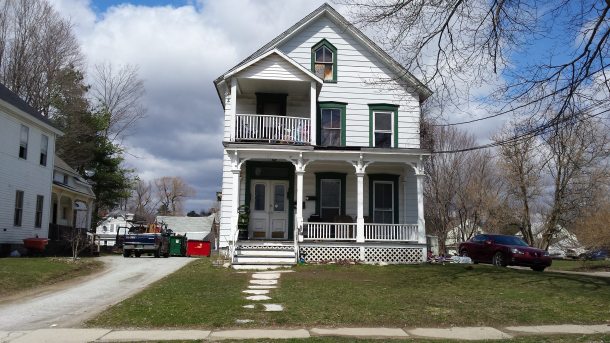
The city has ownership of about 20 properties acquired mostly through tax sales when no bidders showed up.
The parcels, which include vacant lots as well as those with single or multi-family buildings on them, are costing the municipality money to maintain and are not generating property tax revenue.
The Board of Aldermen’s Community and Economic Development Committee met last week to try to come up with a process for dealing with those properties. No votes were taken as the panel worked to determine the various roles entities in the city will play.
Whatever role other parties take, ultimately it is the Board of Aldermen that must authorize the sale of city-owned property, the city’s attorney, Matthew Bloomer, told the committee.
“The city should not be in the business of owning property that we don’t use for some good purpose,” Alderman Christopher Ettori, chair of the economic development committee, said in kicking off the meeting.
“The city doesn’t want to be a landlord, we want to be a tax collector,” added Sharon Davis, Board of Aldermen president, who also attended.
Building inspector Bob Tanner told the committee the city does incur expenses owning the properties, such as providing lawn care. A tally of costs is kept for each property, and the city can try to recoup that money if that property is ever sold.

“That’s why it’s important we keep track of that,” she said.
Tanner said city staff spend time dealing with the properties.
“It’s a lot of extra work for this office, too,” Tanner said, because almost every week staff have to check the buildings to make sure no one is moving in. “If they move in there, and they’re there for 30 days, we have to start an eviction process for squatters,” Tanner said.
Wilton said with the economy improving there has been a lot more interest from investors in going to tax sales and bidding on properties. The ones on the city’s hands now, she added, accumulated over a couple of years.
Committee members and city staff at the meeting Thursday night talked of organizing the properties and buildings on them based on several factors, including whether they are in condition to be sold immediately.
Also, according to the discussion, some properties that may no longer be considered a buildable lot could hold value to be apportioned out to abutters. In addition, a property might make sense for the city to hold onto, especially if it were next to a city-owned park and presented the option to expand it.
In the case of three properties on Park Avenue the city acquired through drug forfeiture, ownership was transferred to NeighborWorks of Western Vermont to be rehabbed.
Ettori talked of a process where potential buyers become qualified to purchase a certain property, rather than always selling to the highest bidder.
“I think there’s more of an incentive for the city to say, ‘What do we actually want with this property? Here are the applications,’” Ettori said, pointing out the importance of making sure the future use of such a property fits with the neighborhood and city goals.
“I think big picture,” Davis said, “the purpose is to rehabilitate, strengthen neighborhoods and get it back on the grand list.”