


The Department of Public Service requested a workshop process, in order for the PSB to evaluate existing regulation alongside “emerging trends in the utility sector,” according to the PSB’s order, dated June 26.
These emerging trends include the state’s renewable energy goals, the recent expansion of Vermont’s natural gas pipeline system, the merger of Green Mountain Power and Central Vermont Public Service Corp. and the proliferation of “smart” electric meters, according to the PSB order.
The board will also consider what’s known as “alternative regulation,” a process under which Green Mountain Power and Vermont Gas Systems have been regulated since 2007 and 2006, respectively. Critics say alternative regulation lacks sufficient oversight, but proponents including former Department of Public Service Commissioner Chris Recchia say the streamlined regulatory process actually benefits customers.
Department of Public Service officials earlier this year asked the Public Service Board to conduct the review of state utility regulation at least in part to settle the question of whether alternative regulation works in Vermonters’ favor.
Utility representatives say they welcome the review.
“We fully support rigorous review and oversight,” especially with the goal of “ensuring value for customers,” said Beth Parent, Vermont Gas Systems spokeswoman. “The energy world is changing fast, and we agree it’s important for regulations to keep up.”

“It’s important to have rigorous regulation,” and it would be “good if we can create an environment where customers get good value,” Schnure said.
“There are lots of new technologies that 10 years ago utilities weren’t doing,” Schnure said, and it’s worth taking a look at these technologies vis-a-vis the regulatory system that predates them.
“We’re looking at this as a great opportunity to say, ‘How can we move forward? What makes sense? What makes sense for our customers?’” Schnure said.
Many utility regulations in effect today have been on the books for around a century, said Ellen Burt, Stowe Electric Department’s general manager, and the past two decades have seen technological advancements those regulations for which those regulations weren’t designed.
That technology includes “smart” meters, Burt said, referring to electric meters capable of communicating automatically with the utility whose service they meter.
Most utilities in Vermont now offer smart meters to customers, and many customers have them already installed, she said.
They’re being underutilized, however, and better regulations could change that, said Sandra Levine, a senior attorney with the Conservation Law Foundation.
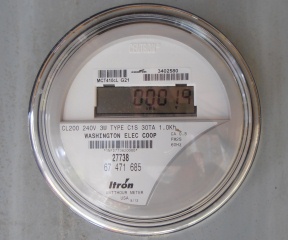
“That’s the kind of alignment between customer and utility needs this should address,” Levine said.
Whatever regulatory changes emerge from the PSB investigation will need to provide incentives to utilities that will encourage them to sell less energy, Levine said. Customers want to decrease their energy consumption, and good energy regulations will reward companies that follow suit, she said.
“If utilities are just allowed to pass on costs for every dollar they spend, their incentives are not aligned with customer needs,” Levine said. “Instead of incentives to sell a kilowatt-hour, or a million cubic feet of gas, there should be incentives to sell smarter, and [there should] be rewards for that.”
Regulatory incentives should encourage energy conservation and low-cost energy, Levine said.
“I think this order makes sense,” she said. “It makes sense to evaluate now how Vermont regulates utilities, especially in light of other changes in the energy world.”
