

[T]he framework for a Senate Ethics Panel was approved Tuesday, but the thorny question of whether senators will have to disclose their sources of income was put off.
The Senate Rules Committee set up the outline for the Senate Ethics Panel — which will be comprised of five senators who will investigate allegations of ethical violations by senators and recommend disciplinary action to the full Senate if they deem it necessary.
The committee vote was 5-0. The full Senate must also approve the panel’s establishment.
The Rules Committee also called for senators to fill out a disclosure form, but did not vote on what the form will contain — particularly whether and to what extent senators will have to disclose income sources. That discussion was left until the Ethics Panel is discussed on the Senate floor, possibly later this week. A proposed draft disclosure form would require senators to list the sources, but not the amounts, where they received $10,000 or more a year.

Campbell said he didn’t want to include an income amount until a separate bill calling for a State Ethics Commission is settled because he wants to the amounts to match. That bill calls for statewide elected officials and statewide candidates, as well as high-level state employees, to disclose income sources of $10,000 or more.
The State Ethics Commission bill has changed frequently before it was approved by the Senate Government Operations Committee. It now sits in Senate Appropriations with a request of $100,000 to fund the commission.
“Because they’re coming around at the same time, I want to make sure we don’t have a major difference” in income disclosure amounts, Campbell said. “If we’re going to be asking statewide people to have certain disclosures, then we should be doing the same for the Legislature.”
The State Ethics Commission does not oversee the conduct of current lawmakers because, experts say, the state Constitution calls on each chamber of the Legislature, to police its own members. (A one-year prohibition on lobbying after a lawmaker leaves office is, however, included in the proposed State Ethics Commission bill.)
“I think people have the right to have a formalized process to bring a complaint,” said Sen. Philip Baruth, D-Chittenden, a member of Senate Rules. “If they as citizens of the State of Vermont say that they’ve been victimized by the ethical practices or misdeeds or a lawmaker, they deserve a formal process to bring those forward.”
“It’s long overdue. Better today than tomorrow,” Baruth said.
The only point of contention before Senate Rules passed the bill out was whether a person filing a complaint would be told of the outcome. Senators were clearly concerned about confidentiality, but agreed the complainant should know what happened, particularly in a case where a settlement was reached before the issue went to the full Senate. The outcome of a settlement would not be made public by the panel, but the complainant could make it public, according to Senate Secretary John Bloomer.
If no ethical violation is found to have occurred or “is minor in nature,” the alleged violation would remain confidential. A hearing on charges would be required and the committee would have the power to take testimony under oath and issue subpeonas. The hearing would be closed unless the accused asked that it remain open. The burden of proof an ethical violation occurred would be “clear and convincing” evidence.
Baruth said he expects some “griping here and there’’ when the income disclosure is debated on the Senate floor but he said he believes a majority will support it.
Sen. Richard Mazza, D-Colchester, said he supported establishing a Senate Ethics Panel but does not believe financial disclosure is necessary for lawmakers.
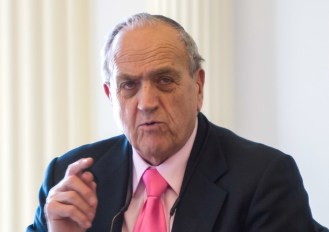
“I don’t favor it,” Mazza. “That opens up a whole area of disclosure. I don’t know if a citizen Legislature is prepared to do that. It’s not a full-time job.”
The House last year set up its own ethics panel, and requires its members to name boards and associations on which they serve, but they do not have to provide any financial information. Speaker Shap Smith has said House members would likely revisit that requirement if the Senate and the State Ethics Commission required financial disclosure.
Meanwhile, a new idea has emerged for a key section of the State Ethics Commission bill that was removed at the 11th hour — a so-called “pay to play” prohibition. Sen. Jeanette White, the chair of Government Operations, said she will ask the five-member commission, once its established, to develop the rules around what restrictions should be put on campaign contributions by people who have contracts with the government.
White said it was clear, for example, that donations from an auditing firm to a candidate for the state auditor job should be prohibited, but she said the committee “got hung up” trying to figure out if all state contracts are overseen by the governor’s office and thus, anyone holding a contract would be precluded from making a contribution in the governor’s race.
The Senate must approve the State Ethics Commission before it goes to the House, where that body’s Government Operations Committee stopped taking testimony until the Senate sorted out its bill.

