

The Shumlin administration spent about $1.6 million since 2011 to develop a proposal for a single payer health care program that is now on hold.
In an interview with WDEV’s Mark Johnson on Thursday, Gov. Peter Shumlin defended the money spent studying single payer.
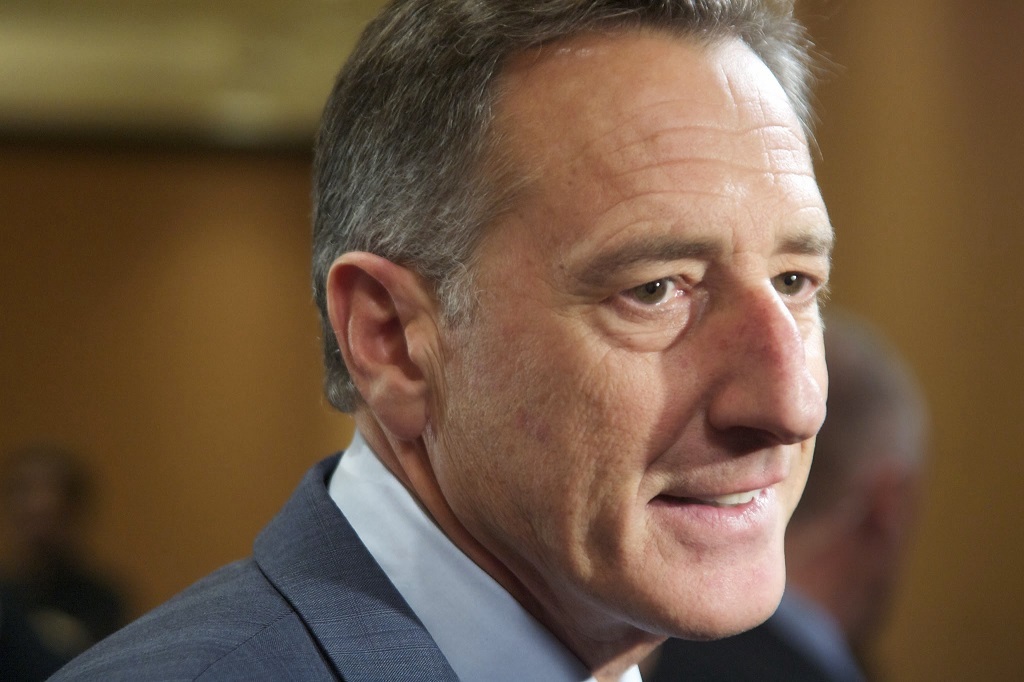
The administration announced Wednesday that it had determined that pursuing a publicly financed health care plan in the near future was economically unwise. Shumlin had hoped to make Vermont the first state in the nation to enact a single payer health care plan by 2017.
The governor chastised those who suggest it would have been easy to anticipate the economic “headwinds” and other factors that ultimately made such a program unfeasible in the near term.
“If there’s people smarter than me that could’ve done this on the back of an envelope and said with conviction to Vermonters ‘I’ve got this so figured out … we don’t need economists and we don’t anyone working on this’ … I’m all ears,” Shumlin said. “But all I can tell you is that’s not how I do things.”
Shumlin said he was not aware of precisely how much his administration spent developing single payer, but compared to the billions of dollars that flow through the health care system, those costs are “very little,” he said.
The $1.6 million estimate includes the cost of the 2013 single payer finance report, a forthcoming single payer finance report to be released at the end of the month, as well as compensation for staff working directly on the governor’s proposal.
Robin Lunge, one of the key architects of Vermont’s suspended single payer effors, said that figure could be high because staff working in the Health Reform office, within the Agency of Administration, also worked on Vermont Health Connect and other initiatives while single payer was being developed.
The $1.6 million does not include $250,000 spent on the 2011 report by Dr. William Hsiao, which preceded Shumlin’s tenure as governor, or work done by state employees in the Department of Tax, Finance and Management or members of the Green Mountain Care Board who contributed to the study of single payer.
Many of those employees contributed directly to the program’s development, while others worked to anticipate how the program would impact other areas of state government.
The $1.6 million also does not include money spent by the Legislature on consultants to help them explore facets of single payer or staff time spent by the legislative Joint Fiscal Office on single payer.
The figure will continue to grow as the administration pays out money on existing contracts for work already completed, or that is ongoing to complete a report Shumlin’s team still plans to release at the end of the month.
Vermont has paid MIT economist Jonathan Gruber $160,000 of a contract that was reduced to a maximum of $280,000. The University of Massachusetts has a contract with a $317,000 maximum, on which Vermont has paid $151,000 to date.
UMass has not billed for all of its work, and the total won’t be known until January or February, Lunge said. Wakely Consulting has a contract cap of $155,000 and the state has paid $134,000. Lunge said there are at least $10,000 in invoices still being processed.
The $1.6 million includes the $300,000 Vermont paid to UMass and Wakely Consulting for the 2013 report, the $445,000 spent on contractors thus far for the current report and $900,000 in compensation for the state’s team working on the project.

